
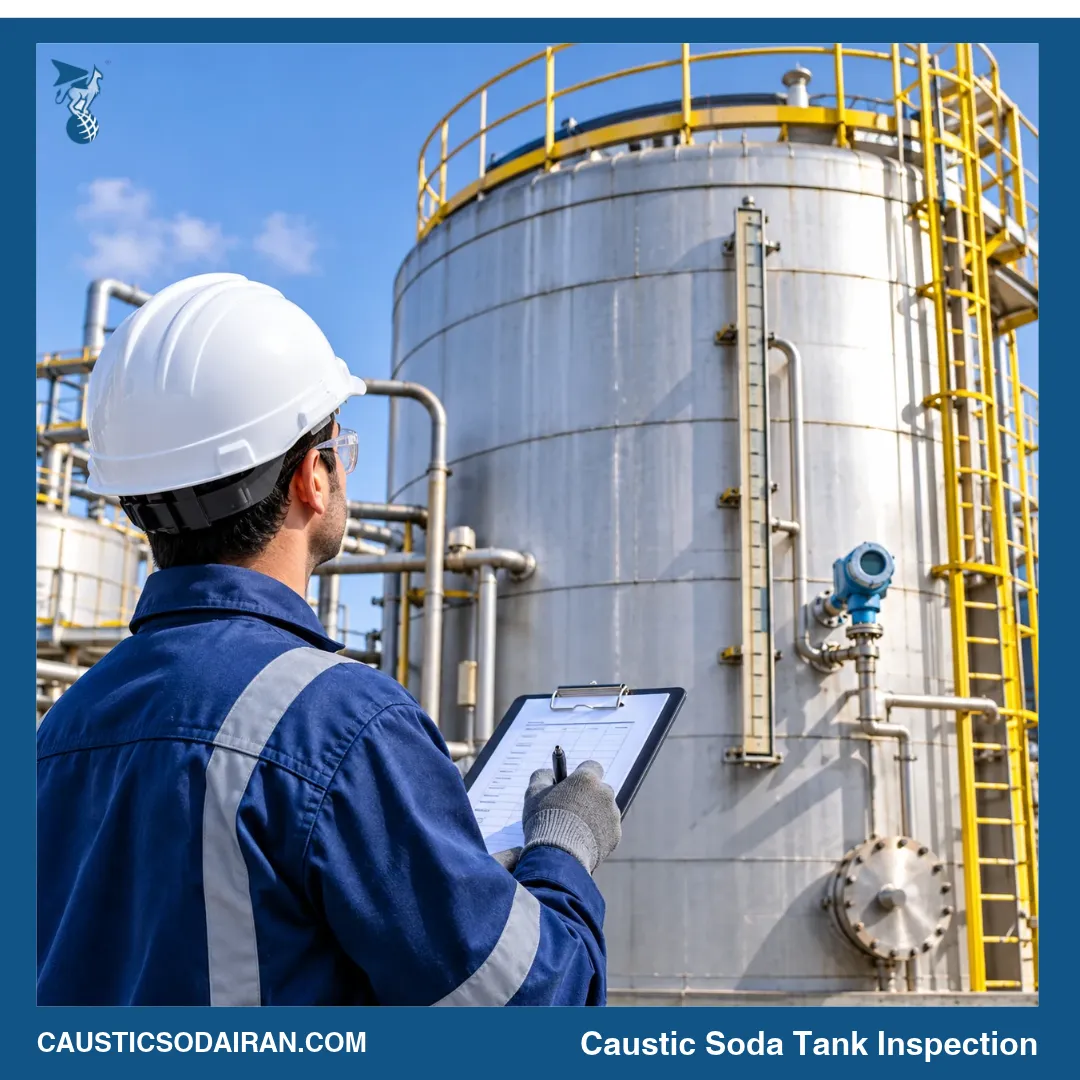
Caustic soda is widely used in chemical manufacturing, water treatment, pulp and paper production, and several other industrial processes. Because sodium hydroxide is highly corrosive under certain conditions, its storage requires proper equipment and regular maintenance. Caustic soda tank inspection plays an important role in preventing leaks, protecting storage systems, and maintaining operational safety.
Storage tanks must withstand chemical exposure, temperature variations, and mechanical stress. Therefore, routine inspections and corrosion monitoring are essential for facilities that handle caustic soda.
1. Why Caustic Soda Storage Tank Inspection Matters
Industrial storage tanks are continuously exposed to chemical and environmental conditions that may affect their structural integrity. Over time, unsuitable materials, poor maintenance, and operating errors can increase the risk of corrosion and equipment failure.
Regular caustic soda tank inspection offers several important benefits:
- Leak prevention: Identifying damaged areas before they develop into serious leaks.
- Equipment protection: Detecting corrosion and material degradation at an early stage.
- Operational safety: Reducing the risk of chemical exposure and workplace accidents.
- Cost control: Preventing expensive emergency repairs and unexpected shutdowns.
- Storage reliability: Maintaining consistent conditions for caustic soda storage.
Consequently, inspection programs should be included in every industrial chemical storage management plan.
2. Common Causes of Corrosion in Caustic Soda Storage Tanks
Although sodium hydroxide is compatible with several industrial materials, corrosion can still occur under unsuitable operating conditions.
Understanding the main causes helps maintenance teams select appropriate inspection methods.
Material Compatibility
Tank construction materials must be compatible with the concentration and temperature of the stored caustic soda. Carbon steel is commonly used for certain caustic soda storage applications, but operating conditions must be carefully controlled.
Inappropriate material selection can increase corrosion rates and shorten equipment service life.
Temperature Fluctuations
Temperature changes can influence chemical behavior and material performance. Higher temperatures may accelerate corrosion reactions and increase the possibility of stress-related damage.
For this reason, temperature monitoring is an important part of preventive maintenance.
Contamination and Chemical Impurities
Foreign substances entering a storage tank may affect the chemical environment inside the equipment. Contamination can also contribute to deposits, operational problems, and localized damage.
Proper handling procedures and clean transfer systems help minimize these risks.
Mechanical Stress
Tank foundations, connections, nozzles, and welded joints can experience mechanical stress during operation. Over time, this stress may contribute to cracks, deformation, or structural deterioration.
Selecting suitable construction materials is equally important for preventing corrosion. For a more detailed explanation, read our guide on Caustic Soda Flakes Material Compatibility, which explains how material selection affects equipment durability and operational safety.
3. Essential Inspection Methods for Caustic Soda Tanks
A comprehensive inspection program combines visual examination with appropriate non-destructive testing techniques.
The selected methods depend on tank design, construction materials, operating conditions, and previous inspection results.
For additional guidance on industrial storage tank inspection, repair, and maintenance, refer to the API 653 tank inspection standard, developed by the American Petroleum Institute.
Visual Inspection
Visual inspection is one of the simplest methods for identifying potential problems.
Maintenance personnel should examine:
- External tank surfaces for rust and coating damage.
- Welded joints for visible cracks or defects.
- Tank foundations for settlement or structural movement.
- Pipes, valves, and connections for leakage.
- Tank roofs and supports for deformation.
However, visual inspection alone cannot identify every form of corrosion. Additional testing may be necessary.
Ultrasonic Thickness Testing
Ultrasonic thickness testing measures the remaining thickness of tank walls without damaging the material.
This method helps inspectors identify metal loss and compare current measurements with previous inspection records.
Regular thickness measurements can reveal corrosion trends and support decisions about repair or replacement.
Non-Destructive Testing
Other non-destructive testing methods may also be useful, depending on the suspected damage.
For example, magnetic particle testing can identify certain surface and near-surface defects in suitable ferromagnetic materials. Liquid penetrant testing can reveal surface-breaking cracks.
These methods provide additional information about the condition of critical tank components.
4. Preventive Maintenance Practices for Caustic Soda Storage Tanks
Inspection identifies potential problems, while preventive maintenance helps reduce the likelihood of equipment failure.
Industrial facilities should establish a maintenance schedule based on tank condition, operating history, and applicable engineering standards.
Important preventive maintenance practices include:
- Regular inspections: Examine tank surfaces, connections, supports, and accessible structural components.
- Thickness monitoring: Record ultrasonic measurements to identify changes over time.
- Temperature control: Maintain operating temperatures within the limits established by the tank design and material compatibility assessment.
- Leak detection: Check valves, flanges, pipelines, and transfer connections.
- Foundation maintenance: Monitor settlement, drainage, and structural stability.
- Maintenance documentation: Record inspection findings, repairs, and testing results.
Furthermore, inspection results should be reviewed by qualified personnel to determine whether corrective action is necessary.
5. Safety Considerations During Tank Inspection
Caustic soda can cause severe chemical burns when it comes into contact with skin or eyes. Therefore, inspection activities must follow strict safety procedures.
Workers should use appropriate personal protective equipment, including chemical-resistant gloves, protective clothing, face shields, and suitable eye protection.
In addition, several safety measures should be considered:
- Follow established chemical handling procedures.
- Use appropriate isolation and lockout/tagout procedures before maintenance.
- Verify atmospheric conditions before entering confined spaces.
- Provide suitable emergency washing and eyewash facilities.
- Ensure that only trained and authorized personnel perform inspection activities.
Importantly, entering a storage tank requires a formal confined-space entry program. Tanks must never be entered without proper isolation, atmospheric testing, authorization, and rescue arrangements.
6. How Inspection Frequency Affects Maintenance Costs
Inspection frequency has a direct relationship with maintenance planning and long-term operating costs.
Infrequent inspections may allow corrosion or structural damage to progress unnoticed. As a result, facilities may face expensive repairs, production interruptions, and unexpected chemical losses.
On the other hand, a risk-based inspection program helps companies allocate maintenance resources more efficiently.
Inspection intervals should consider:
- Tank age and construction materials.
- Caustic soda concentration and operating temperature.
- Previous corrosion measurements.
- Storage conditions and environmental exposure.
- Historical leakage and maintenance records.
There is no single inspection interval suitable for every tank. Qualified inspection engineers should determine the appropriate schedule using applicable standards and equipment-specific risk assessments.
7. Conclusion
Caustic soda tank inspection is an essential part of industrial storage management. Regular visual examinations, ultrasonic thickness measurements, and suitable non-destructive testing methods help identify corrosion and structural damage before they become serious problems.
At the same time, preventive maintenance, temperature monitoring, material compatibility assessments, and proper safety procedures improve equipment reliability.
By implementing a structured inspection program, industrial facilities can reduce maintenance costs, minimize operational risks, and maintain safer caustic soda storage systems.
Contact Us for Caustic Soda Supply and Technical Information
Choosing reliable caustic soda suppliers is essential for maintaining consistent product quality and safe industrial operations. At Caustic Soda Iran, we provide caustic soda products for various industrial applications.
For caustic soda price quotations, product specifications, or technical information, contact our sales team today.


Leave a Reply