
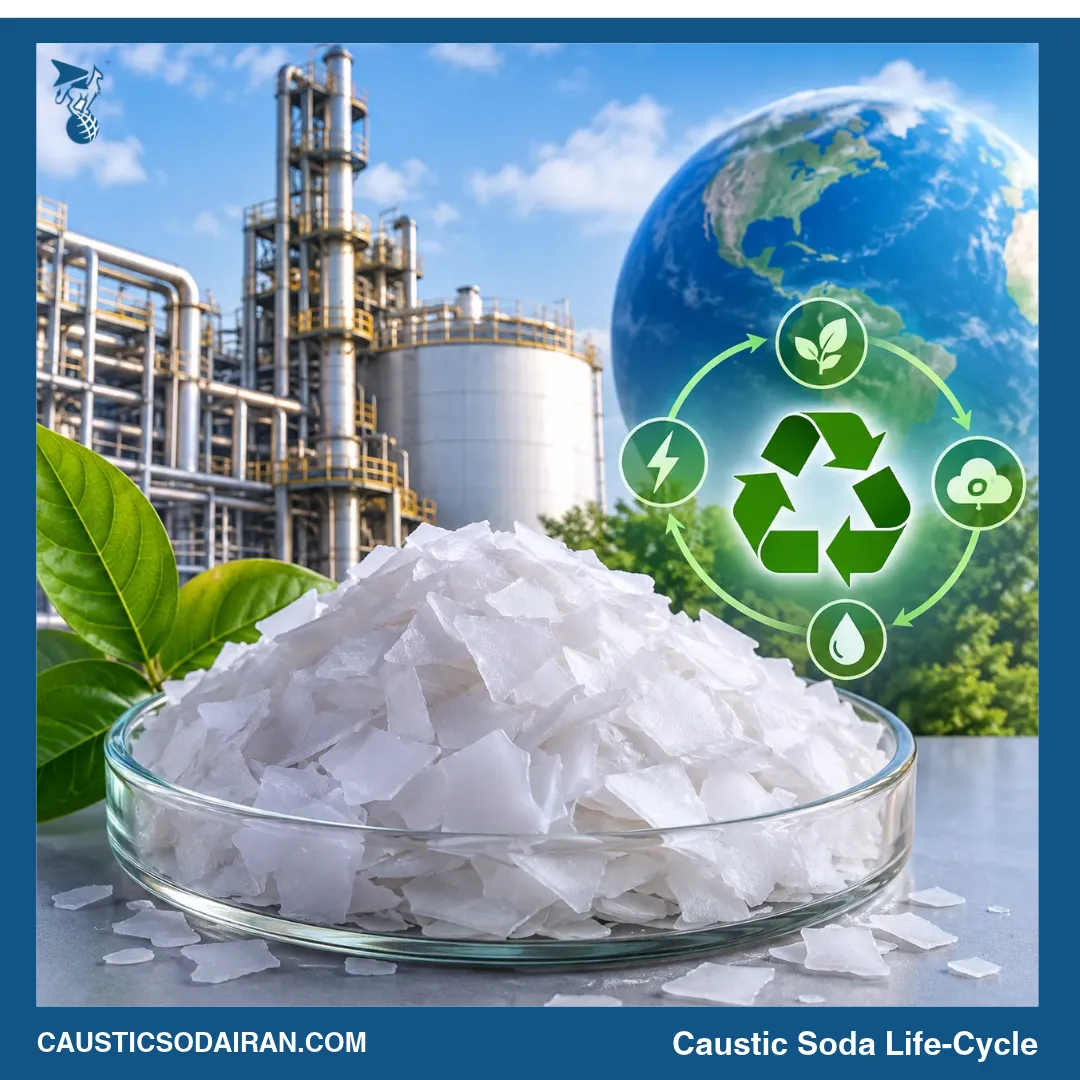
Caustic soda flakes are widely used in industries such as textiles, detergents, paper manufacturing, alumina production, and water treatment. However, their production requires significant energy and raw materials. Understanding the Caustic Soda Life-Cycle helps manufacturers evaluate environmental impacts, reduce production costs, and improve sustainability.
Life-cycle assessment (LCA) is an important method for examining these impacts. It considers different stages of production, from raw material extraction to manufacturing, packaging, and transportation. Therefore, it provides a broader picture of the environmental performance of caustic soda flakes.
1. Understanding the Life-Cycle of Caustic Soda Flakes
The production of caustic soda begins with sodium chloride (salt) and water. Through the chlor-alkali process, electricity separates sodium chloride into chlorine, hydrogen, and sodium hydroxide.
The main production stages include:
- Raw Material Extraction: Salt is extracted from underground deposits or natural brine sources.
- Brine Preparation: Salt is dissolved in water and purified to remove impurities that could damage electrolysis equipment.
- Electrolysis: An electric current separates the brine into chlorine, hydrogen, and sodium hydroxide.
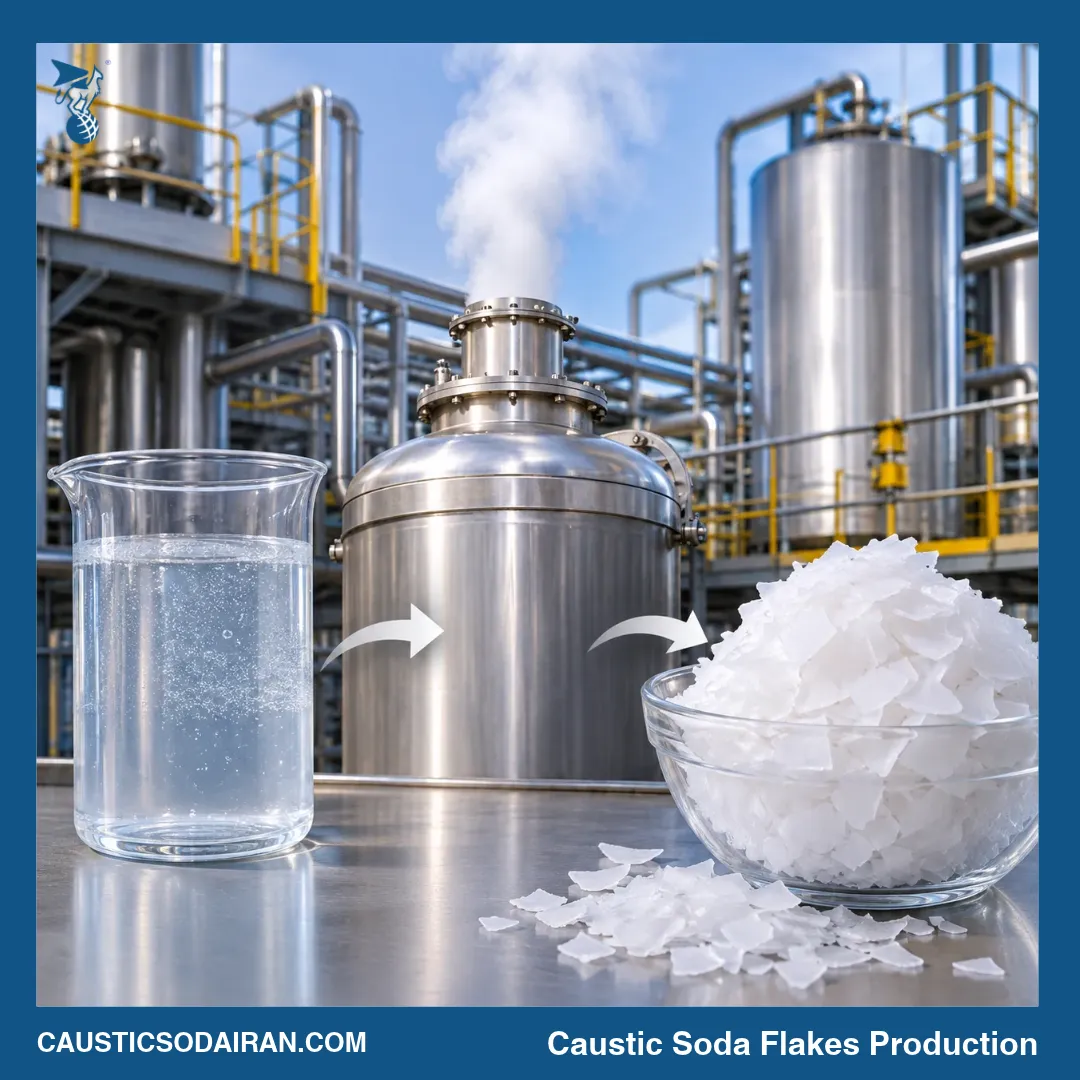
- Concentration and Flaking: Liquid sodium hydroxide is concentrated through evaporation and then processed into solid flakes.
- Packaging and Distribution: The finished flakes are packed and transported to industrial customers.
Each stage consumes resources and can contribute to the overall environmental footprint.
2. Energy Consumption in Caustic Soda Production
Energy consumption is one of the most important factors in the Caustic Soda Life-Cycle. Electrolysis requires substantial electricity, while evaporation and concentration require additional thermal energy.
The amount of energy consumed depends on production technology, equipment efficiency, and the concentration of the final product.
Membrane cell technology is generally considered more energy-efficient than traditional mercury and diaphragm technologies. However, the electricity source also plays a major role in determining total environmental impacts. The choice of electrolysis technology also affects overall production efficiency and energy consumption. To understand these differences in greater detail, read our article on Membrane vs. Diaphragm Technology in Caustic Soda Production, which explains how different production methods influence energy requirements and product quality.
Manufacturers can improve energy efficiency through several measures:
- Using modern membrane electrolysis systems.
- Recovering and reusing waste heat.
- Improving evaporation equipment.
- Optimizing steam consumption.
- Monitoring electricity use throughout production.
These improvements can reduce both operating costs and indirect greenhouse gas emissions.
3. Greenhouse Gas Emissions and Environmental Impacts
The environmental impact of caustic soda production is closely connected to electricity generation and industrial energy consumption.
When electricity comes from fossil fuel sources, production can result in higher indirect carbon dioxide emissions. In addition, fuel consumption for steam generation and transportation contributes to the overall carbon footprint.
Other environmental considerations include:
- Water Consumption: Water is required for brine preparation, processing, and cleaning.
- Raw Material Extraction: Salt extraction and brine production can affect land and local water resources.
- Industrial Waste: Brine purification and production operations may generate waste streams that require proper treatment.
- Air Emissions: Energy generation and transportation can release greenhouse gases and other air pollutants.
Therefore, a complete Caustic Soda Life-Cycle assessment should consider more than direct emissions from the manufacturing plant.
4. Environmental Trade-Offs Between Production Technologies
Different production technologies offer different environmental advantages and disadvantages.
Membrane technology is widely used because it avoids the mercury-related pollution associated with mercury-cell production and generally offers better energy efficiency than older systems.
Diaphragm technology can require additional processing and concentration energy. Meanwhile, mercury-cell technology creates environmental concerns because mercury is highly toxic and requires strict management.
However, selecting a production method is not based on electricity consumption alone. Other factors, such as raw material sourcing, waste treatment, hydrogen recovery, and product concentration, must also be considered.
A life-cycle approach helps manufacturers compare these technologies more accurately and identify the most effective opportunities for environmental improvement.
5. Strategies to Reduce the Environmental Footprint
Reducing the environmental impact of caustic soda flakes requires improvements across the entire production chain.
Several practical strategies can support this objective:
- Renewable Electricity: Using solar, wind, or other low-carbon electricity sources can reduce indirect emissions.For more information about industrial energy-saving strategies, explore the ENERGY STAR chlor-alkali energy efficiency guidelines, which provide useful insights into improving energy performance in chemical manufacturing.
- Heat Recovery: Recovering heat from industrial operations can lower the demand for additional steam and fuel.
- Efficient Electrolysis: Modern membrane systems can improve electricity efficiency and reduce environmental burdens.
- Water Management: Recycling process water and improving wastewater treatment can reduce freshwater consumption.
- Sustainable Packaging: Using recyclable and moisture-resistant packaging can reduce material waste and protect product quality.
- Optimized Transportation: Improving logistics and selecting efficient transport routes can lower fuel consumption and distribution emissions.
Combining these measures can improve environmental performance while maintaining production efficiency.
6. The Role of Life-Cycle Assessment in Industrial Purchasing
Life-cycle assessment is not only useful for manufacturers. Industrial buyers can also use environmental information when selecting caustic soda suppliers.
Evaluating production technology, energy sources, product quality, packaging, and transportation helps purchasing teams make more informed decisions.
For example, two suppliers may offer caustic soda flakes with similar purity levels but different production methods and energy sources. Their environmental footprints may therefore differ significantly.
Buyers should consider reliable environmental data alongside technical specifications, product consistency, supply capacity, and total purchasing costs.
Conclusion
The Caustic Soda Life-Cycle includes several stages, each contributing to energy consumption, emissions, and resource use. Electrolysis is a major source of electricity demand, while evaporation, raw material extraction, and transportation also influence the overall environmental footprint.
By adopting energy-efficient technologies, recovering waste heat, using cleaner electricity, and improving resource management, manufacturers can reduce environmental impacts and support more sustainable chemical production.
Understanding these factors allows both producers and industrial buyers to make better decisions regarding the environmental performance of caustic soda flakes.
Request a Caustic Soda Flakes Price Quotation
Looking for high-quality Caustic Soda Flakes for your industrial applications? Contact Caustic Soda Iran to request the latest price quotation, product specifications, and Certificate of Analysis (COA). Our team is ready to assist you with your chemical sourcing requirements.
Leave a Reply