
Introduction
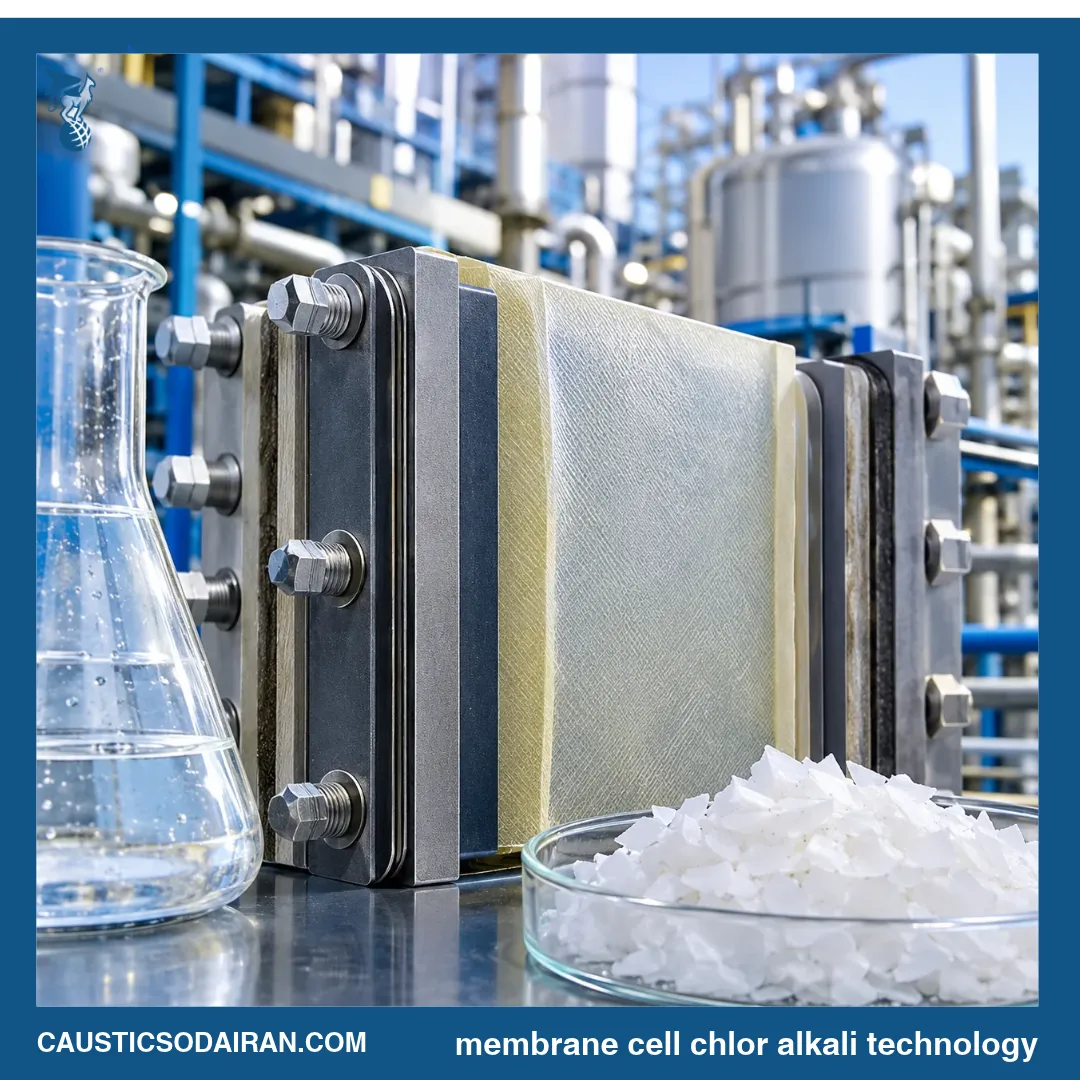
Membrane cell chlor alkali technology plays a critical role in modern caustic soda manufacturing. This electrochemical process uses selective ion-exchange membranes to separate the anode and cathode compartments while enabling sodium ions to pass through the membrane. As a result, manufacturers can produce high-purity sodium hydroxide with relatively high energy efficiency and reduced environmental impact compared with older electrolysis technologies.
However, membrane performance gradually changes during industrial operation. Chemical exposure, mechanical stress, contamination, and operating conditions can affect membrane selectivity, electrical resistance, and structural integrity. These changes may increase electricity consumption, reduce current efficiency, and negatively influence the overall productivity of chlor-alkali plants.
Understanding membrane degradation mechanisms is therefore essential for maintaining stable electrolysis operations. Furthermore, systematic performance monitoring helps manufacturers identify early signs of deterioration, plan maintenance activities, and protect the efficiency of downstream caustic soda concentration and flakes production.
1. Structure and Operating Principles of Chlor-Alkali Membranes
Industrial chlor-alkali membranes are generally manufactured from perfluorinated ion-exchange polymers. Many commercial designs contain two functional layers with different chemical properties.
The sulfonic acid-based layer provides high ionic conductivity and is typically positioned toward the anode compartment. Meanwhile, the carboxylic acid-based layer provides greater selectivity and helps restrict the migration of hydroxide and chloride ions.
For a broader understanding of membrane-based electrolysis and its differences from conventional diaphragm systems, read our detailed guide on [Membrane vs. Diaphragm Technology in Caustic Soda Production].
The membrane performs several important functions:
- Allowing sodium ions to migrate from the anode compartment to the cathode compartment.
- Restricting chloride ion transport toward the cathode.
- Limiting hydroxide ion back-migration toward the anode.
- Maintaining separation between chlorine and hydrogen production environments.
- Supporting stable sodium hydroxide production under demanding operating conditions.
The overall electrolysis reaction can be represented as follows:
2NaCl + 2H₂O → 2NaOH + Cl₂ + H₂
Membrane integrity directly influences the efficiency of this reaction. Therefore, any structural or chemical deterioration can affect both product generation and energy consumption.
2. Major Membrane Degradation Mechanisms in Chlor-Alkali Electrolysis
Membrane degradation does not result from a single factor. Instead, several chemical, mechanical, and operational mechanisms can gradually reduce membrane performance.
2.1 Chemical Degradation and Polymer Structure Changes
Although perfluorinated membranes offer strong chemical resistance, prolonged exposure to aggressive operating environments can still affect their functional groups and structural properties.
High concentrations of sodium hydroxide, chlorine-containing species, and other reactive compounds may contribute to gradual changes in membrane performance.
Chemical degradation can influence:
- Ion-exchange capacity.
- Sodium ion transport.
- Membrane selectivity.
- Electrical resistance.
- Mechanical strength.
The severity of these effects depends on membrane composition, operating temperature, chemical exposure, and the specific design of the electrolyzer.
2.2 Impurity Accumulation and Membrane Fouling
One of the most important causes of membrane performance deterioration is contamination in the incoming brine.
Calcium, magnesium, iron, aluminum, and other metallic impurities can accumulate within the membrane structure or form deposits near its surfaces.
For example, calcium and magnesium can form poorly soluble compounds under specific operating conditions. These deposits may obstruct ionic transport pathways and increase electrical resistance.
Consequently, contaminated brine can cause:
- Higher cell voltage.
- Lower current efficiency.
- Uneven current distribution.
- Reduced membrane service life.
- Increased electricity consumption.
Effective brine purification is therefore essential for protecting membrane cell chlor alkali technology against premature performance losses. The European Commission’s [Best Available Techniques Reference Document for the Production of Chlor-Alkali] provides further technical guidance on membrane performance, brine purification, and energy efficiency in industrial chlor-alkali plants.
2.3 Mechanical Stress and Membrane Deformation
Membranes are exposed to mechanical forces during installation, operation, and maintenance.
Pressure differences between the anode and cathode compartments, uneven gasket compression, improper installation, and dimensional changes caused by hydration can contribute to mechanical deterioration.
Over time, these stresses may lead to localized deformation, surface damage, or the development of weak points.
In severe cases, physical defects can allow unwanted electrolyte crossover between compartments. Such conditions may compromise product purity and create additional operational risks.
2.4 Thermal Stress and Temperature Fluctuations
Temperature is another important factor affecting membrane durability.
Chlor-alkali membranes operate under elevated temperatures, and sudden temperature fluctuations can produce dimensional changes in polymer materials.
Repeated thermal cycling may increase mechanical stress, particularly when heating and cooling rates are not properly controlled.
Moreover, operating outside the membrane manufacturer’s recommended temperature range can accelerate performance deterioration.
Maintaining stable thermal conditions is therefore an important part of long-term membrane management.
2.5 Changes in Ion Selectivity and Transport Properties
Membrane selectivity is essential for separating the desired electrochemical reactions.
As membrane properties deteriorate, hydroxide ions may migrate more easily toward the anode compartment. This phenomenon reduces caustic current efficiency and can contribute to the formation of secondary chlorine-containing compounds.
At the same time, changes in ionic conductivity may increase the electrical resistance of the membrane.
These effects can reduce sodium hydroxide production efficiency even when the electrolyzer continues operating at its normal current level.
3. Key Indicators for Monitoring Membrane Performance
Continuous performance monitoring allows operators to identify abnormal operating trends before serious membrane damage occurs.
Rather than relying on a single measurement, manufacturers should evaluate several operating indicators together.
3.1 Cell Voltage Trends
Cell voltage is one of the most important indicators of membrane condition.
An increase in voltage at comparable operating conditions may indicate higher membrane resistance, contamination, electrode deterioration, or changes in electrolyte properties.
However, voltage changes should not automatically be attributed to membrane degradation. Temperature, current density, brine concentration, and electrode condition must also be considered.
Tracking voltage trends over time provides a more reliable basis for identifying abnormal behavior.
3.2 Current Efficiency
Current efficiency measures the proportion of electrical current effectively used to produce the desired chemical product.
In membrane chlor-alkali electrolysis, caustic current efficiency is particularly important because it indicates how effectively electrical energy is converted into sodium hydroxide.
A gradual decline may indicate increased hydroxide back-migration, membrane contamination, or changes in operating conditions.
Monitoring this parameter helps manufacturers evaluate actual production performance rather than relying exclusively on theoretical output calculations.
3.3 Electrical Energy Consumption
Specific electrical energy consumption provides another important indication of electrolyzer performance.
When membrane resistance increases, more electrical energy may be required to maintain the same production rate.
Operators should therefore compare electricity consumption against sodium hydroxide output while accounting for changes in current density, product concentration, and operating conditions.
A sustained increase in specific energy consumption may justify a more detailed inspection of membrane condition.
3.4 Electrolyte Composition and Product Quality
Changes in anolyte and catholyte composition can provide additional information about membrane performance.
Important parameters include:
- Sodium hydroxide concentration.
- Sodium chloride concentration in the catholyte.
- Anolyte pH.
- Chlorate concentration.
- Calcium and magnesium concentrations in purified brine.
For example, increased sodium chloride contamination in the catholyte may indicate reduced separation efficiency or problems elsewhere in the process.
These measurements should be evaluated together to distinguish membrane-related problems from variations in feed composition or operating conditions.
3.5 Hydrogen and Chlorine Gas Quality
The composition of gases produced in the electrolyzer can also help identify abnormal operating conditions.
Unexpected changes in hydrogen or chlorine purity may indicate unwanted crossover, process imbalance, or membrane integrity problems.
Because chlorine and hydrogen mixtures present serious safety hazards, gas composition monitoring must be integrated into the plant’s established safety and process-control systems.
4. Advanced Techniques for Membrane Performance Monitoring
Traditional operating measurements provide valuable information. However, advanced monitoring techniques can improve the detection of gradual performance deterioration.
4.1 Historical Data Analysis
Recording cell voltage, current, temperature, and electrolyte composition over extended periods helps establish normal operating patterns.
By comparing current measurements with historical data, operators can identify gradual deviations that may otherwise remain unnoticed.
For example, a consistent increase in voltage at similar current density and temperature may indicate developing resistance within the electrolysis system.
4.2 Online Brine Impurity Monitoring
Online analysis of calcium and magnesium concentrations helps detect contamination before it significantly affects membrane performance.
Combining laboratory measurements with continuous or frequent online monitoring can improve the reliability of brine purification systems.
This approach is particularly valuable because even small concentrations of certain impurities can negatively affect membrane-based electrolysis.
4.3 Statistical Process Monitoring
Statistical process control techniques can be used to identify unusual variations in operating parameters.
Control charts, trend analysis, and multivariable monitoring allow operators to distinguish normal process fluctuations from persistent performance deterioration.
Furthermore, combining several operating variables can provide a more accurate assessment than evaluating cell voltage or current efficiency independently.
4.4 Predictive Maintenance and Data-Based Models
Predictive maintenance uses historical operating data to estimate future equipment performance and identify potential maintenance requirements.
Machine learning models can analyze relationships between current density, temperature, brine concentration, cell voltage, and current efficiency.
These models may help estimate performance losses and identify operating conditions associated with accelerated deterioration.
Nevertheless, predictive models should be validated against actual plant measurements and established engineering knowledge before being used for maintenance decisions.
5. How Membrane Degradation Affects Caustic Soda Flakes Production
Membrane performance has a direct influence on the efficiency of sodium hydroxide generation.
However, membrane electrolysis and caustic soda flakes production are separate stages of the manufacturing process.
The electrolyzer initially produces sodium hydroxide solution. This solution is subsequently concentrated through evaporation and processed through additional thermal operations to manufacture solid caustic soda flakes.
Membrane deterioration can influence this downstream process in several ways.
5.1 Reduced Sodium Hydroxide Production Efficiency
Lower caustic current efficiency means that a smaller proportion of the electrical current contributes to sodium hydroxide production.
Consequently, the plant may require more electrical energy to achieve the same production target.
5.2 Increased Manufacturing Costs
Higher cell voltage and reduced current efficiency can increase electricity consumption per unit of sodium hydroxide produced.
Since electricity is a major operating expense in chlor-alkali manufacturing, even relatively small performance losses can have significant economic consequences.
5.3 Greater Pressure on Downstream Concentration Equipment
Changes in sodium hydroxide production rates and solution characteristics can affect the operating balance of downstream evaporation systems.
For example, reduced electrolyzer output may require adjustments to evaporation capacity and production scheduling.
Therefore, maintaining stable membrane performance supports better coordination between electrolysis and caustic soda flakes production.
5.4 Potential Variations in Product Quality
Membrane-related performance problems may influence the composition of the produced caustic liquor.
Depending on the nature of the contamination and separation problem, additional purification or process adjustments may become necessary before the solution enters the concentration stage.
Stable membrane operation therefore contributes to consistent raw material quality for downstream caustic soda flakes manufacturing.
6. Strategies for Extending Membrane Service Life
Preventing premature membrane degradation requires coordinated control of feed quality, operating conditions, and maintenance practices.
The following strategies can help improve long-term performance.
6.1 Maintain High Brine Purity
Brine purification should effectively remove hardness ions and other contaminants before the solution enters the electrolyzer.
Regular monitoring of calcium, magnesium, iron, and suspended solids is particularly important.
Secondary brine purification should also be maintained according to the requirements of the membrane technology in use.
6.2 Control Operating Temperature and Current Density
Temperature and current density influence membrane transport properties and overall cell performance.
Operators should maintain these parameters within the manufacturer’s specified operating range.
Sudden changes in operating conditions should be avoided whenever possible.
6.3 Prevent Pressure Imbalances
Maintaining appropriate pressure balance between the anode and cathode compartments helps reduce unnecessary mechanical stress.
Pressure monitoring and appropriate control systems can also help prevent operating conditions that increase the risk of membrane damage.
6.4 Follow Proper Start-Up and Shutdown Procedures
Start-up and shutdown operations require particular attention because changes in temperature, electrolyte concentration, and pressure can affect membrane integrity.
Gradual adjustment of operating conditions helps reduce thermal and mechanical stress.
Furthermore, maintenance procedures should follow the membrane manufacturer’s technical recommendations.
6.5 Establish Performance-Based Replacement Criteria
Membrane replacement should not depend exclusively on operating age.
Instead, manufacturers should evaluate several indicators, including voltage trends, current efficiency, electrolyte contamination, product quality, and membrane inspection results.
This approach allows maintenance teams to make more informed decisions about membrane replacement and reduces the risk of unnecessary production interruptions.
7. Economic Importance of Membrane Performance Management
Membrane condition has a significant influence on the operating economics of chlor-alkali plants.
Higher electrical resistance increases power requirements, while reduced current efficiency decreases the amount of sodium hydroxide produced from a given electrical input.
In addition, premature membrane replacement introduces maintenance expenses, production downtime, and additional operational challenges.
A structured monitoring program can help manufacturers reduce these costs through earlier identification of abnormal conditions.
From an economic perspective, the most effective maintenance strategy is not necessarily replacing membranes at the earliest sign of deterioration. Instead, it involves balancing energy consumption, production efficiency, maintenance costs, and operational reliability.
Conclusion
Membrane degradation is an important factor affecting the efficiency and reliability of modern chlor-alkali electrolysis.
Chemical exposure, impurity accumulation, mechanical stress, thermal fluctuations, and changes in ion selectivity can gradually reduce membrane performance.
Therefore, monitoring cell voltage, current efficiency, specific energy consumption, electrolyte composition, and gas quality is essential for identifying early signs of deterioration.
For manufacturers producing Caustic Soda Flakes, effective membrane management supports stable sodium hydroxide generation, improved energy efficiency, and better coordination with downstream concentration operations.
Ultimately, combining high-purity brine, controlled operating conditions, historical performance analysis, and predictive maintenance can help extend membrane service life and improve the long-term economics of caustic soda manufacturing.
Contact Us for Caustic Soda Flakes Supply
Looking for a reliable supplier of high-quality Caustic Soda Flakes? Our team is ready to assist you with product specifications, technical information, and export inquiries.
As a caustic soda manufacturer and exporter, we are committed to providing consistent product quality and dependable supply solutions for industrial customers.
Contact us today to request a price quotation, product specifications, or Certificate of Analysis (COA).
Leave a Reply