
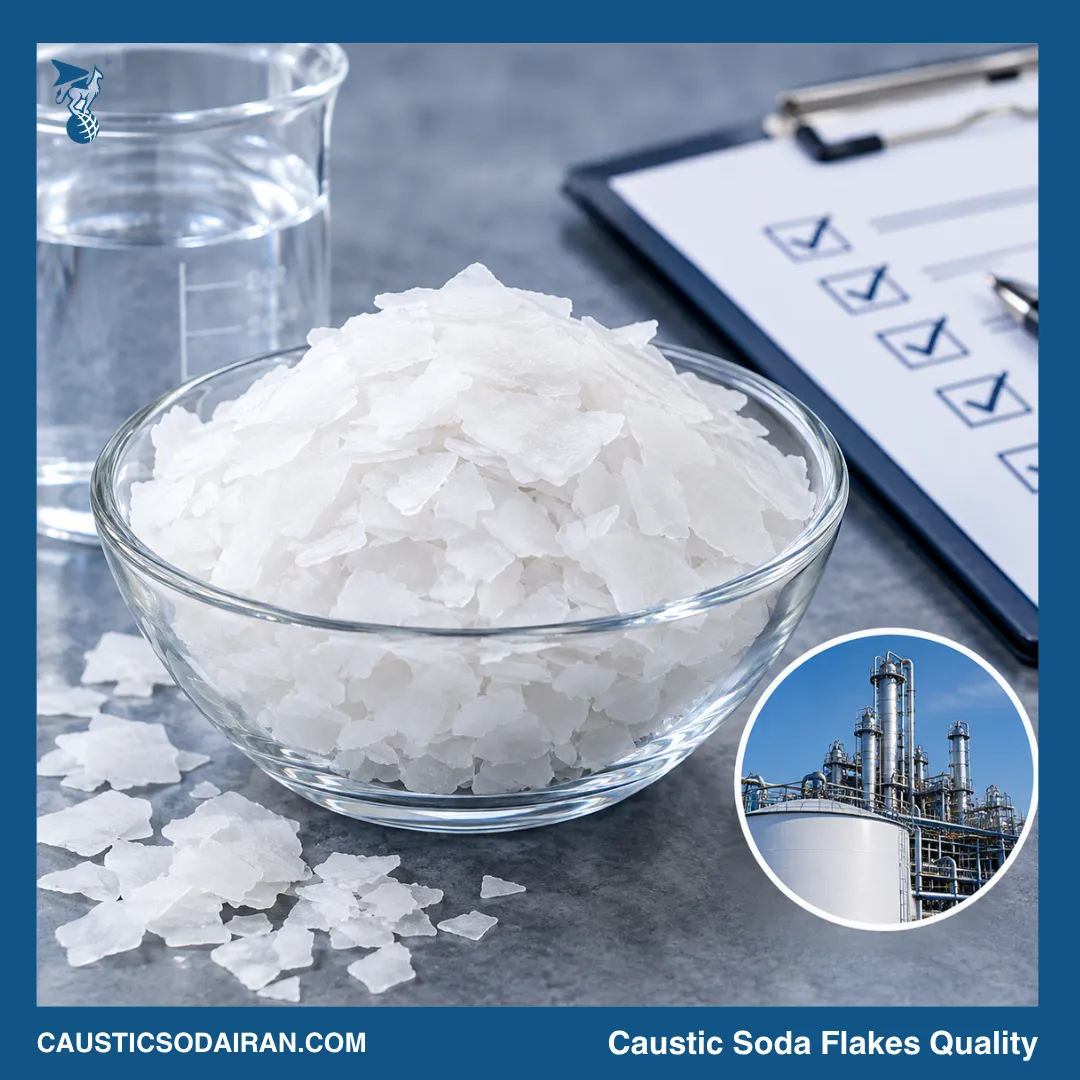
Caustic soda flakes are a widely used form of sodium hydroxide (NaOH) supplied as a white, solid, highly alkaline material. Industries use them in chemical processing, pulp and paper production, textiles, alumina processing, water treatment, detergents, and petroleum refining. Because small differences in purity can affect process performance, buyers need clear caustic soda flakes quality specifications before purchasing or importing the product.
Quality assessment does not depend only on the percentage of NaOH. A complete specification normally considers sodium hydroxide concentration, sodium carbonate, sodium chloride, iron, sulfates, insoluble matter, trace metals, physical appearance, and the analytical methods used to verify each parameter. ASTM E291, for example, provides analytical methods for commercial caustic soda, including solid flakes, while EN 896 establishes specific requirements for sodium hydroxide used in drinking-water treatment.
What Determines Caustic Soda Flakes Quality?
The quality of caustic soda flakes depends on both the chemical composition and the physical condition of the product. A high-quality industrial product should meet the agreed specification for its intended application and remain stable during storage and transportation.
The main quality indicators include:
- NaOH purity or total alkalinity
- Sodium carbonate content
- Sodium chloride content
- Iron and other trace metals
- Sulfate and chlorate levels where applicable
- Water-insoluble matter
- Appearance and physical condition
- Moisture exposure and caking
- Compliance with the buyer’s required testing standard
These parameters should appear clearly in the technical data sheet or Certificate of Analysis (COA).
NaOH Purity in Caustic Soda Flakes
NaOH purity is usually the first specification buyers examine. It represents the concentration of sodium hydroxide in the product and directly affects the amount of active alkali delivered to an industrial process.
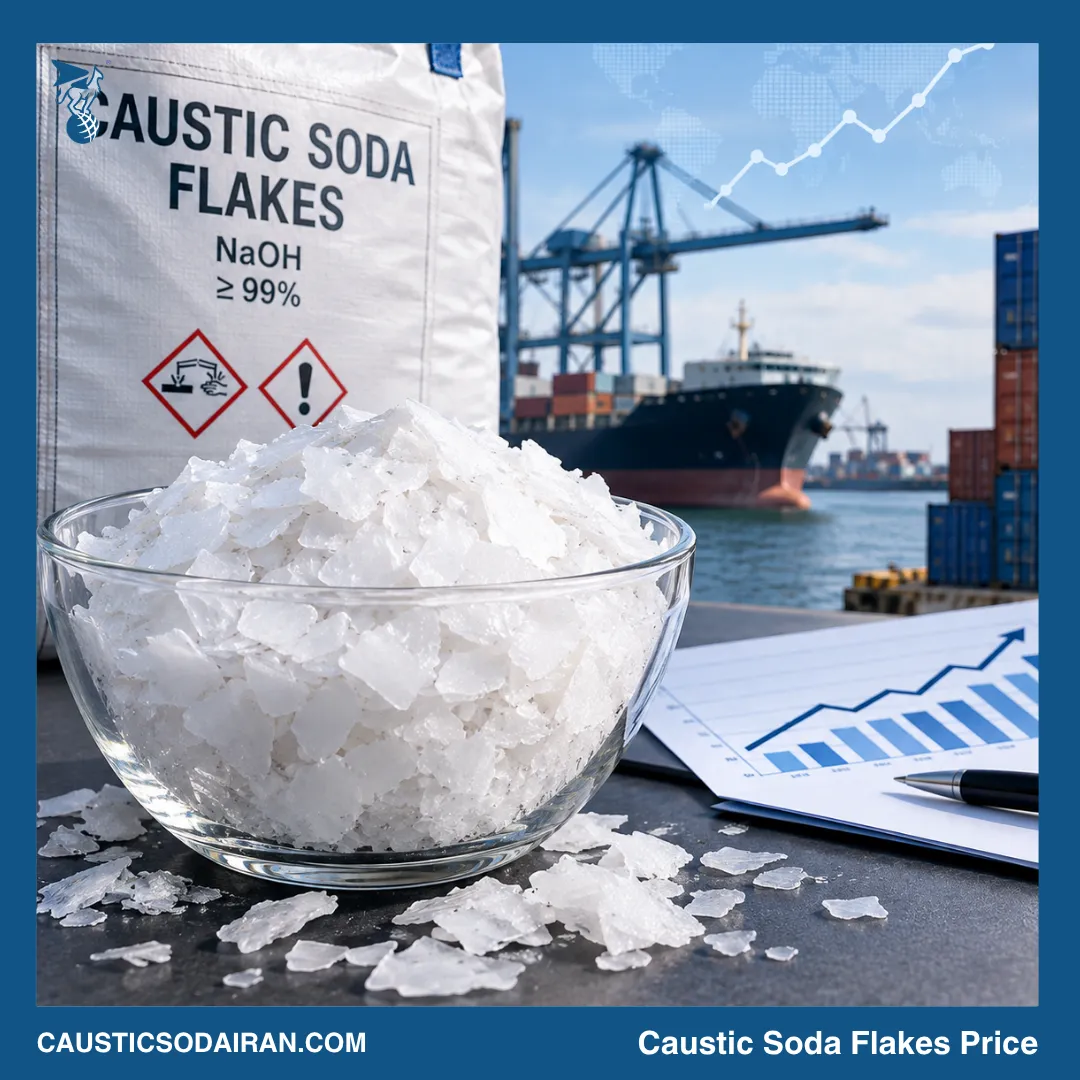
Commercial caustic soda flakes are available in different purity grades. Many industrial products are marketed around the 98% to 99% NaOH range, but the exact specification depends on the producer, production technology, grade, and application.
For example, EN 896 specifies a minimum NaOH mass fraction of 96% for solid sodium hydroxide intended for drinking-water treatment. This value should not be interpreted as a universal requirement for every commercial caustic soda flake product. Different industrial, food, pharmaceutical, or analytical applications can require different specifications.
Therefore, buyers should always compare the stated NaOH purity with the specification required by their process rather than selecting a product based only on a general purity percentage.
Key Impurities in Caustic Soda Flakes
Even when a product has a high NaOH concentration, impurities can influence its suitability for a specific application. The most important impurities commonly evaluated include sodium carbonate, sodium chloride, iron, sulfate compounds, and trace metals.
Sodium Carbonate (Na₂CO₃)
Sodium carbonate is one of the most important impurities in solid sodium hydroxide. It can form when NaOH reacts with carbon dioxide from the surrounding atmosphere.
Higher carbonate levels reduce the effective concentration of caustic alkali and may affect processes that require tightly controlled alkalinity.
For drinking-water-treatment sodium hydroxide, EN 896 specifies a maximum sodium carbonate level of 0.4% on the relevant basis. Other commercial grades can use different limits depending on their intended application.
Sodium Chloride (NaCl)
Chloride can remain in caustic soda as a residue of the chlor-alkali manufacturing process. Its concentration becomes particularly important in applications where chloride can contribute to corrosion or interfere with downstream processing.
For this reason, buyers should not evaluate NaOH purity separately from chloride content. Two products with similar NaOH percentages may have significantly different impurity profiles.
Iron (Fe)
Iron is another important quality parameter, particularly for applications that require a low-metal chemical feedstock.
Elevated iron levels can introduce unwanted coloration or contamination into sensitive processes. Specifications therefore often establish a maximum iron concentration, typically expressed in mg/kg or ppm.
ASTM E291 includes a photometric procedure for determining iron in caustic soda and caustic potash.
Sulfates and Other Inorganic Impurities
Depending on the production process and raw materials, sulfate and other inorganic residues may also appear in caustic soda flakes.
The required limit depends on the end use. A standard industrial-grade specification may tolerate levels that would not be acceptable in a high-purity application.
This is why a reliable purchasing specification should identify each critical impurity instead of simply stating “high purity.”
Typical Caustic Soda Flakes Specification Parameters
There is no single impurity limit that applies to every caustic soda flake product. However, a typical technical specification may include the following parameters:
| Parameter | Typical Specification Category | Why It Matters |
|---|---|---|
| NaOH purity | Minimum % | Determines active caustic content |
| Na₂CO₃ | Maximum % | Controls carbonate contamination |
| NaCl | Maximum % or ppm | Important for corrosion and process control |
| Fe | Maximum ppm | Controls metal contamination |
| Na₂SO₄ | Maximum % | Limits sulfate contamination |
| Water-insoluble matter | Maximum % | Controls solid contaminants |
| Trace metals | Maximum ppm | Important for sensitive applications |
| Appearance | White flakes | Indicates physical product quality |
These values are examples of parameters that buyers commonly request, not universal limits. Actual acceptance criteria should come from the applicable product standard, end-use regulation, customer specification, or purchase contract.
Why Testing Standards Matter
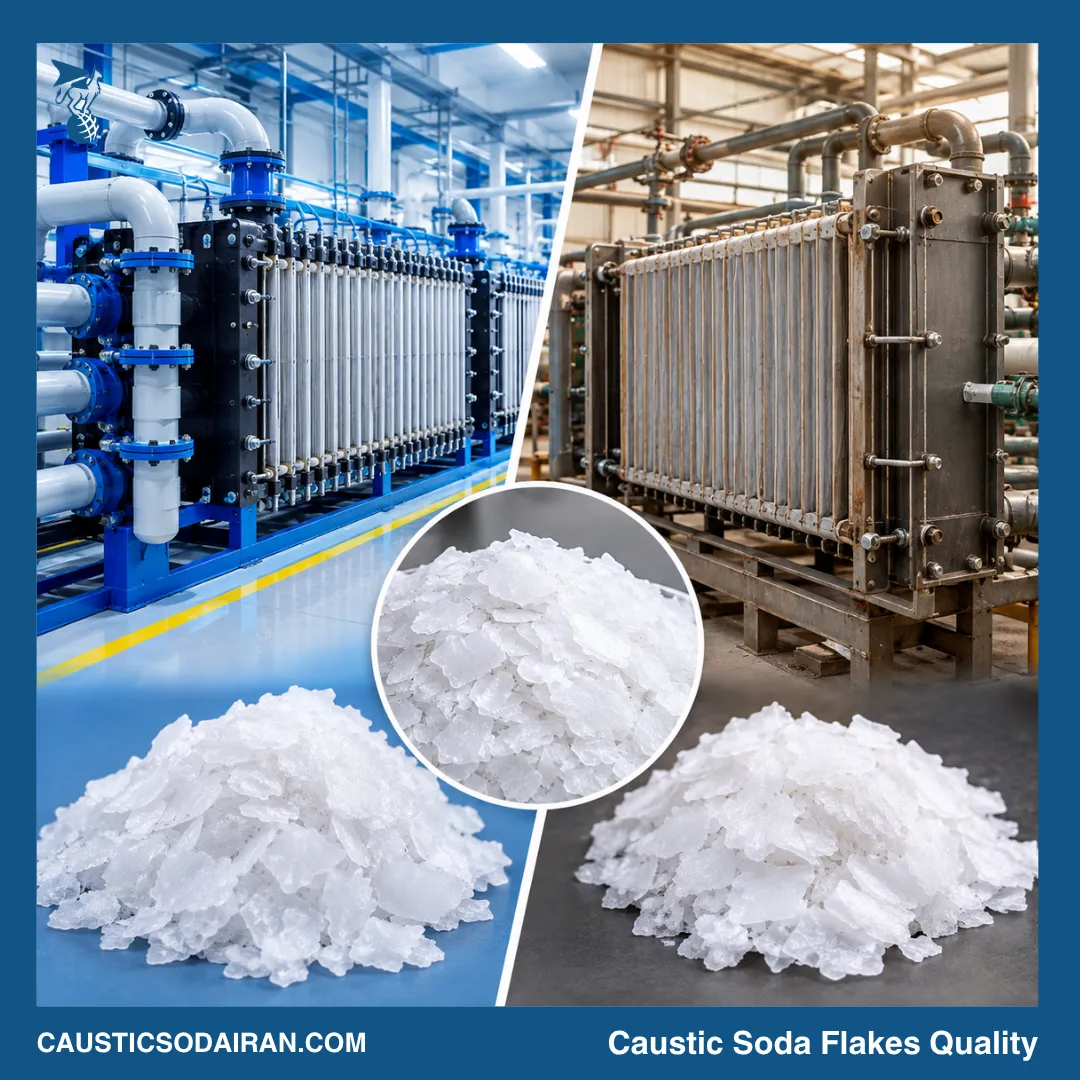
A specification is only useful when the buyer and seller use consistent analytical methods. The production method can also influence the impurity profile of caustic soda flakes, particularly sodium chloride levels; membrane and diaphragm technologies can therefore result in different quality characteristics.
ASTM E291 is specifically designed for the chemical analysis of commercial caustic soda and caustic potash. Its scope includes anhydrous sodium hydroxide in solid, flake, ground, and powdered forms. The standard includes methods for total alkalinity, carbonate, chloride, iron, and sulfate.
Using an established analytical method helps laboratories produce comparable results and reduces disputes between suppliers and buyers.
For international procurement, the purchase contract should therefore identify:
- The required product grade
- Minimum NaOH purity
- Maximum impurity levels
- Applicable test methods
- Sampling procedure
- COA requirements
- Batch identification
- Acceptance criteria
- Packaging requirements
Certificate of Analysis (COA) for Caustic Soda Flakes
A Certificate of Analysis provides documented evidence of the chemical composition of a specific production batch.
A useful COA should normally identify the product, batch number, production or analysis date, test parameters, specification limits, and actual laboratory results.
For example, a buyer may request a COA containing:
Product: Caustic Soda Flakes
Chemical: Sodium Hydroxide (NaOH)
Appearance: White flakes
NaOH: Minimum specified percentage
Sodium Carbonate: Maximum specified percentage
Sodium Chloride: Maximum specified concentration
Iron: Maximum specified concentration
Sulfate: Maximum specified concentration
Insoluble Matter: Maximum specified percentage
Test Method: Applicable ASTM, ISO, EN, or national standard
The COA should correspond to the actual shipment or production batch rather than relying only on a generic product specification sheet.
Sampling and Laboratory Testing
Correct sampling is essential because sodium hydroxide readily absorbs moisture and carbon dioxide from the atmosphere. EN 896 specifically highlights the need to limit atmospheric exposure during sampling and sample preparation.
A representative sample should therefore be collected using an appropriate procedure and handled in a way that minimizes changes before laboratory analysis.
Common analytical checks include:
- NaOH assay: Determines active sodium hydroxide content.
- Carbonate analysis: Measures sodium carbonate contamination.
- Chloride analysis: Determines chloride concentration.
- Iron analysis: Measures iron contamination.
- Sulfate analysis: Determines sulfate residues when required.
- Insoluble matter testing: Identifies non-dissolving solid contaminants.
- Trace-metal analysis: Used for applications with strict purity requirements.
ASTM E291 provides several of these analytical procedures for commercial caustic soda.
Caustic Soda Flakes Quality for Different Industries
The required quality level depends strongly on the application.
Chemical Manufacturing
Chemical manufacturers often focus on NaOH concentration and impurity control because contaminants can affect reaction efficiency, product color, catalyst performance, or downstream purification.
Pulp and Paper
Pulp and paper operations consume significant quantities of sodium hydroxide. Consistent concentration and controlled impurities help maintain predictable process conditions.
Textile Processing
Textile processes can require consistent alkalinity for operations such as mercerization and chemical treatment. Stable NaOH quality supports repeatable process performance.
Alumina Processing
The Bayer process uses caustic soda to digest bauxite and produce alumina. In this application, the chemical composition of the caustic solution can influence process control and material balance.
Water Treatment
Water-treatment applications can have specific regulatory requirements. EN 896 addresses sodium hydroxide used for treatment of water intended for human consumption and specifies minimum purity and impurity limits, including limits for several trace metals.
Food and Pharmaceutical Applications
Food and pharmaceutical applications generally require tighter control of contaminants and compliance with the relevant regulatory or compendial requirements. The USP/FCC description recognizes sodium hydroxide in forms including flakes and notes its strong tendency to absorb moisture and carbon dioxide from air.
The correct grade should therefore be selected according to the applicable regulatory requirements rather than by NaOH percentage alone.
How to Compare Two Caustic Soda Flakes Suppliers
When comparing suppliers, buyers should evaluate the complete specification rather than focusing on price or NaOH purity alone.
A practical comparison should include:
- NaOH purity
- Sodium carbonate limit
- Chloride limit
- Iron limit
- Sulfate limit
- Insoluble matter
- Trace-metal limits
- Test methods
- COA availability
- Packaging condition
- Batch consistency
- Production origin
- Export documentation
For example, a 99% NaOH product is not automatically the right choice if its chloride, iron, carbonate, or other impurity levels exceed the requirements of the buyer’s process.
Storage and Handling Considerations
Caustic soda flakes are hygroscopic and can absorb moisture from the atmosphere. They can also react with carbon dioxide, which contributes to carbonate formation.
Proper packaging and storage therefore play an important role in preserving caustic soda flakes quality.
Recommended practices include:
- Keep bags tightly sealed.
- Store the product in a dry and well-ventilated warehouse.
- Protect packaging from rain and direct moisture.
- Minimize prolonged exposure to humid air.
- Keep damaged bags separated and inspected.
- Follow the supplier’s SDS for handling and emergency procedures.
- Use appropriate corrosion-resistant handling equipment.
Because sodium hydroxide is strongly alkaline, workers should also follow the required personal protective equipment and chemical-handling procedures.
What Buyers Should Request Before Purchase
Before placing a bulk or containerized order, buyers should request a current technical data sheet and a representative COA.
At minimum, the documentation should clearly state:
Product grade → NaOH purity → impurity limits → test methods → packaging → batch information → storage requirements.
For regulated applications, buyers should also verify whether the product complies with the relevant national or international standard.
Final Checklist for Caustic Soda Flakes Quality
Before accepting a shipment, buyers can use the following checklist:
- Confirm the required NaOH purity.
- Check sodium carbonate against the agreed limit.
- Verify chloride concentration.
- Check iron and other relevant metals.
- Review sulfate and other specified impurities.
- Confirm the appearance and physical condition of the flakes.
- Compare the COA results with the purchase specification.
- Confirm that the stated analytical methods are appropriate.
- Inspect packaging for moisture damage.
- Keep batch and shipment records for traceability.
Conclusion
Caustic soda flakes quality depends on much more than NaOH percentage. Sodium carbonate, chloride, iron, sulfate, insoluble matter, trace metals, physical condition, analytical methods, and batch consistency can all influence whether a product is suitable for a particular industrial application.
Standards such as ASTM E291 provide established analytical methods for commercial sodium hydroxide, while standards such as EN 896 define specific purity and impurity requirements for particular applications such as drinking-water treatment.
For international buyers, the safest approach is to establish a detailed technical specification before purchase and verify every shipment against a batch-specific Certificate of Analysis. This approach makes supplier comparisons more transparent and helps ensure that the selected caustic soda flakes meet the technical requirements of the intended process.
Looking for a reliable source of high-quality caustic soda flakes? We are a professional caustic soda supplier and exporter, providing consistent-quality sodium hydroxide flakes with technical specifications and batch documentation for international industrial buyers. Contact us to discuss your required grade, purity, packaging, and export volume.


Leave a Reply