
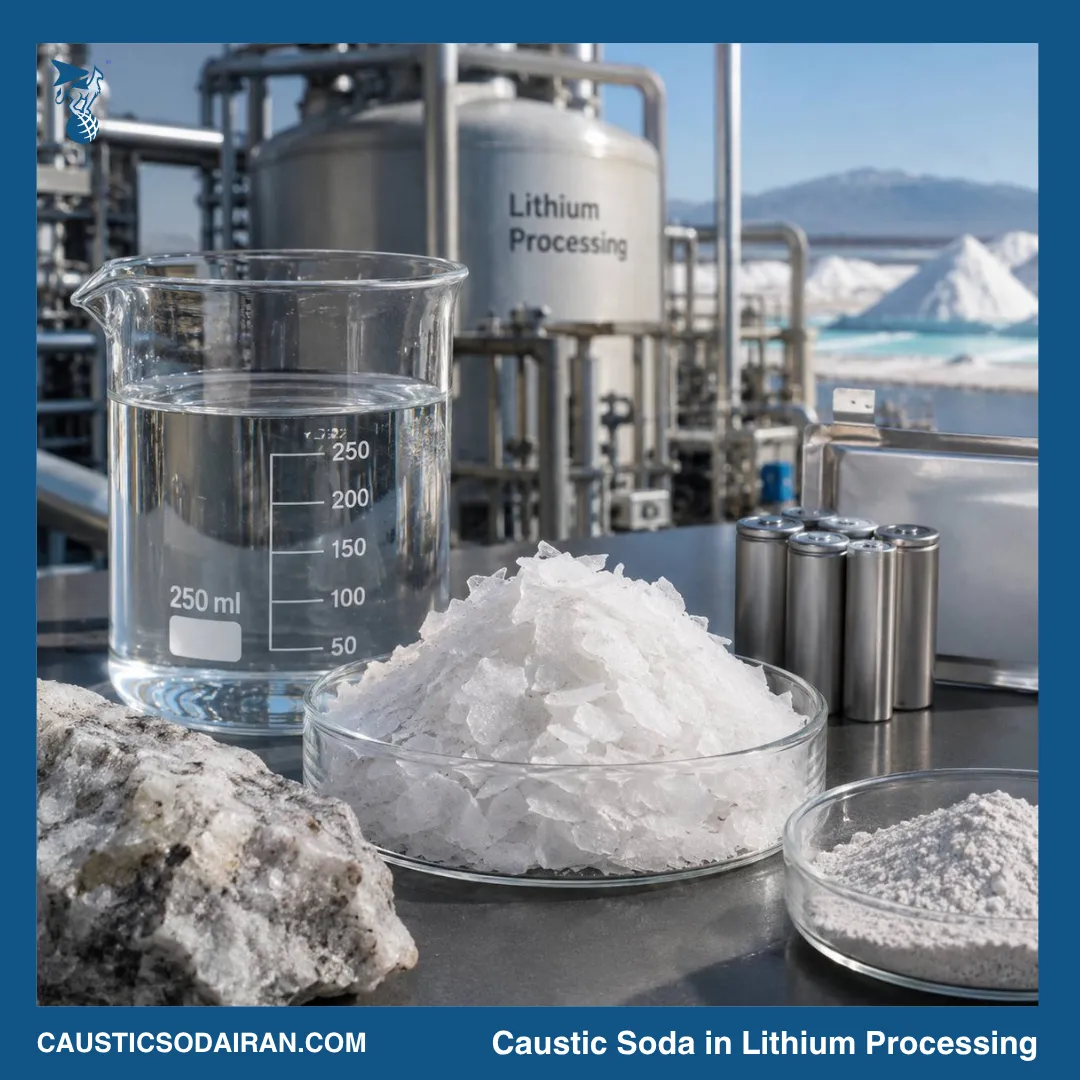
Caustic soda in lithium processing plays an important role in mineral extraction, brine treatment, impurity removal, and battery material production. Also known as sodium hydroxide (NaOH), this industrial chemical supports several hydrometallurgical processes used to recover and refine lithium. As demand for lithium-ion batteries grows, efficient chemical treatment has become increasingly important for lithium producers.
1. What Is the Role of Caustic Soda in Lithium Processing?
Caustic soda is a strong alkaline chemical used in different stages of lithium recovery. Depending on the feed material and process design, manufacturers may use sodium hydroxide to adjust pH, remove selected impurities, regenerate extraction agents, or assist in the alkaline treatment of lithium-bearing minerals.
However, not every lithium production route requires the same chemicals. The appropriate reagent depends on the mineral composition, brine chemistry, recovery targets, and final product specifications.
2. Caustic Soda in Lithium Brine Treatment
Lithium-rich brines often contain magnesium, calcium, boron, and other dissolved components that complicate lithium recovery. Before producing battery-grade lithium compounds, operators must reduce these impurities to meet product quality requirements.
Caustic soda in lithium processing can support several treatment operations:
- pH adjustment: Sodium hydroxide helps control solution chemistry during pretreatment and purification.
- Magnesium removal: Under suitable conditions, sodium hydroxide reacts with dissolved magnesium to form magnesium hydroxide precipitates.
- Process optimization: Controlled reagent addition can improve downstream separation and reduce the burden on certain purification stages.
For example, magnesium hydroxide can form through the following reaction:
MgCl₂ + 2NaOH → Mg(OH)₂↓ + 2NaCl
This reaction illustrates how sodium hydroxide can remove magnesium from chloride-containing solutions. Nevertheless, operators must control reagent dosage and operating conditions to limit lithium losses and unwanted precipitation.
3. Sodium Hydroxide in Lithium Mineral Processing
Lithium can be extracted from hard-rock minerals such as spodumene and petalite. Conventional spodumene processing often involves thermal conversion followed by chemical leaching. However, alternative alkaline routes can use sodium hydroxide under specific conditions.
In caustic leaching, sodium hydroxide reacts with suitable lithium-bearing materials to help convert lithium into forms that can be recovered during subsequent processing.
Potential advantages include:
- Access to alternative mineral-processing routes.
- Improved extraction potential for selected mineral feeds.
- Opportunities to modify reaction conditions and downstream separation requirements.
- Potential process integration with lithium hydroxide production.
The results depend on mineralogy, temperature, pressure, reagent concentration, and the selected flowsheet. Therefore, caustic leaching is not a universal replacement for conventional sulfuric acid-based processing.
4. Applications in Battery Material Production
Battery manufacturers require high-purity lithium compounds to produce reliable lithium-ion batteries. Two important products are lithium carbonate (Li₂CO₃) and lithium hydroxide (LiOH).
Caustic soda in lithium processing supports certain refining and purification routes used to produce these materials. Sodium hydroxide can participate in impurity removal and, in selected processes, the conversion or recovery of lithium compounds. For further insights, explore our guide to caustic soda flakes in lithium-ion battery recycling and its role in hydrometallurgical metal recovery.
Lithium hydroxide is particularly important for several nickel-rich cathode chemistries used in electric vehicle batteries. However, sodium hydroxide is not the only chemical involved in its production. Other reagents, purification technologies, and crystallization steps may also be necessary.
For more information, explore this scientific study on battery-grade lithium hydroxide production, which examines purification and membrane electrodialysis processes.
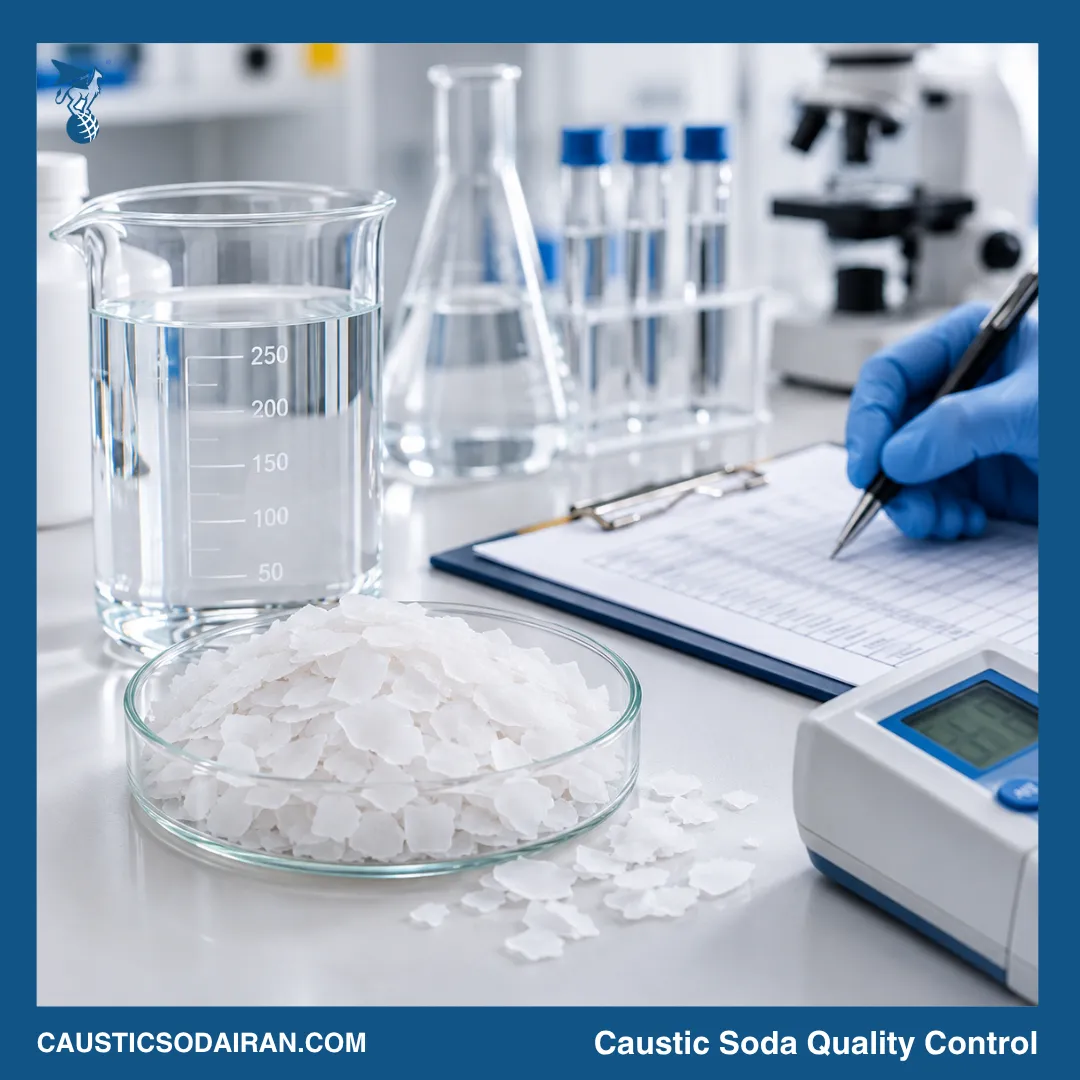
Maintaining consistent chemical quality throughout these stages helps producers meet strict battery-grade specifications.
5. Benefits of Using Caustic Soda in Lithium Processing
The industrial value of sodium hydroxide depends on how effectively it integrates into the overall production process. Its main potential benefits include:
Effective impurity control: Properly designed treatment stages can reduce selected dissolved contaminants and support product purification.
Flexible process applications: Sodium hydroxide can serve different functions in brine treatment, mineral processing, and chemical refining.
Potential cost optimization: Appropriate reagent selection and dosage control can reduce unnecessary chemical consumption and downstream treatment costs.
Support for battery supply chains: Reliable access to industrial chemicals helps lithium producers maintain stable operations as battery material demand increases.
These benefits depend on process-specific testing, chemical consumption, energy requirements, and waste management practices.
6. Handling and Storage Requirements
Sodium hydroxide is highly corrosive and requires appropriate industrial handling procedures. Lithium processing facilities should select compatible storage tanks, transfer equipment, pipelines, and protective systems.
Operators should also consider the following measures:
- Store caustic soda in suitable, corrosion-resistant equipment.
- Use appropriate personal protective equipment and emergency washing facilities.
- Control reagent concentration and dosing through validated operating procedures.
- Monitor process wastewater and manage chemical residues responsibly.
- Follow applicable safety regulations and supplier handling instructions.
Careful storage and handling protect personnel, equipment, and product quality.
Conclusion
Caustic soda in lithium processing supports important operations in brine purification, magnesium removal, selected mineral extraction methods, and lithium chemical refining. Its effectiveness depends on feed composition, process conditions, and the required purity of the final product.
For lithium producers, selecting the right sodium hydroxide grade and maintaining consistent supply can help support efficient operations and reliable battery material production.
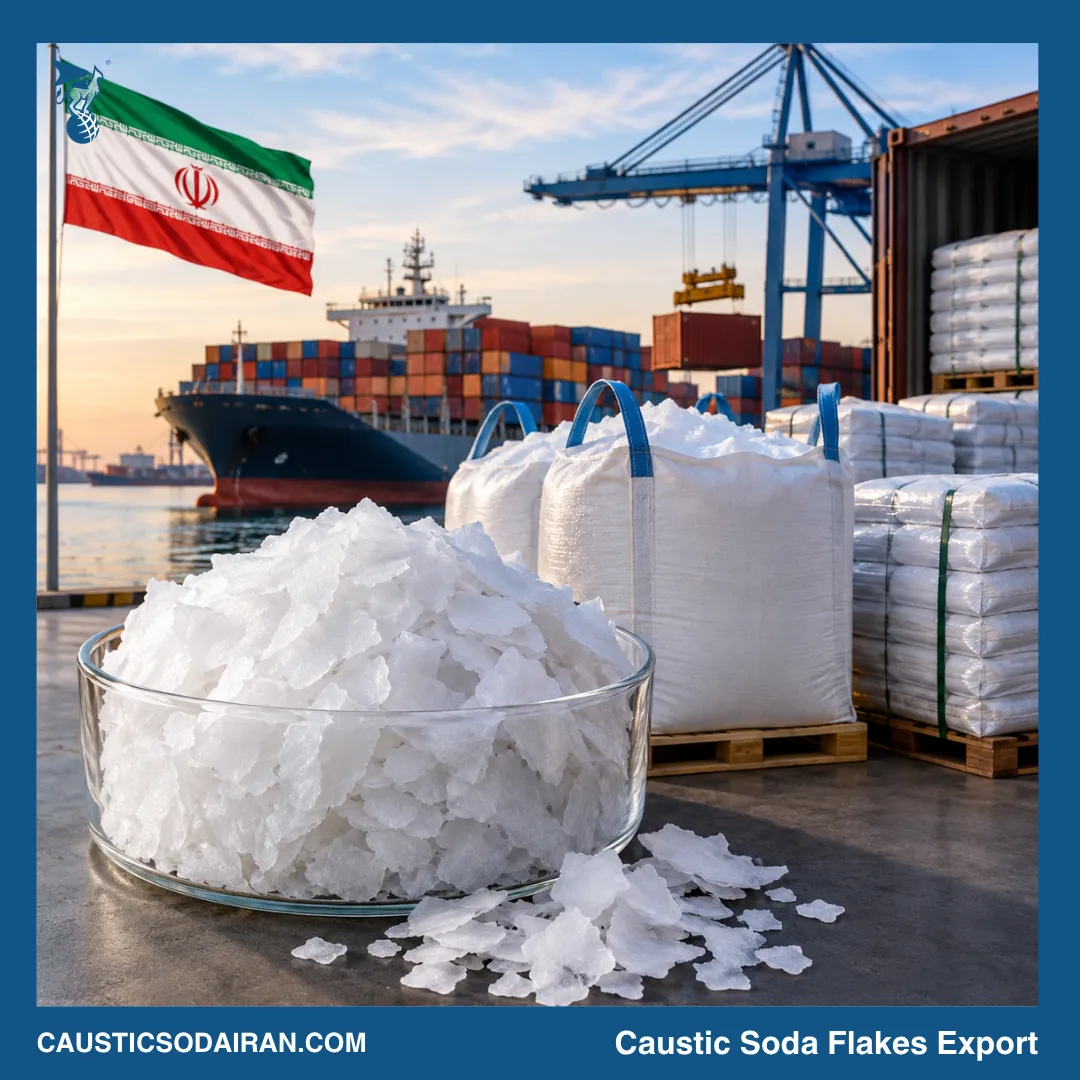
As an industrial chemical producer and exporter, Caustic Soda Iran can support industrial buyers seeking dependable caustic soda supply for suitable chemical processing applications. Contact our team to discuss product specifications, packaging, and export requirements.
Leave a Reply