
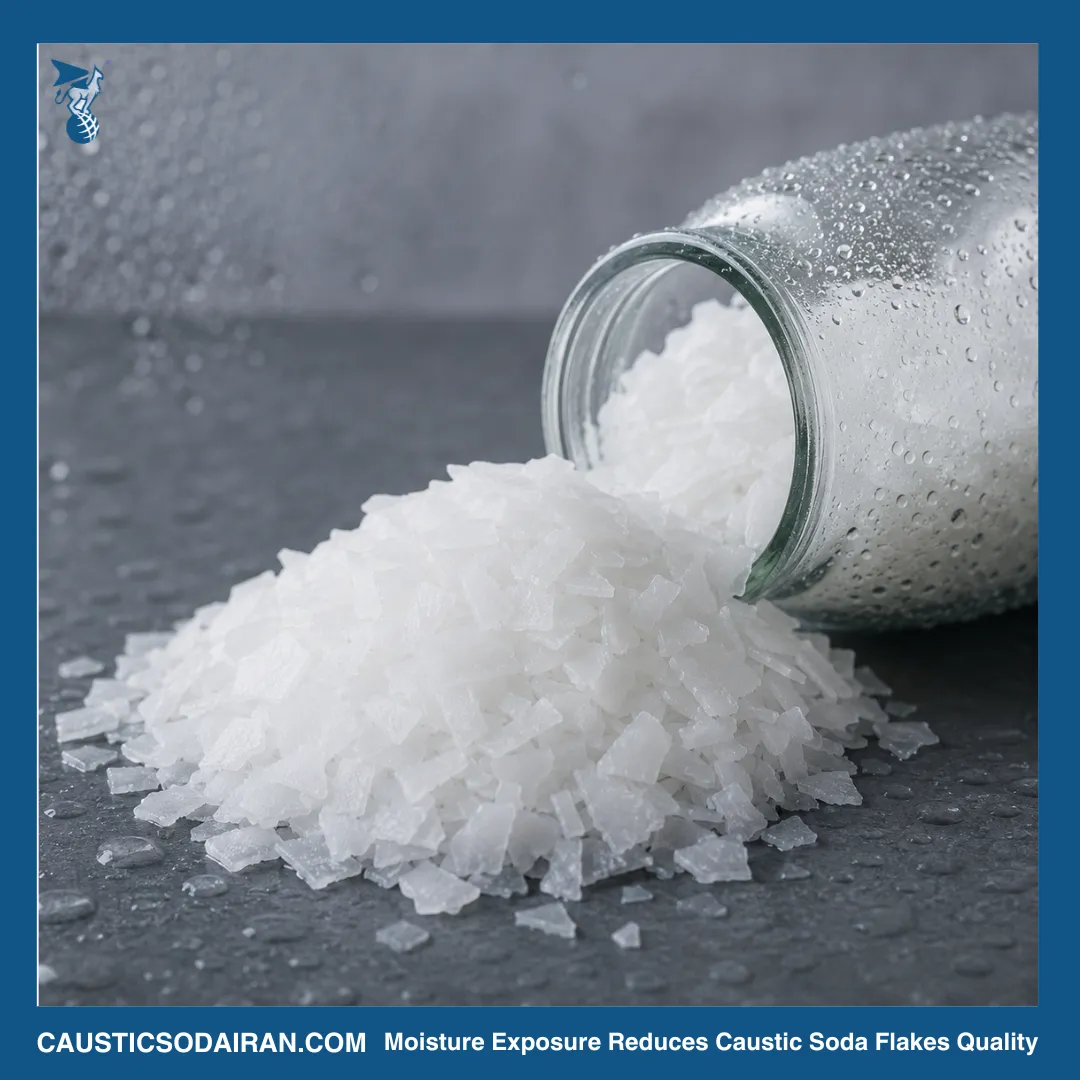
Caustic soda flakes are highly hygroscopic, meaning they readily absorb moisture from the surrounding air. This characteristic makes proper storage and handling essential for maintaining product quality. Moisture exposure reduces caustic soda flakes quality by changing their physical properties, lowering effective purity, and increasing the risk of contamination. For manufacturers, distributors, and industrial users, understanding these effects is key to protecting product performance and reducing unnecessary costs.
Why Caustic Soda Flakes Absorb Moisture
Sodium hydroxide (NaOH) naturally attracts water molecules from the atmosphere. Even in environments with moderate humidity, exposed flakes begin absorbing moisture within a relatively short period.
As moisture accumulates, the flakes gradually lose their dry, free-flowing structure and may start to:
- Form hard lumps
- Become sticky
- Dissolve partially on the surface
- Be more difficult to transport and handle
These changes can occur long before the chemical itself appears visibly damaged.
How Moisture Exposure Affects Product Quality
Reduced Effective Purity
Although sodium hydroxide itself remains chemically active, absorbed water decreases the concentration of NaOH per unit weight. Industrial processes that require precise dosing may therefore receive less active material than expected.
This can lead to:
- Inconsistent process performance
- Increased chemical consumption
- Higher operating costs
- Reduced production efficiency
Carbonate Formation
Moisture also allows caustic soda to react more easily with carbon dioxide in the air.
The reaction forms sodium carbonate according to the following equation:
2NaOH + CO₂ → Na₂CO₃ + H₂O
The presence of sodium carbonate is undesirable in many industrial applications because it may:
- Reduce reaction efficiency
- Affect product quality
- Create unwanted residues
- Interfere with sensitive manufacturing processes
Physical Changes During Moisture Exposure
As moisture continues to accumulate, several physical changes become noticeable.
These include:
- Loss of flake appearance
- Clumping and caking
- Reduced flowability
- Difficult weighing and dosing
- Packaging deformation caused by internal moisture
These issues are especially problematic in automated production systems where consistent material flow is essential.
Industries Most Affected
Poor-quality caustic soda can impact numerous industries, including:
Water Treatment
Incorrect dosing may reduce pH adjustment efficiency and increase chemical consumption.
Pulp and Paper
Variations in alkali concentration can affect pulping consistency and bleaching performance.
Textile Manufacturing
Moisture-contaminated caustic soda may influence mercerization quality and dye uptake.
Chemical Manufacturing
Many chemical reactions depend on accurate sodium hydroxide concentration for predictable yields.
Soap and Detergent Production
Impure or moisture-affected flakes can alter formulation consistency and production efficiency.
Common Causes of Moisture Exposure
Several handling mistakes increase the risk of quality degradation.
Common examples include:
- Damaged packaging
- Improper warehouse ventilation
- High ambient humidity
- Long-term storage after opening
- Containers left uncovered during production
- Transportation without adequate moisture protection
Even brief exposure in humid environments can begin affecting product quality.
Best Storage Practices
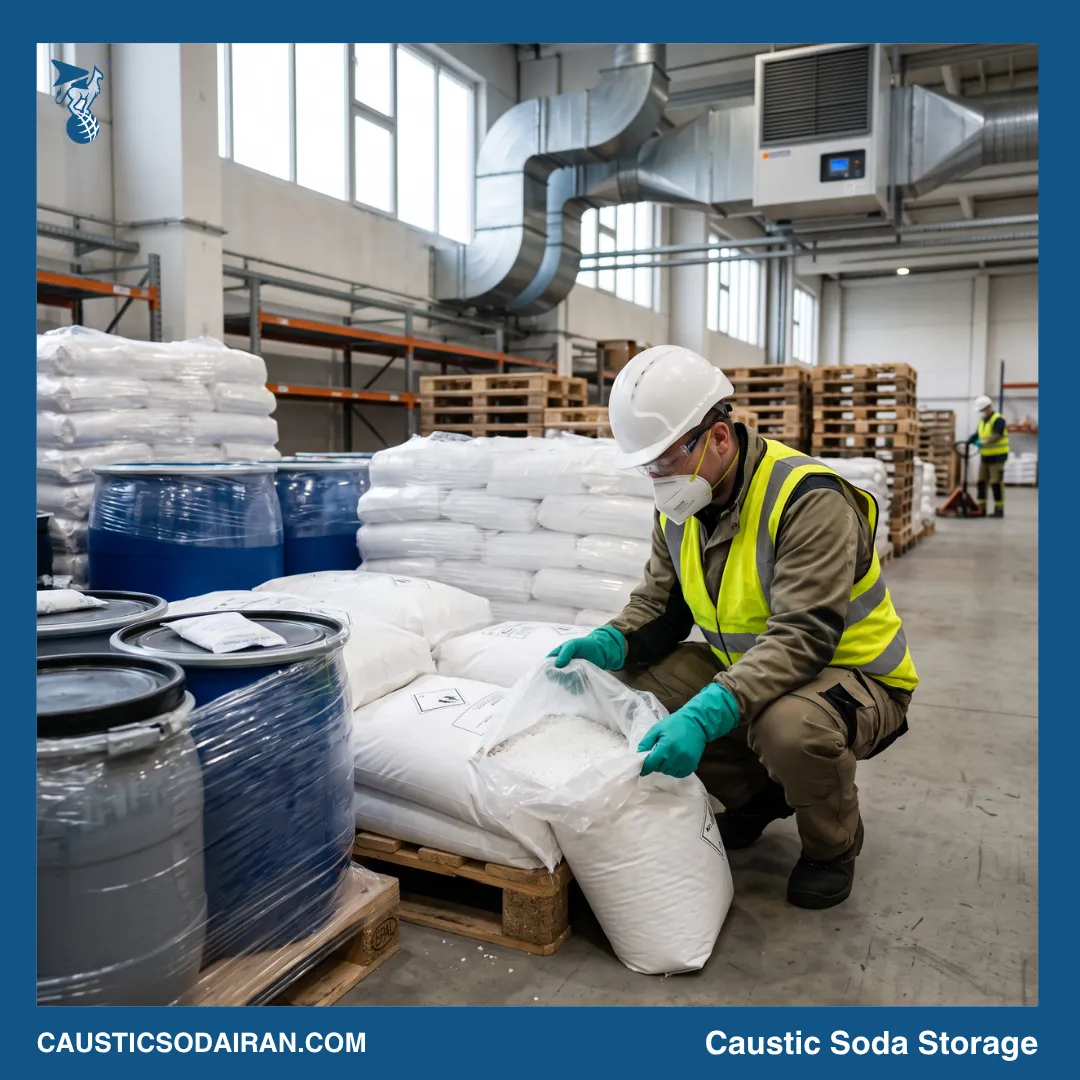
Maintaining product quality starts with proper storage conditions.
Recommended practices include:
- Store in a cool, dry warehouse.
- Keep containers tightly sealed.
- Minimize exposure to open air.
- Use moisture-resistant packaging.
- Avoid storing near water sources.
- Rotate inventory using the First-In, First-Out (FIFO) method.
- Inspect packaging regularly for damage.
These preventive measures significantly reduce quality loss during storage and transportation.
Packaging Matters
High-quality packaging plays a major role in protecting caustic soda flakes.
Reliable suppliers typically use:
- Multi-layer moisture-resistant bags
- Polyethylene inner liners
- Proper pallet wrapping
- Waterproof transportation methods
Packaging integrity is often just as important as product purity.
How Buyers Can Verify Product Condition
Before accepting a shipment, industrial buyers should inspect:
- Packaging condition
- Presence of hard lumps
- Free-flowing flakes
- Manufacturing date
- Storage history
- Certificate of Analysis (COA)
If excessive caking or visible moisture is present, laboratory testing may be advisable before use.
Long-Term Cost of Poor Storage
The financial impact of moisture exposure extends beyond the cost of replacing damaged chemicals.
Hidden costs include:
- Higher consumption rates
- Process instability
- Production downtime
- Increased waste
- Additional cleaning requirements
- Lower product quality
Investing in proper storage and transportation is usually far less expensive than dealing with production problems later.
Conclusion
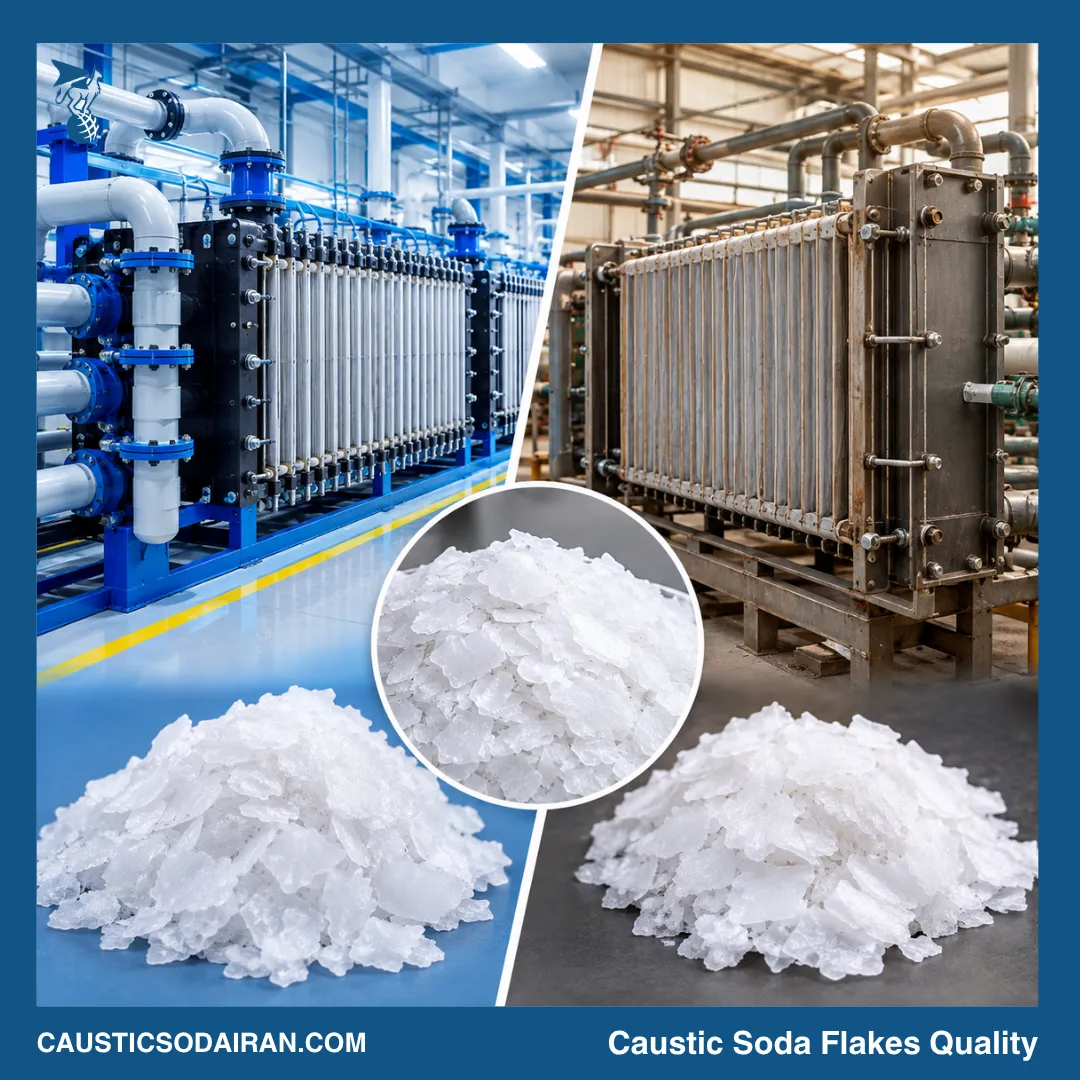
Moisture exposure reduces caustic soda flakes quality by decreasing effective purity, promoting carbonate formation, altering physical characteristics, and creating operational challenges across multiple industries. Proper packaging, controlled storage conditions, and careful handling are essential for preserving product performance. Businesses that prioritize moisture protection can maintain consistent chemical quality, improve process efficiency, and reduce long-term operating costs.


Leave a Reply