
Introduction
Caustic soda price is influenced by more than the concentration of sodium hydroxide in the product. For industrial buyers, the final purchasing cost depends on product form, production energy, freight, packaging, supply-demand conditions, and the selected Incoterm.
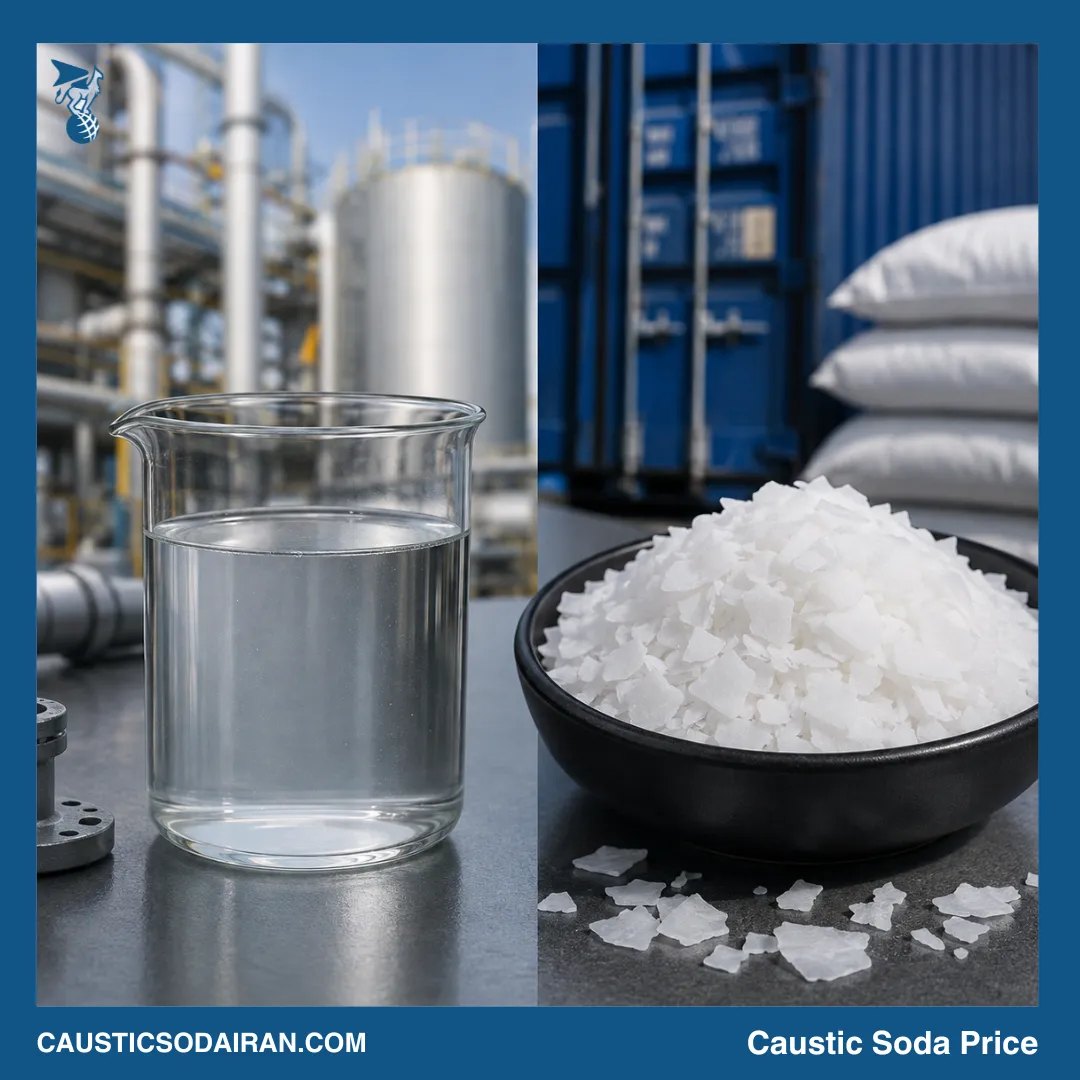
Liquid caustic soda at around 50% NaOH and caustic soda flakes at around 98% NaOH are two important commercial forms. However, their prices cannot be compared directly on a simple price-per-metric-ton basis. The water content of liquid caustic soda, the additional processing required to manufacture flakes, and different transportation requirements can significantly change the real cost.
Therefore, B2B buyers should evaluate both products on a dry NaOH basis and landed-cost basis before choosing the more economical option.
Liquid 50% vs. Flakes 98%: What Is the Main Difference?
Liquid 50% caustic soda contains approximately 50% sodium hydroxide and 50% water. It is normally transported in bulk tankers, ISO tanks, or other suitable liquid-handling systems.
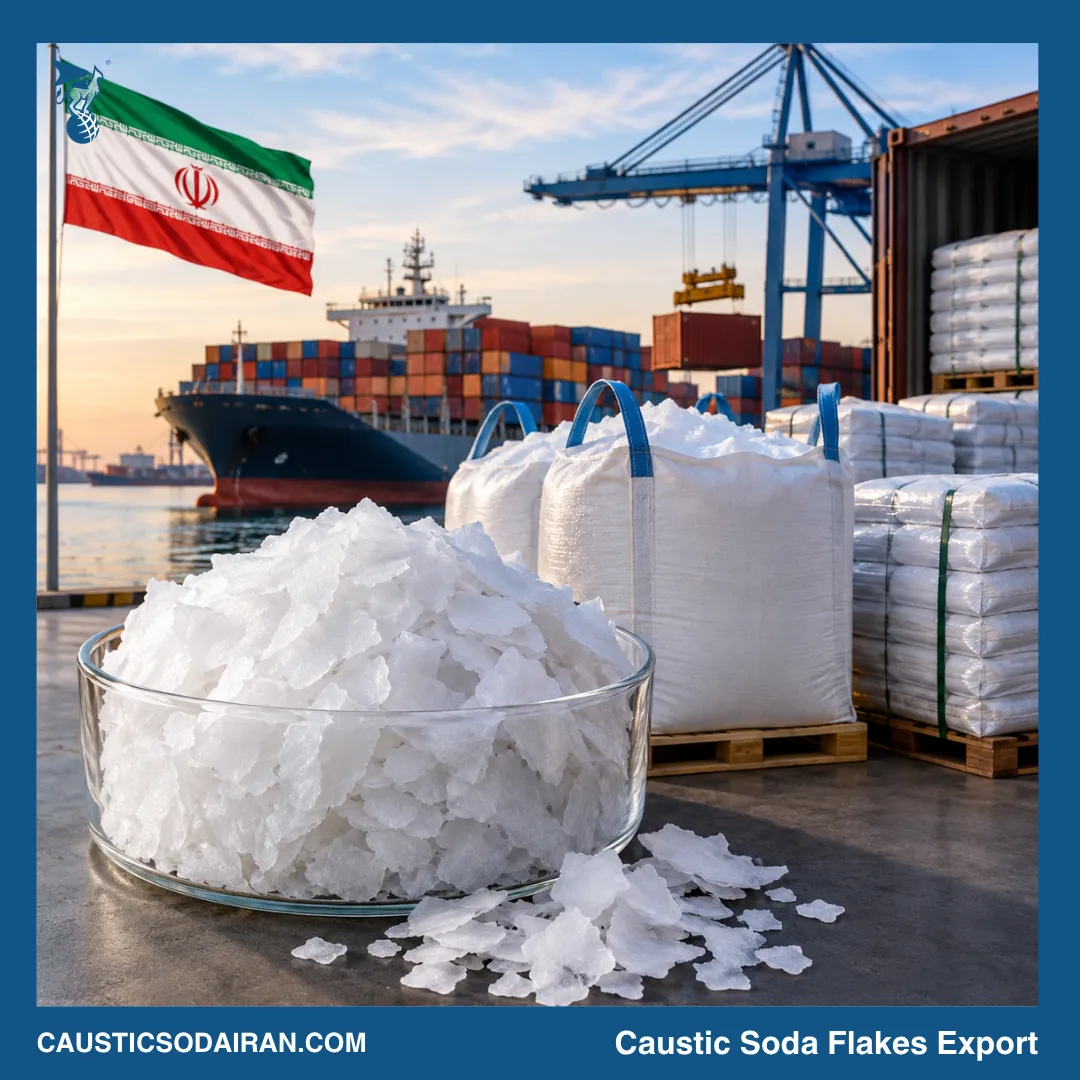
Caustic soda flakes, by comparison, contain approximately 98% NaOH. The higher concentration means that buyers pay for significantly less water during transportation. However, flakes require additional evaporation and solidification processes, as well as moisture-resistant packaging.
This creates an important pricing principle:
The cheapest product per metric ton is not necessarily the cheapest product per metric ton of contained NaOH.
For example, 1 metric ton of 50% liquid caustic soda contains approximately 0.50 metric tons of NaOH. One metric ton of 98% flakes contains approximately 0.98 metric tons of NaOH.
Therefore, buyers should normalize quotations before comparing suppliers.
Caustic Soda Price Formula for Liquid 50%
A simple dry-basis formula can be used to compare liquid caustic soda quotations:
Contained NaOH Cost = Liquid Product Price ÷ NaOH Concentration
For example, if 50% liquid caustic soda is quoted at $300/MT:
$300 ÷ 0.50 = $600/MT of contained NaOH
This calculation does not represent the final landed cost. Freight, insurance, terminal charges, storage, inland transportation and other costs may still need to be added.
A simplified landed-cost formula is:
Landed Cost = Product Price + Freight + Insurance + Port Charges + Inland Transportation + Other Import Costs
This approach gives procurement teams a more realistic basis for comparing international offers.
Caustic Soda Price Formula for 98% Flakes
For 98% flakes, the dry-basis adjustment is smaller because the product already contains a high concentration of NaOH.
The basic formula is:
Contained NaOH Cost = Flakes Price ÷ 0.98
For example, if 98% flakes are quoted at $700/MT:
$700 ÷ 0.98 ≈ $714.29/MT of contained NaOH
However, the final cost should also include packaging and logistics:
Landed Flakes Cost = FOB Price + Packaging + Freight + Insurance + Port Charges + Inland Transportation + Import Costs
This is particularly important when comparing bulk liquid shipments with bagged flakes.
Why Are 98% Flakes Usually More Expensive?
Caustic soda flakes normally carry a premium over liquid caustic soda because producing a highly concentrated solid requires additional processing.
The main reasons include:
1. Evaporation and Concentration Costs
Liquid caustic soda must undergo additional water removal to reach approximately 98% concentration. This requires additional energy and processing equipment.
2. Solidification
The concentrated material must be converted into a solid form. This creates additional manufacturing and handling costs compared with bulk liquid products.
3. Packaging
Flakes are generally packed in moisture-resistant bags or other suitable packaging. Packaging therefore becomes a more visible component of the final price.
4. Storage and Handling
Flakes can be attractive for buyers that lack liquid storage tanks. However, they must be protected from moisture to reduce caking and maintain product quality.
Market pricing sources also identify additional processing, packaging and handling requirements as important reasons for the premium of flakes over liquid grades.
The Main Market Drivers Behind Caustic Soda Price
Understanding the caustic soda price requires looking at both production economics and downstream demand.
Energy Costs
Electricity is one of the most important cost drivers because caustic soda is produced through the [chlor-alkali process], which is highly electricity-intensive.
When electricity and other energy costs increase, producers face higher production costs. This can place upward pressure on caustic soda prices.
Recent European market data has highlighted the strong relationship between chlor-alkali electricity costs and caustic soda pricing.
Chlor-Alkali Operating Rates
Caustic soda is produced alongside chlorine and hydrogen. Therefore, production decisions are not based exclusively on sodium hydroxide demand.
If chlor-alkali plants reduce operating rates because of weak chlorine economics, caustic soda availability can also decline. Conversely, high operating rates can increase supply and place downward pressure on prices.
This co-product relationship is one of the most important structural characteristics of the caustic soda market.
Alumina Demand
Alumina refining is one of the largest applications for caustic soda. Strong aluminium production can therefore increase demand for sodium hydroxide.
When alumina refineries operate at high utilization rates, caustic soda consumption can increase, supporting prices.
Pulp and Paper Demand
The pulp and paper industry uses caustic soda in several chemical processing stages. Changes in pulp production can consequently influence regional demand.
Strong pulp production combined with limited caustic soda supply can create additional pricing pressure.
Chemical Manufacturing
Caustic soda is widely used in chemical processing, including pH control, neutralization and the production of various sodium-based chemicals.
Therefore, broader chemical manufacturing activity can affect regional demand and pricing.
Freight Costs
Freight is particularly important for international buyers.
A supplier offering a lower FOB price may not necessarily provide the lowest final cost. Long-distance transportation, port charges, dangerous-goods handling and inland delivery can substantially increase the landed price.
This is especially relevant when comparing liquid and flake shipments because their transportation and packaging requirements differ.
Liquid 50% vs. Flakes 98%: Which Is More Economical?
There is no universal answer because the best option depends on the buyer’s location, consumption volume and infrastructure.
| Factor | Liquid Caustic Soda 50% | Caustic Soda Flakes 98% |
|---|---|---|
| NaOH concentration | ~50% | ~98% |
| Water content | High | Very low |
| Transportation | Bulk tanker / ISO tank | Bags / suitable solid cargo |
| Additional processing | Lower | Higher |
| Packaging cost | Usually lower | Usually higher |
| Storage requirement | Liquid tank required | Dry storage required |
| Long-distance transport | Less efficient per unit of NaOH | More concentrated |
| Handling | Suitable for bulk systems | Suitable where liquid infrastructure is unavailable |
| Typical pricing basis | USD/MT of solution | USD/MT of product |
For buyers located close to a production site or discharge port and equipped with liquid storage facilities, 50% liquid caustic soda can be highly competitive.
For buyers facing long inland transportation distances or lacking liquid-handling infrastructure, 98% flakes may offer a stronger overall logistics proposition.
How to Compare Two Supplier Quotations
Suppose Supplier A offers:
50% Liquid Caustic Soda = $300/MT
Supplier B offers:
98% Caustic Soda Flakes = $700/MT
At first glance, the liquid product appears much cheaper.
However:
Liquid dry-basis price:
$300 ÷ 0.50 = $600/MT contained NaOH
Flakes dry-basis price:
$700 ÷ 0.98 ≈ $714/MT contained NaOH
The initial difference is therefore much smaller than the original quotation suggests.
The buyer should then add freight, insurance, packaging, inland transportation, customs-related costs and handling charges.
This is why professional procurement teams should compare landed cost per metric ton of contained NaOH, rather than simply comparing supplier quotations per metric ton.
FOB, CFR and CIF: Why the Incoterm Matters
The selected Incoterm can significantly change the apparent caustic soda price.
FOB
Under FOB, the quoted price generally covers the product and the seller’s obligations up to loading according to the agreed Incoterms® rules. The buyer manages the main international freight and subsequent costs.
CFR
Under CFR, the seller arranges and pays for the main carriage to the destination port, while insurance is not included in the same way as under CIF.
CIF
Under CIF, the seller arranges the main carriage and insurance to the named destination port, subject to the specific Incoterms® requirements.
Consequently, two quotations should not be compared solely by their headline price if they use different Incoterms.
How Supply and Demand Affect Flake and Liquid Prices Differently
Liquid and flake prices do not always move by exactly the same percentage.
A rise in liquid caustic soda prices may reflect changes in chlor-alkali operating rates, regional demand or energy costs. However, flakes can have additional price drivers, including evaporation costs, packaging availability and export demand.
Recent 2026 market observations show that liquid and flake prices can move differently even within the same producing region.
Therefore, buyers should monitor the specific product form they intend to purchase rather than assuming that one market quotation completely represents the other.
A Practical Formula for B2B Procurement
For a more accurate procurement comparison, buyers can use:
Total Landed Cost per MT of NaOH = (Product Price + Freight + Insurance + Handling + Inland Transport + Other Costs) ÷ Actual NaOH Content
For liquid 50%:
Total Landed Cost ÷ 0.50
For flakes 98%:
Total Landed Cost ÷ 0.98
This formula helps procurement managers compare products with different concentrations and logistics structures on a consistent basis.
What Buyers Should Monitor Before Negotiating
Before requesting a long-term quotation, buyers should monitor:
- Electricity and energy prices
- Chlor-alkali plant operating rates
- Alumina production
- Pulp and paper demand
- Chemical industry activity
- Regional inventories
- Export availability from major producers
- Ocean freight rates
- Port congestion
- Currency movements
- Packaging costs
- Seasonal purchasing patterns
- Incoterms and payment conditions
Current market analysis continues to identify energy costs, downstream demand, production rates and freight as major variables affecting caustic soda pricing.
Conclusion
The caustic soda price cannot be evaluated correctly by comparing the nominal price of liquid 50% solution with the price of 98% flakes.
Liquid caustic soda contains significantly more water and usually requires dedicated liquid-handling infrastructure. Flakes contain approximately 98% NaOH but require additional concentration, solidification and packaging. As a result, each product has a different cost structure.
For B2B buyers, the most reliable approach is to calculate the landed cost per metric ton of contained NaOH and then consider freight, storage, handling and infrastructure requirements.
By combining dry-basis pricing with market indicators such as energy costs, chlor-alkali operating rates, alumina demand and freight conditions, procurement teams can negotiate more accurately and select the most cost-effective caustic soda supply option.
Leave a Reply