
Introduction
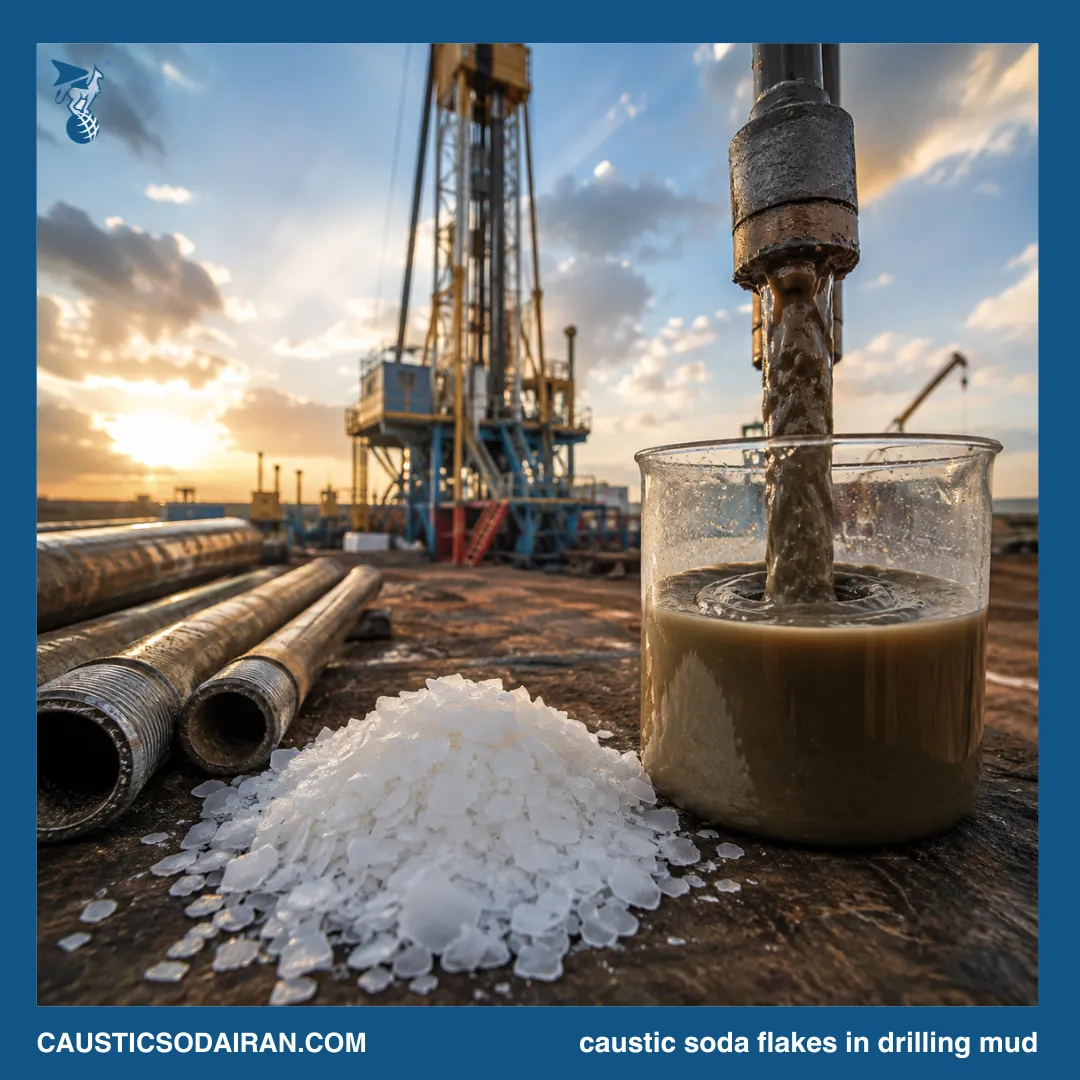
Caustic soda flakes in drilling mud are widely used in water-based drilling fluids to control alkalinity and maintain the chemical conditions required for efficient drilling. Caustic soda, chemically known as sodium hydroxide (NaOH), is a strong alkali that releases hydroxyl ions when dissolved in water. These ions increase the pH of the drilling fluid and help manage contaminants such as acidic gases.
In oil and gas drilling, maintaining appropriate mud chemistry is essential for wellbore stability, corrosion control, fluid performance, and safe handling of formations containing hydrogen sulfide (H₂S). Therefore, caustic soda flakes can play an important role in drilling-fluid treatment, particularly when rapid and effective alkalinity adjustment is required.
What Is Caustic Soda Flakes?
Caustic soda flakes are a solid form of sodium hydroxide (NaOH), typically supplied as white flakes or other dry forms. When dissolved in water, NaOH dissociates into sodium and hydroxyl ions, creating a strongly alkaline solution.
This high alkalinity makes caustic soda useful for adjusting drilling-fluid pH. It is particularly relevant to water-based mud systems where mud engineers need precise control over alkalinity and chemical performance.
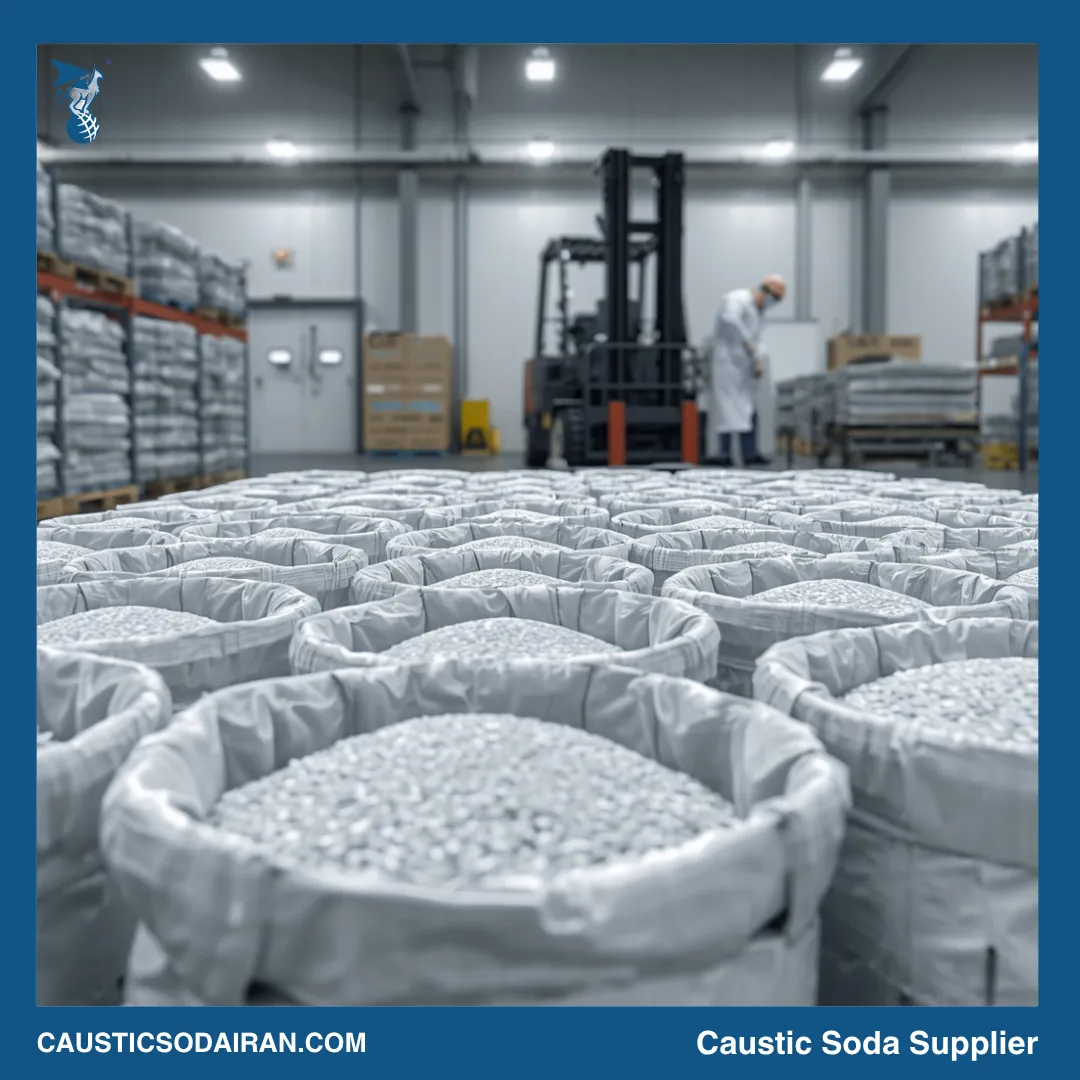
Compared with liquid caustic soda, dry flakes can also be practical for certain drilling operations because they are concentrated and can be transported and stored as a solid chemical. However, their corrosive nature requires controlled handling and appropriate personal protective equipment.
Why pH Control Matters in Drilling Mud
The pH of drilling mud affects several aspects of drilling-fluid performance. Mud chemistry influences the behavior of clay and other solids, corrosion of drilling equipment, chemical reactions with contaminants, and the performance of certain drilling-fluid additives.
Caustic soda is commonly used to increase or maintain the pH of water-based mud. Field references describe typical caustic treatment levels in the range of approximately 0.25–4 lb/bbl, although the appropriate dosage depends on water chemistry, mud formulation, and operating conditions.
Maintaining the correct pH can provide several operational benefits:
- Supports stable drilling-fluid chemistry
- Reduces acidic corrosion conditions
- Helps manage calcium and magnesium in certain water systems
- Supports the performance of selected mud additives
- Creates an alkaline environment for H₂S management
However, the target pH should always be established by the mud engineer according to the specific drilling-fluid program rather than by applying a fixed dosage.
How Caustic Soda Flakes Control Mud pH
When caustic soda flakes are dissolved in water, the resulting sodium hydroxide provides hydroxyl ions:
NaOH → Na⁺ + OH⁻
The increase in hydroxyl-ion concentration raises the pH of the drilling fluid. Caustic soda is widely used in water-based drilling muds for pH control and alkalinity adjustment.
This makes sodium hydroxide an effective alkalinity controller when a drilling-fluid system requires a relatively rapid pH adjustment. Technical literature identifies caustic soda as one of the principal additives used for pH control in water-based drilling fluids.
The treatment should be based on laboratory and field measurements. Mud engineers commonly monitor pH and alkalinity parameters to determine whether additional treatment is necessary.
Role of Caustic Soda in H₂S Management
Hydrogen sulfide is a particularly important concern in oil and gas drilling because it is highly toxic and corrosive. H₂S can enter drilling fluids from sour formations, formation fluids, or contaminated makeup water.
The chemical behavior of H₂S is strongly dependent on pH. Under more acidic conditions, a greater proportion remains in the molecular H₂S form. As pH increases, H₂S increasingly converts into ionic forms such as hydrosulfide (HS⁻) and sulfide (S²⁻).
Consequently, increasing mud alkalinity with caustic soda can reduce the proportion of molecular H₂S and help limit its release from the drilling fluid.
A simplified reaction is:
H₂S + NaOH → NaHS + H₂O
With additional alkalinity, further conversion can occur:
NaHS + NaOH → Na₂S + H₂O
“These reactions illustrate why alkaline drilling fluids can help convert dissolved H₂S into ionic sulfide species, similar to the role of caustic soda in the oil refining process.”
Caustic Soda Flakes vs. H₂S Scavengers
An important distinction is that caustic soda should not be considered a complete replacement for dedicated H₂S scavengers.
Increasing pH changes the chemical form of dissolved sulfide, but this process can be reversible. If the mud pH decreases, H₂S can potentially be regenerated. High sulfide concentrations can also exceed the capacity of alkalinity alone to control H₂S release.
For this reason, H₂S management programs can combine:
- pH and alkalinity control
- Appropriate H₂S scavengers
- Continuous gas monitoring
- Mud testing
- Corrosion-control measures
- Well-control and emergency-response procedures
When soluble sulfides are detected, technical guidance emphasizes treating the drilling fluid with an appropriate scavenger rather than relying solely on elevated pH.
Benefits of Caustic Soda Flakes in Oil & Gas Drilling
1. Efficient pH Adjustment
Caustic soda is a concentrated source of hydroxyl ions, allowing relatively small quantities to produce a significant change in alkalinity when conditions are suitable.
2. Support for H₂S Control
A higher pH shifts dissolved sulfide away from molecular H₂S toward ionic forms. This can reduce the tendency of H₂S to remain in its volatile molecular form.
3. Corrosion Control
Maintaining an appropriate alkaline environment can help reduce corrosion associated with acidic conditions. Caustic soda is therefore also relevant to protecting steel components exposed to drilling fluids.
4. Compatibility With Water-Based Mud Systems
Caustic soda is used across many water-based drilling-fluid formulations and can support the chemical performance of different mud systems.
5. Management of Hard Water Chemistry
In suitable water systems, increasing pH with caustic soda can precipitate magnesium and suppress dissolved calcium through hydroxide-related reactions. However, very high-hardness brines can limit the effectiveness of caustic soda for pH adjustment.
Application Considerations for Drilling Operations
The effectiveness of caustic soda flakes depends on the complete drilling-fluid formulation. Mud engineers should consider:
Mud type: Water-based systems generally have greater direct relevance for caustic soda pH treatment.
Water chemistry: Calcium, magnesium, carbonate, bicarbonate, and other dissolved species can affect alkalinity response.
H₂S concentration: Severe sulfide contamination may require dedicated scavenging chemicals in addition to pH control.
Temperature and pressure: Downhole conditions can affect chemical equilibria and H₂S behavior.
Mud rheology: Excessive chemical treatment can alter the properties of the drilling fluid and should therefore be controlled through testing.
Alkalinity measurements: pH alone does not provide a complete picture of the mud’s buffering capacity.
Safe Handling of Caustic Soda Flakes
Caustic soda flakes are highly corrosive. Handling them requires appropriate chemical-resistant gloves, eye and face protection, protective clothing, and proper ventilation.
When preparing a treatment solution, the dry chemical should be added carefully and gradually according to the drilling-fluid program. Technical guidance specifically recommends controlled addition through an appropriately designed chemical barrel rather than adding dry caustic directly through the mud hopper.
Because dissolving sodium hydroxide generates substantial heat, uncontrolled mixing can create splash and thermal hazards. Storage should also keep the material dry, closed, and separated from incompatible substances.
Recommended Monitoring Strategy
Effective use of caustic soda flakes requires continuous verification rather than one-time dosing.
A practical monitoring program can include:
- Measure mud pH regularly.
- Monitor relevant alkalinity parameters.
- Test for soluble sulfides when H₂S is suspected.
- Monitor H₂S concentrations using appropriate gas-detection equipment.
- Check mud rheology and filtration properties after chemical treatment.
- Adjust treatment according to laboratory and field results.
- Use dedicated H₂S scavengers when sulfide contamination requires additional treatment.
Research on drilling fluids also highlights the importance of standardized pH measurement and regular monitoring because pH can influence rheological and filtration properties.
Conclusion
Caustic soda flakes in drilling mud provide an effective means of controlling alkalinity and pH in many water-based drilling-fluid systems. Their strong alkaline chemistry can also support H₂S management by shifting dissolved hydrogen sulfide toward ionic sulfide species.
However, pH elevation is only one component of an effective H₂S-control strategy. Because sulfide chemistry can be reversible, dedicated scavengers, gas monitoring, appropriate alkalinity management, and established well-site safety procedures remain essential when drilling in H₂S-bearing formations.
For B2B oil and gas operations, selecting consistent-quality caustic soda flakes and maintaining reliable chemical supply are therefore important parts of drilling-fluid management.
Leave a Reply