
Introduction
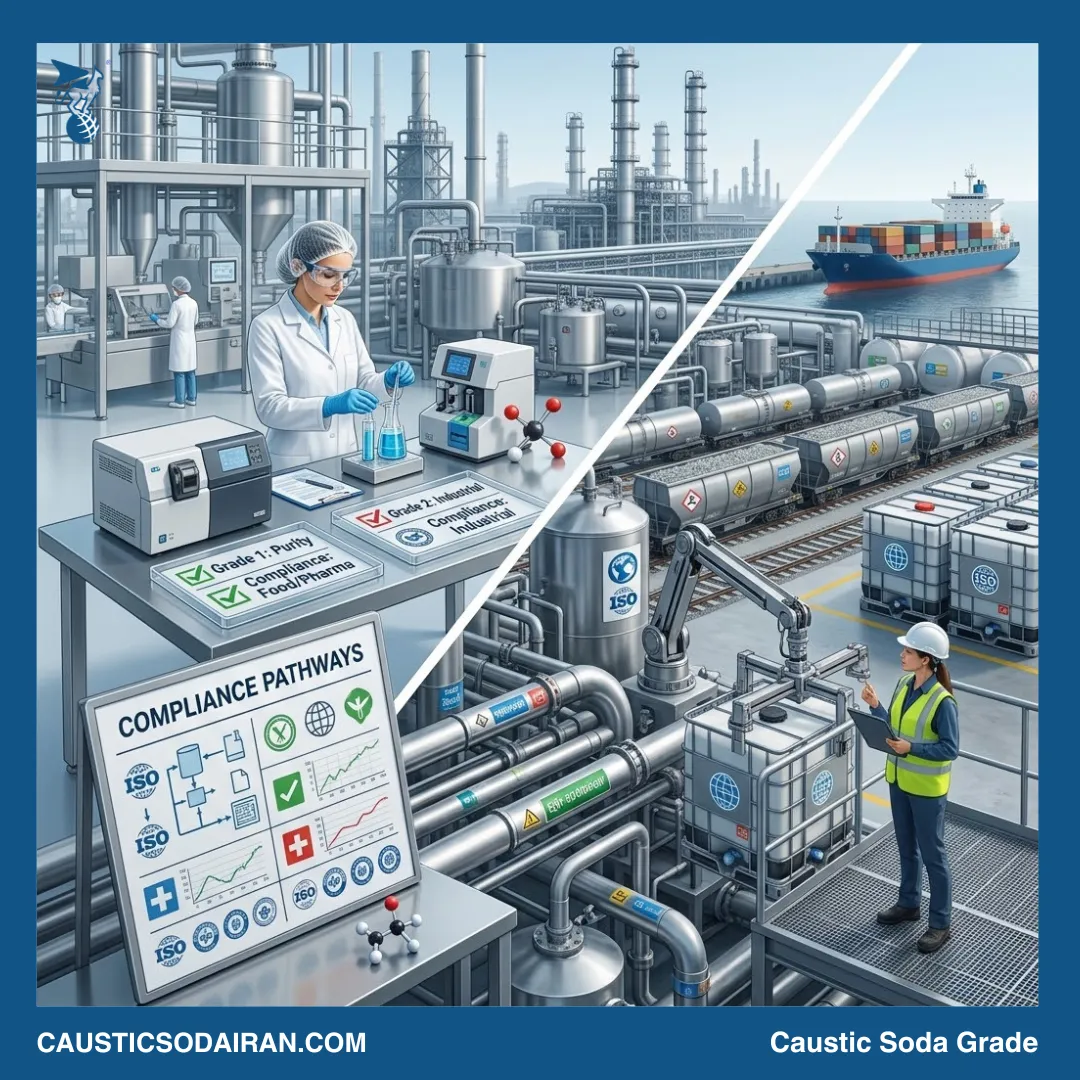
Choosing the right Caustic Soda Grade is essential for manufacturers operating in food, pharmaceutical, chemical, and other industrial sectors. Sodium hydroxide (NaOH) is available in different quality levels, and each grade can have different specifications, impurity limits, documentation, and intended applications.
Food and pharmaceutical applications generally require tighter quality controls than many general industrial processes. As a result, buyers should evaluate more than the NaOH concentration when selecting a product. Purity, impurity limits, applicable standards, Certificate of Analysis (COA), traceability, packaging, and supplier documentation can all affect whether a product is suitable for a specific application.
What Is Caustic Soda?
Caustic soda is the common name for sodium hydroxide (NaOH). It is a strong alkaline chemical widely supplied in flakes, pearls, pellets, and aqueous solutions.
The chemical is used across many industries, including:
- Chemical manufacturing
- Pulp and paper production
- Textile processing
- Water treatment
- Detergent manufacturing
- Food processing
- Pharmaceutical manufacturing
- Industrial cleaning
- pH adjustment
Despite having the same basic chemical identity, sodium hydroxide products can differ significantly in quality specifications and regulatory suitability.
Food Grade Caustic Soda
Food-grade caustic soda is intended for applications associated with food production and processing. Its suitability depends on the specific regulatory requirements, application, concentration, and impurity profile. The U.S. FDA lists sodium hydroxide among substances used in food-related applications and identifies several applicable provisions under Title 21 of the Code of Federal Regulations.
In the United States, the FDA identifies sodium hydroxide as a substance used for several food-related technical functions, including pH control, processing aid, and washing or surface-removal applications.
Quality considerations can include:
- Sodium hydroxide concentration
- Sodium carbonate content
- Chloride levels
- Iron and other trace impurities
- Heavy metals
- Manufacturing controls
- Batch identification
- Packaging and storage
- Certificate of Analysis
Importantly, food grade does not simply mean that a product contains a high percentage of NaOH. The impurity profile and compliance with the applicable specification are equally important.
Pharmaceutical Grade Caustic Soda
Pharmaceutical-grade sodium hydroxide is intended for applications where pharmaceutical quality requirements apply. Depending on the product and intended use, relevant specifications may be based on recognized pharmacopoeial standards.
For example, the United States Pharmacopeia publishes a Sodium Hydroxide monograph with defined quality specifications, including limits related to total alkali and sodium carbonate.
Pharmaceutical buyers may therefore need to verify:
- Assay
- Sodium carbonate content
- Identification
- Heavy-metal limits
- Other specified impurities
- Packaging requirements
- Batch traceability
- COA documentation
- Applicable pharmacopoeial compliance
A pharmaceutical manufacturer should always match the purchased material to the specification required for its particular process. The term “high purity” alone is not sufficient evidence of pharmaceutical suitability.
Industrial Grade Caustic Soda
Industrial-grade caustic soda is primarily used for general manufacturing and processing applications. It is commonly purchased for processes where pharmaceutical or food-specific specifications are not required.
Typical applications include:
- Chemical production
- Pulp and paper
- Textile manufacturing
- Water and wastewater treatment
- Soap and detergent production
- Petroleum processing
- Metal processing
- Industrial cleaning
Industrial specifications commonly focus on NaOH concentration and relevant impurities. Depending on the supplier and application, parameters such as sodium carbonate, sodium chloride, iron, moisture, and insoluble matter may also be specified.
For many industrial processes, this grade provides a practical balance between performance, availability, and cost. Nevertheless, it should not automatically be considered suitable for regulated food or pharmaceutical applications.
Food, Pharmaceutical, and Industrial Grades: Key Differences
The main difference between these categories is not necessarily the chemical formula. All are based on sodium hydroxide, but the quality specification, impurity limits, manufacturing controls, documentation, and intended application can differ.
| Factor | Food Grade | Pharmaceutical Grade | Industrial Grade |
|---|---|---|---|
| Primary use | Food processing | Pharmaceutical manufacturing | General industrial processes |
| Quality control | Strict | Very strict | Application-dependent |
| Impurity control | Controlled | Highly controlled | Specification-dependent |
| Regulatory requirements | Food regulations | Pharmacopoeial and regulatory requirements | Industrial specifications |
| COA | Commonly required | Particularly important | Commonly provided |
| Traceability | Important | Highly important | Depends on application |
| Typical purchasing priority | Compliance and purity | Compliance, purity, and documentation | Performance and cost |
The exact requirements vary by country, manufacturer, product form, and intended application. Therefore, buyers should request the current product specification rather than relying on a generic grade description.
Why Standards and Compliance Matter
Regulatory compliance can directly affect whether a chemical is acceptable for a particular manufacturing process. Food and pharmaceutical manufacturers often operate under strict quality systems, making documentation and traceability important parts of procurement.
For food applications, sodium hydroxide may be subject to specific conditions of use. For example, U.S. regulations under 21 CFR §184.1763 address sodium hydroxide and specify its use as a pH control agent and processing aid under current good manufacturing practice.
Pharmaceutical manufacturing presents a different set of requirements. A buyer may need to demonstrate that the material meets a relevant pharmacopoeial specification rather than simply confirming its commercial purity.
Industrial applications generally provide greater flexibility. Even so, the chemical must still satisfy the technical requirements of the process and applicable safety regulations.
How to Verify a Caustic Soda Grade Before Buying
B2B procurement teams should evaluate several factors before placing an order.
1. Check the Product Specification
Start by reviewing the supplier’s technical specification. Confirm the NaOH concentration and the maximum permitted levels of relevant impurities.
A detailed specification provides a much better basis for comparison than a product name such as “premium caustic soda.”
2. Request a Certificate of Analysis
The COA should correspond to the specific production batch whenever applicable. Check parameters such as assay, carbonate, chloride, iron, and other specified impurities. For a more detailed purchasing guide, buyers can also review what to know before buying caustic soda.
Comparing the COA with the required specification can help buyers determine whether the material is appropriate for their process.
3. Confirm the Applicable Standard
Ask the supplier which standard or specification the product meets. Food and pharmaceutical buyers should be particularly careful because regulatory suitability can depend on the exact intended use.
For example, FDA databases identify sodium hydroxide under several food-related provisions, while USP-NF provides a specific sodium hydroxide monograph.
4. Review Traceability
Traceability becomes especially important in regulated industries. Batch numbers, production records, COAs, and supplier documentation can support quality audits and product verification.
5. Evaluate Packaging
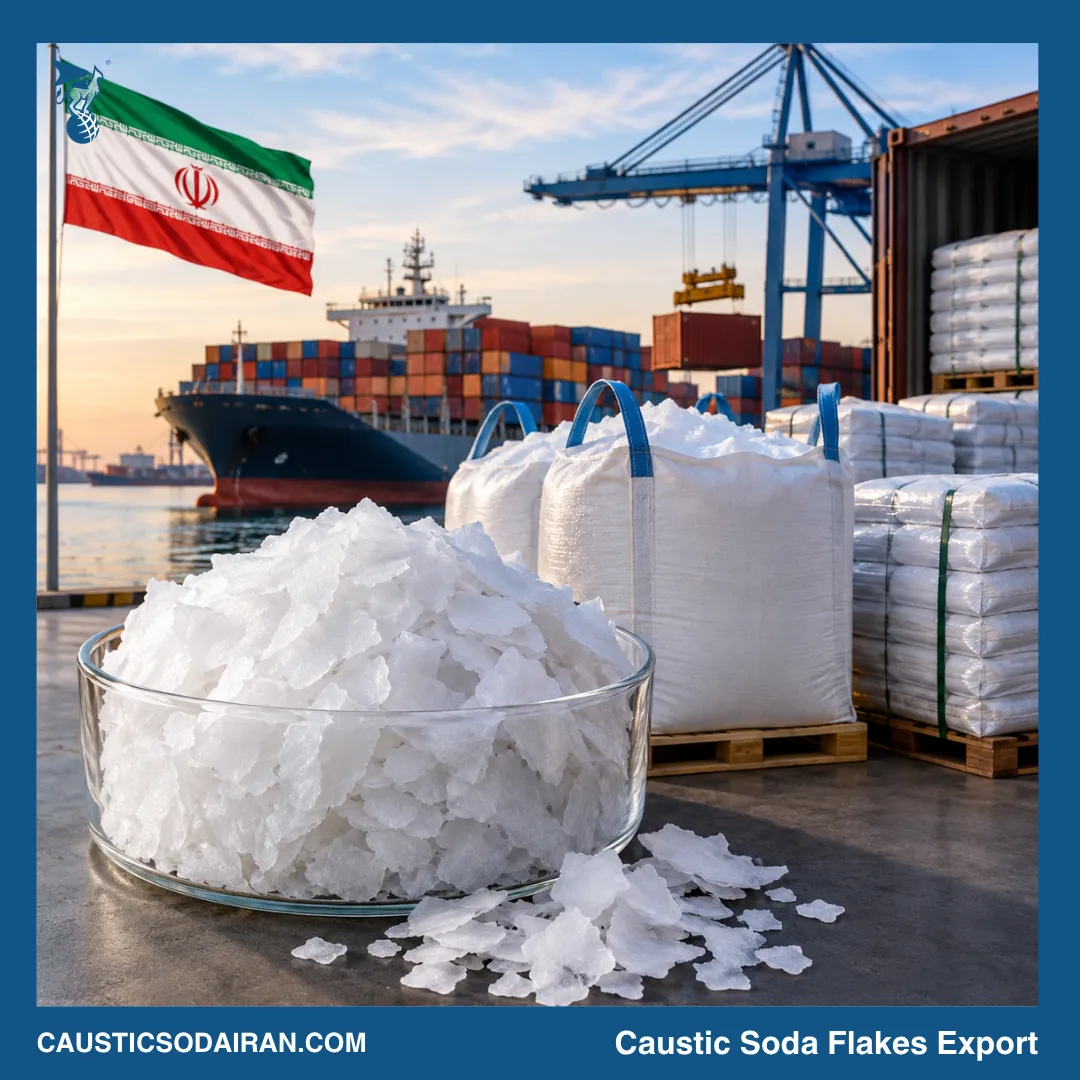
Packaging should protect caustic soda from contamination and moisture during storage and transportation. The selected packaging format should also correspond to the product form and handling requirements.
6. Assess Supplier Reliability
A qualified supplier should be able to provide consistent specifications and appropriate technical documentation. Buyers should also consider production capacity, batch consistency, packaging options, logistics, and export documentation.
Can Industrial Grade Caustic Soda Be Used for Food or Pharmaceutical Applications?
Industrial-grade caustic soda should not automatically be substituted for food or pharmaceutical grade.
Two products can have similar NaOH concentrations while having different impurity profiles or compliance status. Consequently, concentration alone cannot establish regulatory suitability.
Before using a product in a regulated application, buyers should verify the applicable specification, intended use, COA, impurity limits, and supporting documentation.
How to Choose the Right Caustic Soda Grade
The appropriate grade depends primarily on the end use.
Industrial-grade material can be suitable for chemical processing, water treatment, pulp and paper, textile production, and other general applications when it meets the required technical specification.
Food-grade material is more appropriate when the application is subject to food-related quality and regulatory requirements.
Pharmaceutical-grade material should be selected when the manufacturing process requires compliance with a relevant pharmaceutical specification or pharmacopoeial standard.
For procurement teams, the purchasing decision should therefore consider more than price. Purity, impurity limits, documentation, regulatory compliance, packaging, consistency, and supplier reliability should all be evaluated.
Conclusion
Understanding the differences between food, pharmaceutical, and industrial Caustic Soda Grade options is essential for effective B2B chemical procurement. Although all three categories are based on sodium hydroxide, their specifications and compliance requirements can vary considerably.
Food applications may require compliance with specific food regulations, while pharmaceutical applications can require adherence to recognized pharmacopoeial specifications. Industrial products, meanwhile, are generally selected according to the technical requirements of the manufacturing process.
Before purchasing, buyers should review the technical specification, COA, impurity profile, applicable standards, traceability, packaging, and supplier documentation. Selecting the correct grade from the beginning can reduce compliance risks, prevent quality problems, and improve supply-chain reliability.
Leave a Reply