
Introduction
Caustic soda, also known as sodium hydroxide (NaOH), is widely used in chemical processing, water treatment, food manufacturing, detergents, textiles, and other industrial applications. However, its highly corrosive nature makes caustic soda safety a critical priority for B2B companies that purchase, store, transport, or handle this chemical.
Exposure to concentrated caustic soda can cause severe chemical burns to the skin and eyes. Therefore, industrial facilities need clearly documented safety protocols, appropriate personal protective equipment (PPE), emergency washing facilities, employee training, and an effective first-aid response plan.
Why Caustic Soda Requires Strict Industrial Safety Controls
Caustic soda is a strong alkaline substance. When it contacts biological tissue, it can cause chemical damage that may continue until the substance is removed.
The risk increases when workers handle concentrated solutions, flakes, or pellets without suitable protection. In addition, splashes can create serious eye injuries, while contaminated clothing can prolong skin exposure.
For B2B operations, caustic soda safety should therefore cover the entire handling process, from receiving and storage to production, maintenance, transportation, and emergency response.
Common Causes of Caustic Soda Chemical Burns
Industrial exposure can occur through several routes, including:
- Direct skin contact with liquid sodium hydroxide
- Contact with caustic soda flakes or pellets
- Chemical splashes during dilution
- Leaking containers, valves, pumps, or pipelines
- Improper transfer between storage tanks and process equipment
- Contaminated gloves or protective clothing
- Accidental eye exposure
- Inadequate ventilation or poor workplace procedures
Importantly, workers should never rely only on experience when handling corrosive chemicals. Written procedures and regular training are essential.
Essential PPE for Caustic Soda Handling
Appropriate PPE is one of the first layers of protection against chemical exposure.For additional guidance, see our recommendations for caustic soda flakes handling and transportation. Depending on the concentration and operation, industrial workers may require:
- Chemical-resistant gloves
- Chemical-resistant protective clothing or aprons
- Safety goggles
- Face shields when splash hazards exist
- Chemical-resistant boots
- Appropriate respiratory protection when required by the risk assessment
PPE selection should be based on the specific concentration, temperature, exposure scenario, and manufacturer’s chemical-resistance data.
Furthermore, damaged or contaminated PPE should be removed and replaced according to the site’s emergency procedures.
First-Aid Response to Caustic Soda Skin Burns
A rapid response is essential after skin exposure.
1. Remove the Source of Exposure
Move away from the contaminated area when it is safe to do so. Remove contaminated clothing, shoes, watches, jewelry, and other items that may retain caustic soda.
However, workers should avoid spreading the chemical to unaffected skin.
2. Flush the Skin Immediately
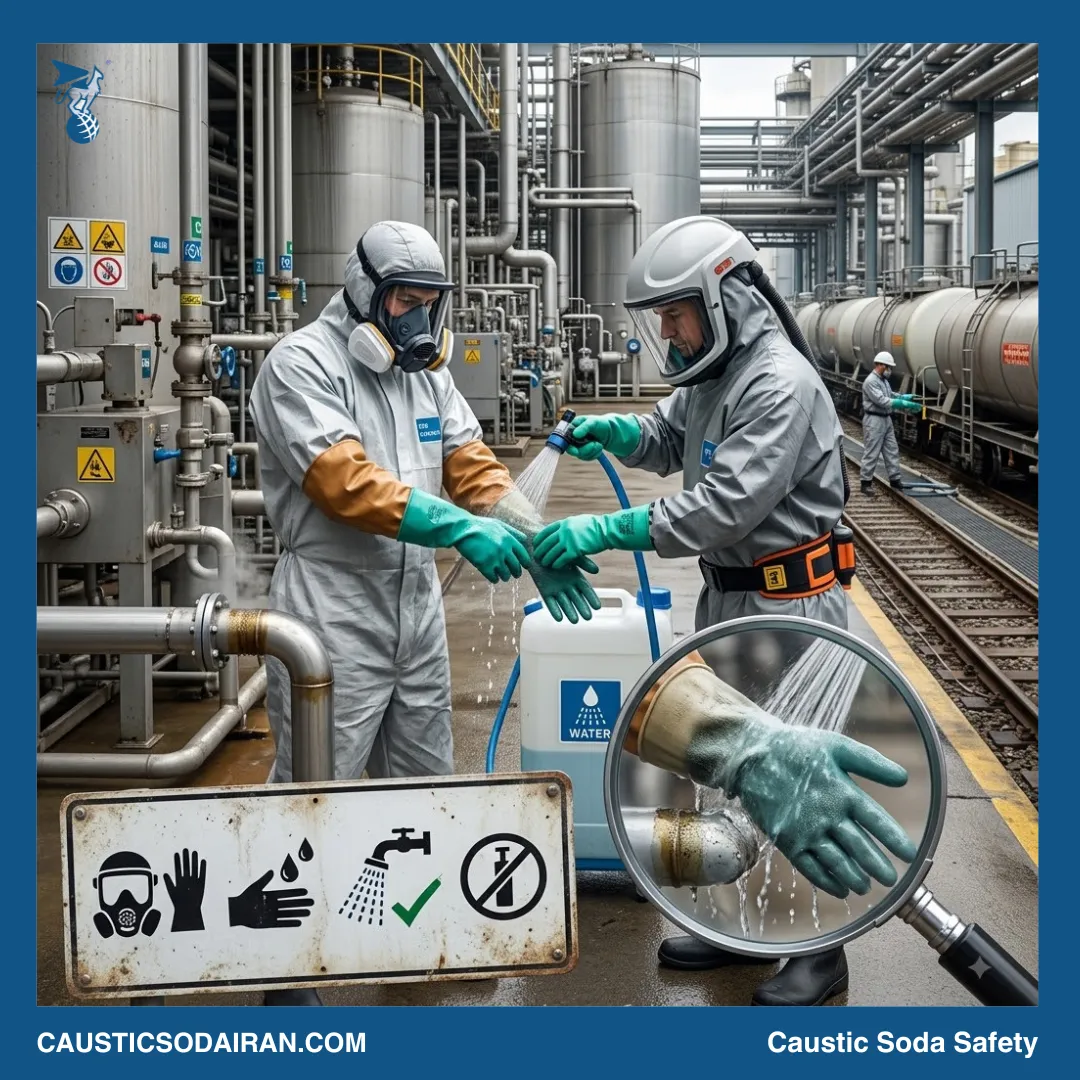
The affected area should be flushed immediately with large amounts of clean running water.
Continuous irrigation is one of the most important first-aid measures for chemical exposure. The objective is to remove the corrosive substance and reduce further tissue damage. For additional medical guidance, consult the Sodium Hydroxide Medical Management Guidelines published by ATSDR.
Do not delay irrigation while looking for neutralizing chemicals or other treatments.
3. Do Not Attempt Chemical Neutralization
A common mistake is attempting to neutralize caustic soda on the skin with an acid.
This approach is unsafe because the neutralization reaction can generate heat and potentially increase tissue damage. Water irrigation is the appropriate immediate decontamination measure.
4. Seek Medical Evaluation
Serious chemical burns require professional medical assessment, particularly when exposure involves concentrated caustic soda, extensive skin areas, severe pain, or delayed symptoms.
The affected person should be evaluated according to the site’s emergency medical procedures and the chemical’s Safety Data Sheet (SDS).
First-Aid Response to Eye Exposure
Eye exposure requires immediate action because caustic soda can cause severe ocular injury.
The eye should be irrigated immediately with plenty of clean water or an appropriate eyewash solution. Eyelids should be held open during irrigation so that the chemical can be removed from the entire surface.
Contact lenses should be removed if this can be done easily during irrigation.
Importantly, workers should not rub the eyes or attempt to neutralize the chemical. Emergency medical evaluation should follow immediately after thorough irrigation.
What Workers Should Never Do
Effective caustic soda safety also requires identifying unsafe first-aid practices.
Workers should not:
- Apply acids to neutralize caustic soda on the skin
- Rub contaminated skin or eyes
- Delay flushing while searching for specialized products
- Ignore apparently minor exposure
- Handle contaminated clothing without appropriate protection
- Return to work before the exposure has been properly assessed
Clear emergency signage can help employees remember the correct response during a stressful incident.
Emergency Equipment for B2B Facilities
Industrial facilities that handle caustic soda should maintain accessible emergency equipment.
Depending on the facility’s risk assessment, this may include:
- Emergency showers
- Eyewash stations
- Clean running-water supplies
- Chemical-resistant spill-control equipment
- Suitable PPE
- First-aid supplies
- Clearly accessible SDS documentation
- Emergency communication systems
- Clearly marked evacuation routes
Emergency showers and eyewash stations should be positioned where workers can reach them quickly after exposure.
Regular inspections are also important. Equipment that exists but does not function properly provides little practical protection.
Caustic Soda Storage and Handling Protocols
Prevention remains the most effective part of industrial chemical safety.
Companies should establish procedures covering:
Safe Storage
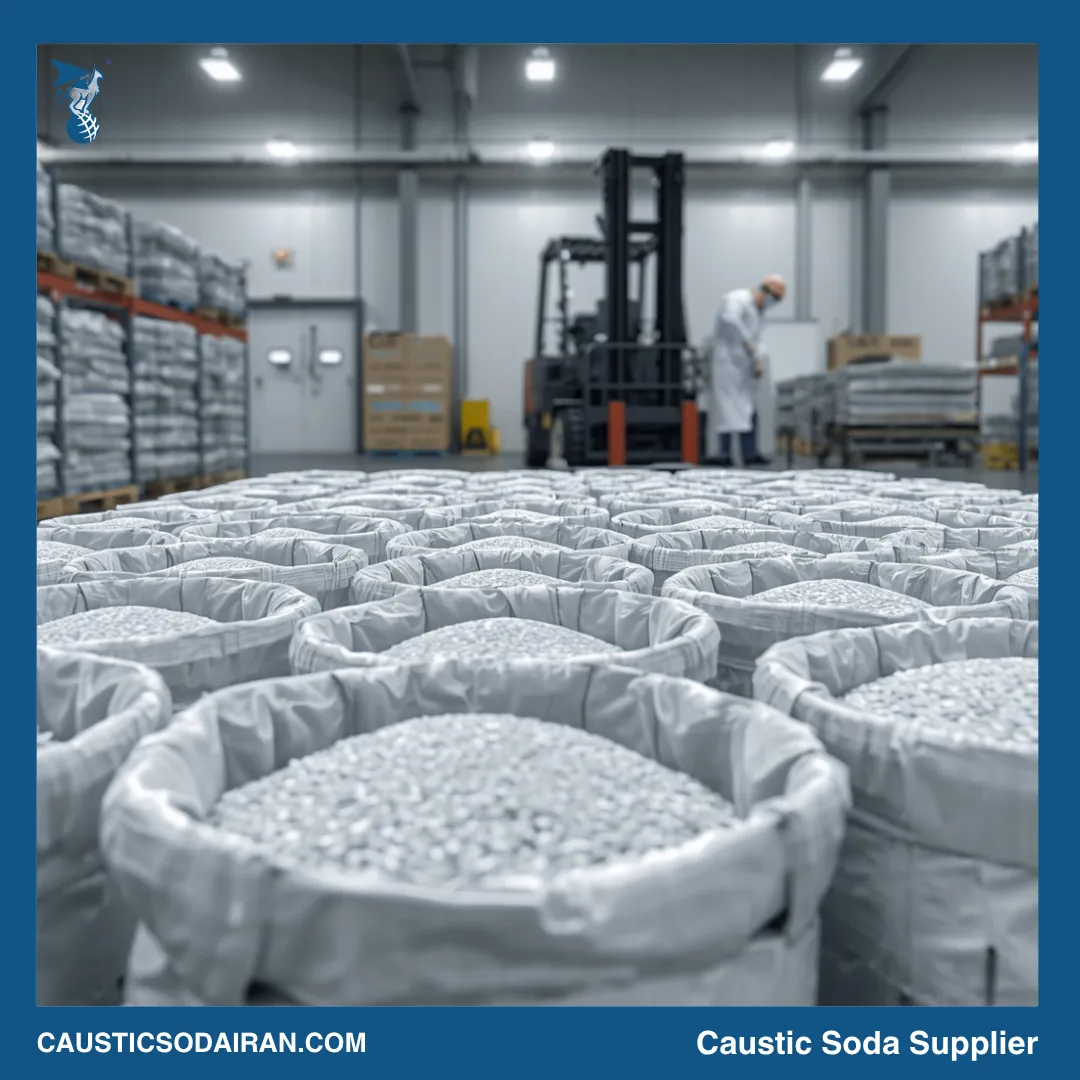
Caustic soda should be stored in compatible containers and protected from conditions that could compromise packaging or containment. Storage areas should also be clearly labeled and controlled.
Controlled Chemical Transfer
Transfer operations should use suitable equipment and procedures designed to minimize splashing, leaks, and uncontrolled releases.
Employee Training
Workers should understand the hazards of sodium hydroxide, PPE requirements, emergency procedures, and the location of eyewash stations and emergency showers.
Safety Data Sheets
Current SDS documentation should be readily available to workers and emergency personnel. Employees should know how to access and interpret the relevant information.
Building a B2B Chemical Burn Response Plan
A professional B2B safety program should define responsibilities before an incident occurs.
A practical response plan can include:
- Identify the exposure.
- Stop the source when it is safe.
- Move the affected worker away from the hazard.
- Remove contaminated clothing.
- Begin immediate water irrigation.
- Contact the designated emergency response team.
- Arrange medical evaluation when required.
- Secure and report the incident.
- Investigate the root cause.
- Update procedures and training if necessary.
This structured approach helps reduce confusion and response delays.
Supplier Responsibilities in Caustic Soda Safety
Chemical safety does not begin at the factory floor. B2B buyers should also evaluate their chemical suppliers.
A reliable supplier should provide accurate product specifications, appropriate packaging, current Safety Data Sheets, and relevant handling information.
Before purchasing caustic soda, industrial buyers should consider:
- Product concentration and grade
- Packaging type
- Certificate of Analysis (COA)
- Safety Data Sheet (SDS)
- Packaging integrity
- Transportation requirements
- Supplier quality controls
- Technical support and documentation
Choosing a qualified supplier can reduce operational and supply-chain risks.
Why Prevention Matters More Than First Aid
First aid is essential after an exposure, but it should never replace preventive controls.
A strong industrial safety strategy follows the hierarchy of controls. Engineering controls, safe operating procedures, training, appropriate PPE, and emergency preparedness should work together to reduce the probability and severity of chemical injuries.
For B2B companies, this approach also protects production continuity, employees, equipment, and regulatory compliance.
Conclusion
Caustic soda is an essential industrial chemical, but its corrosive properties require rigorous safety management. Effective caustic soda safety involves proper PPE, controlled handling, suitable storage, employee training, emergency equipment, and clearly defined first-aid procedures.
In the event of skin or eye exposure, immediate and thorough water irrigation is a critical first response. At the same time, facilities should ensure that workers understand what to do—and what not to do—before an emergency occurs.
For industrial buyers, selecting a qualified caustic soda supplier and maintaining strong B2B safety protocols are important steps toward safer and more reliable chemical operations.
Leave a Reply