
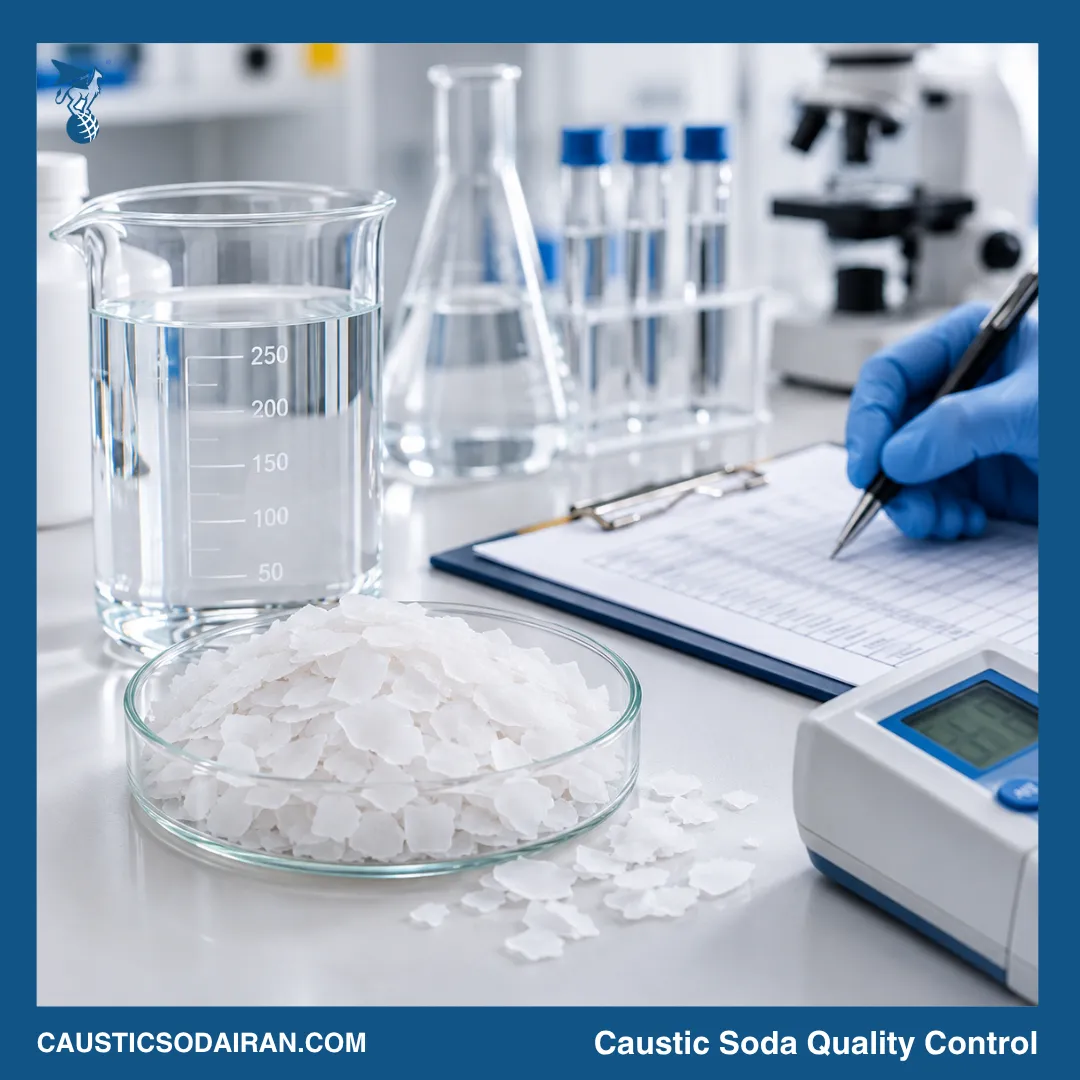
Caustic soda is widely used in chemical processing, water treatment, pulp and paper, textiles, alumina production, and many other industries. Because even small variations in chemical composition can affect industrial processes, effective Caustic Soda Quality Control is essential for maintaining batch consistency and meeting agreed specifications.
A reliable quality control program evaluates sodium hydroxide concentration, impurities, physical characteristics, sampling procedures, and laboratory test results. ASTM E291, for example, includes analytical methods for caustic soda covering parameters such as alkalinity, carbonate, chloride, iron, and sulfate.
Why Caustic Soda Quality Control Matters
Consistent caustic soda quality helps manufacturers maintain stable operating conditions and predictable chemical performance. In contrast, variations between batches can affect chemical consumption, process efficiency, product quality, and production costs.
For industrial buyers, quality control is also important during procurement. A product may meet a general purity description while still containing impurity levels that are unsuitable for a particular application. Therefore, buyers should define measurable specifications before purchasing.
Key Parameters in Caustic Soda Quality Control
Several chemical and physical parameters can be monitored during quality control.
1. Sodium Hydroxide Concentration
The NaOH concentration is one of the most important quality parameters. For solid caustic soda, buyers commonly specify a minimum sodium hydroxide content, while liquid products are supplied at defined concentrations.
For a detailed overview of NaOH purity, impurity limits, and other product specifications, see our guide to Caustic Soda Flakes Quality Standards.
Laboratory analysis should confirm that each batch meets the concentration stated in the product specification or purchase contract.
2. Sodium Carbonate
Carbonate is an important impurity because sodium hydroxide can react with carbon dioxide during storage and handling. Higher carbonate levels may affect applications where strict chemical purity is required.
ASTM E291 includes both gas-volumetric and gravimetric methods for determining carbonate in caustic soda.
3. Chloride
Chloride levels can be particularly important for applications that require low levels of inorganic impurities. ASTM methods include titrimetric, potentiometric, and ion-selective electrode approaches for chloride analysis.
The acceptable chloride concentration should therefore be defined according to the product grade and intended industrial application.
4. Iron
Iron is another impurity that may need to be controlled, particularly when caustic soda is used in processes where contamination can affect the final product.
ASTM E291 includes a photometric method for determining iron in caustic soda.
5. Sulfate and Other Anions
Sulfate, chlorate, and other anionic impurities may also be monitored depending on the required grade. ASTM E1787 describes ion chromatography for determining several anionic impurities, including chloride, chlorate, sulfate, fluoride, nitrate, and phosphate in applicable caustic soda solutions.
How to Maintain Batch Consistency
Quality control should not begin only after production is complete. Consistency requires monitoring throughout production, storage, sampling, and shipment.
Standardize Production Conditions
Manufacturers should maintain controlled production parameters and use consistent operating procedures. Changes in raw materials, process conditions, or equipment performance can influence the final chemical composition.
Use Representative Sampling
A laboratory result is only useful when the sample accurately represents the batch. Sampling procedures should therefore be standardized and performed using clean, appropriate equipment.
For large shipments, sampling plans should consider the number of containers, production lots, and shipment configuration.
Apply Consistent Testing Methods
Different analytical methods can produce different levels of precision. For this reason, laboratories should use validated procedures and maintain consistent testing conditions.
ASTM E291 provides established analytical procedures for several common caustic soda quality parameters.
Maintain Laboratory Calibration
Analytical equipment should be properly calibrated and maintained. Reagents, reference materials, and laboratory procedures should also be controlled to reduce measurement variation.
This is particularly important when specifications contain narrow limits for impurities.
Specification Compliance Before Shipment
Before releasing a batch for shipment, manufacturers and suppliers should compare laboratory results with the agreed product specification.
A typical quality review may include:
- Sodium hydroxide concentration
- Sodium carbonate content
- Chloride concentration
- Iron content
- Sulfate or other specified impurities
- Physical appearance
- Batch or lot identification
- Production and testing dates
- Certificate of Analysis (CoA)
The exact limits should be determined by the product grade, customer requirements, applicable standards, and intended application rather than using one universal specification.
The Role of the Certificate of Analysis
A Certificate of Analysis provides documented test results for a specific batch. For industrial buyers, the CoA can help verify that the supplied material corresponds to the agreed specification.
A useful CoA should clearly identify the product, batch number, relevant test parameters, test results, units, and applicable specification limits. For standardized chemical testing, ASTM E291 describes analytical methods used to evaluate caustic soda and parameters such as alkalinity, carbonate, chloride, iron, and sulfate.
For export transactions, keeping batch documentation consistent with shipping and commercial documents can also simplify quality verification between suppliers and buyers.
Managing Non-Conforming Batches
If a batch does not meet the agreed specification, it should be identified and controlled before shipment.
The supplier can then investigate the cause of the deviation. Possible causes may include production changes, contamination, storage conditions, sampling errors, or analytical variation.
Corrective actions should address the underlying cause rather than simply repeating the test. When necessary, additional testing can be performed using an appropriate validated method.
Quality Control for Caustic Soda Buyers
Buyers can improve procurement quality by defining technical requirements before requesting quotations. Instead of focusing only on the stated NaOH concentration, buyers should identify the impurity limits and testing requirements relevant to their process.
A practical purchasing specification can include:
- Product form and concentration
- Minimum NaOH content
- Maximum carbonate level
- Maximum chloride level
- Maximum iron content
- Other application-specific impurities
- Packaging requirements
- Required CoA information
- Sampling and inspection requirements
- Delivery and storage conditions
This approach reduces uncertainty and makes it easier to compare offers from different suppliers.
Conclusion
Effective Caustic Soda Quality Control combines standardized production, representative sampling, reliable laboratory testing, and clear product specifications. Monitoring NaOH concentration and relevant impurities such as carbonate, chloride, iron, and sulfate helps suppliers maintain consistent batches and helps buyers verify specification compliance.
For industrial procurement, quality should therefore be evaluated as a complete system rather than by sodium hydroxide concentration alone. Clear specifications, documented test results, and consistent quality procedures can support reliable caustic soda supply across different batches and shipments.

Leave a Reply