
Introduction
Caustic soda flakes play an important role in industrial cleaning because sodium hydroxide helps remove grease, oils, and other stubborn organic residues from compatible equipment surfaces. However, effective cleaning requires more than removing visible contamination. Industrial facilities must also ensure that cleaning agents do not leave unacceptable chemical residues behind.
Caustic soda flakes are a solid form of sodium hydroxide (NaOH). When dissolved in water, they produce a strongly alkaline solution that can support cleaning processes in manufacturing plants, food-processing facilities, and chemical industries. The effectiveness of these solutions depends on concentration, temperature, contact time, and the nature of the contaminants.
Industrial cleaning validation provides documented evidence that a cleaning procedure consistently achieves its intended results. Residue testing and predefined acceptance criteria help manufacturers evaluate cleaning performance, reduce cross-contamination risks, and maintain reliable operating conditions.
1. Why Caustic Soda Flakes Matter in Industrial Cleaning
Sodium hydroxide is widely used in industrial cleaning formulations because of its strong alkaline properties. It can help break down fats and oils through saponification and improve the removal of certain organic deposits.
In suitable applications, caustic soda solutions can support the cleaning of tanks, pipelines, processing vessels, and other industrial equipment. Their effectiveness depends on the equipment material, soil composition, and operating conditions.
However, the use of caustic soda also introduces a potential residue-control challenge. If rinsing is insufficient, residual alkalinity or sodium-containing compounds may remain on equipment surfaces.
These residues can affect subsequent manufacturing operations, product quality, or equipment compatibility. Therefore, industrial cleaning procedures should address both the removal of the original contaminants and the removal of the cleaning agent itself.
2. Understanding Cleaning Validation Requirements
Cleaning validation is a documented process used to demonstrate that a defined cleaning procedure consistently removes relevant residues to predetermined, scientifically justified limits.
Unlike a simple visual inspection, cleaning validation evaluates whether the procedure performs reliably under specified operating conditions.
A cleaning validation program should identify:
- The equipment and surfaces covered by the procedure.
- The contaminants and cleaning-agent residues that require monitoring.
- The cleaning parameters, including concentration, temperature, contact time, and rinsing conditions.
- The sampling locations and analytical methods.
- The acceptance criteria for each relevant residue.
- The documentation and approval requirements.
The US Food and Drug Administration explains that cleaning procedures should be documented and supported by appropriate testing methods. The criteria must reflect the intended application and the risk associated with residual contamination. For additional information on residue testing, sampling procedures, and acceptance limits, consult the Health Canada cleaning validation guide.
3. Identifying Caustic Soda Residues After Cleaning
Residue testing begins by identifying the substances that may remain after the cleaning cycle. These substances can originate from the original process, the cleaning solution, or interactions between the cleaning agent and equipment surfaces.
For processes using caustic soda flakes, relevant residue categories may include:
Residual alkalinity: Remaining sodium hydroxide can increase the pH of a surface extract or final rinse water. This can indicate inadequate rinsing, although pH alone does not establish the exact concentration of sodium hydroxide.
Sodium-containing residues: Sodium may remain in dissolved compounds or deposits. Because sodium can originate from several sources, its presence does not automatically prove that unreacted sodium hydroxide remains.
Original process contaminants: Oils, organic materials, product ingredients, and other manufacturing residues may remain if the cleaning procedure does not adequately remove them.
Reaction products and deposits: Depending on process conditions, the cleaning solution may interact with contaminants or surfaces and produce additional residues that require evaluation.
A suitable testing strategy should distinguish these residue types rather than relying on a single measurement to assess the entire cleaning process.
4. Common Residue Testing Methods
Selecting the appropriate analytical method is essential for reliable cleaning validation. The method should be capable of detecting the residue of concern at or below the established acceptance limit.
4.1. Surface Swab Testing
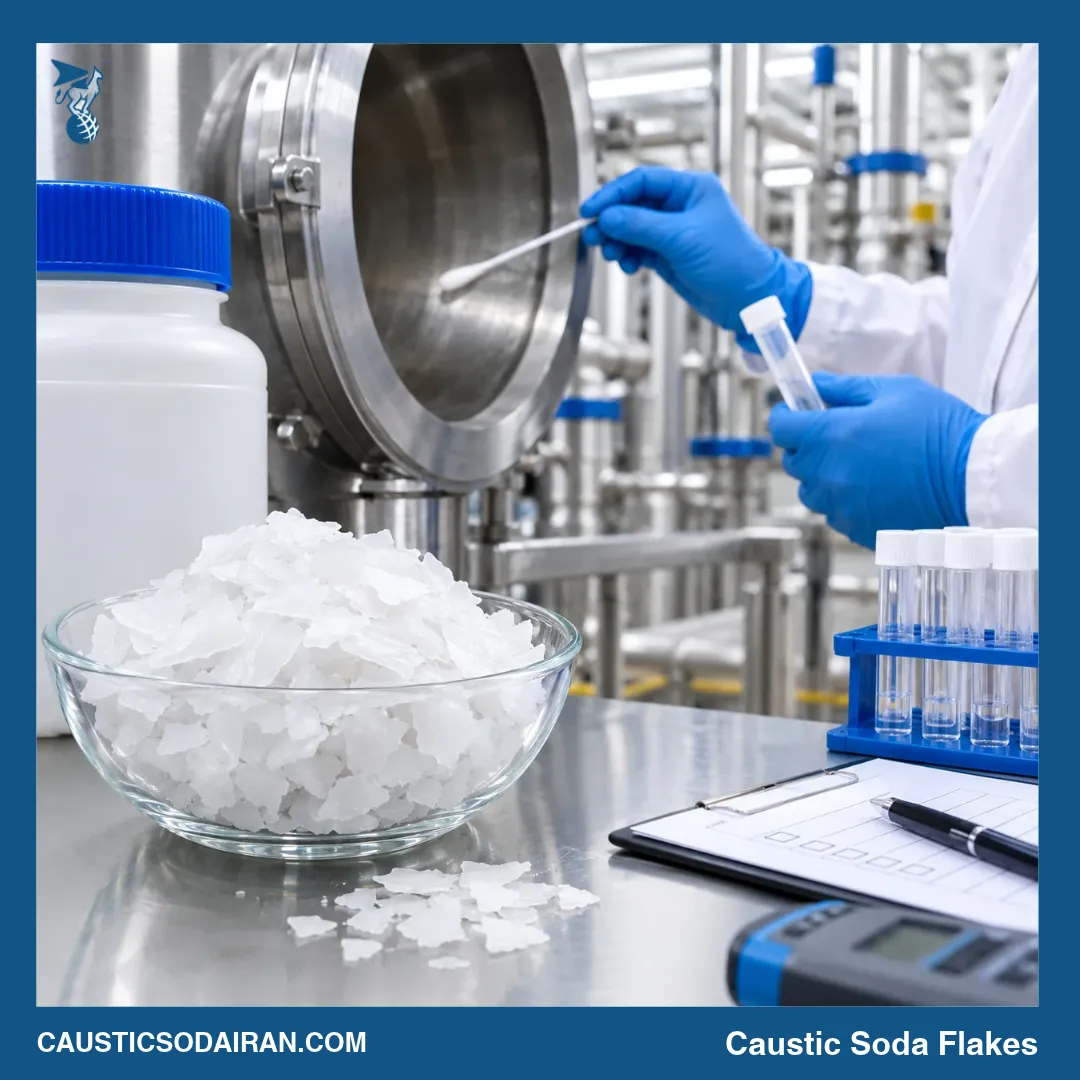
Swab testing involves collecting residues directly from a defined area of equipment using a suitable sampling material. The collected sample is then analyzed using an appropriate laboratory method.
This approach is particularly useful for accessible surfaces, including tank walls, equipment joints, and locations where residues may accumulate.
For caustic soda cleaning systems, swab samples may be extracted into a suitable medium and evaluated for relevant chemical indicators. The sampling procedure should account for recovery efficiency, surface compatibility, and possible interference from the swab material.
4.2. Rinse Water Testing
Rinse sampling involves collecting a defined volume of liquid after the cleaning and rinsing stages. The sample is analyzed for relevant residues or indicators of incomplete removal.
Depending on the process, measurements may include pH, conductivity, or specific chemical analyses.
Conductivity can help detect changes in dissolved ionic content, while pH provides information about acidity or alkalinity. However, neither measurement is specific to sodium hydroxide. Water quality, dissolved salts, and other cleaning chemicals can affect the results.
Therefore, these measurements should be interpreted against an established baseline and supported by more specific testing when necessary.
4.3. Specific Chemical Analysis
Some industrial applications require direct measurement of a particular substance rather than indirect indicators.
The appropriate method depends on the residue, its expected concentration, the equipment material, and the required detection capability. Method suitability should be demonstrated before the results are used to establish cleaning effectiveness.
Where applicable, analytical validation should address specificity, precision, sensitivity, and recovery from the relevant sampling surface.
4.4. Visual Inspection
Visual inspection is a useful initial check for visible deposits, discoloration, or remaining contamination.
However, a surface that appears clean may still contain chemical residues that cannot be detected by sight. Visual inspection should therefore support, rather than replace, analytical testing when cleaning validation requires chemical residue measurements.
5. Establishing Acceptance Criteria for Cleaning Validation
Acceptance criteria define the maximum permissible residue levels or other measurable conditions that demonstrate the cleaning procedure is suitable for its intended purpose.
These limits should be established before validation testing begins. They should reflect the risks associated with the residues, the subsequent process, and the intended use of the equipment.
For caustic soda cleaning, acceptance criteria may address several different parameters.
For further information on chemical specifications, laboratory testing, and batch consistency, read our guide to caustic soda quality control.
Residual Alkalinity Limits
A facility may establish a maximum acceptable pH or another validated measure of residual alkalinity for the final rinse or a defined surface extract. The selected limit must be appropriate for the process and should not be treated as a universal standard.
A pH result alone cannot determine the amount of sodium hydroxide present because other substances can influence pH.
Chemical Residue Limits
Where quantitative analysis is necessary, the facility should establish a justified maximum residue level for the relevant chemical.
The limit should consider the potential impact on subsequent products, equipment, worker safety, and the manufacturing process. For pharmaceutical applications, the assessment may also need to consider health-based exposure limits and potential product carryover.
Visual Cleanliness Requirements
Cleaning procedures should also define acceptable visual conditions. Visible residues should not remain where their presence indicates inadequate cleaning or creates an unacceptable contamination risk.
Meeting a visual cleanliness requirement does not automatically demonstrate compliance with chemical residue limits.
Analytical Method Requirements
The analytical method must be sufficiently sensitive to evaluate the established acceptance criteria. If the method cannot reliably measure residues at the required level, the testing approach or analytical technique should be reviewed.
Importantly, there is no single acceptance limit that applies to every caustic soda cleaning process. Limits must be scientifically justified for the specific application.
6. Factors That Influence Residue Removal
Several operating variables can affect the performance of a cleaning procedure using caustic soda flakes.
Concentration: The concentration of the sodium hydroxide solution influences cleaning performance. Excessive concentrations may increase material compatibility risks and should not be assumed to produce better results in every application.
Temperature: Higher temperatures can improve the removal of some contaminants, but they can also increase chemical hazards and affect equipment materials. Temperature limits should be established for the specific process.
Contact time: Insufficient contact time may prevent effective removal of stubborn deposits. The procedure should specify an appropriate and reproducible exposure period.
Mechanical action: Agitation, circulation, or scrubbing can improve contact between the cleaning solution and contaminated surfaces.
Rinsing conditions: Rinse volume, water quality, flow rate, and duration can influence the removal of residual alkalinity and dissolved contaminants.
Equipment design: Dead legs, valves, seals, narrow pipelines, and poorly drained sections can retain cleaning solution. Validation studies should consider difficult-to-clean locations rather than focusing exclusively on easily accessible surfaces.
These factors should be controlled and documented to demonstrate that the cleaning process remains effective during routine operation.
7. Developing a Practical Cleaning Validation Protocol
A structured protocol helps industrial facilities evaluate cleaning performance consistently and maintain reliable records.
A typical protocol should include the following steps:
- Define the scope. Identify the equipment, cleaning process, products, and residues covered by the validation study.
- Assess contamination risks. Determine which residues may remain and which equipment locations are most difficult to clean.
- Specify cleaning parameters. Document the concentration of the caustic soda solution, temperature, contact time, mechanical action, and rinsing conditions.
- Select sampling locations. Include representative surfaces and difficult-to-clean areas based on a documented risk assessment.
- Choose analytical methods. Select suitable swab, rinse, or other testing methods that can evaluate the relevant residues.
- Establish acceptance criteria. Define justified limits and confirm that the analytical methods can measure residues at the required levels.
- Conduct validation runs. Demonstrate that the procedure achieves acceptable results consistently under defined operating conditions.
- Document the findings. Record test results, deviations, investigations, and the final approval decision.
- Maintain the validated state. Monitor process performance and reassess the procedure when significant changes occur.
A failed test should trigger an investigation into the cause. Repeated cleaning and retesting without addressing the underlying problem can conceal process weaknesses rather than demonstrate reliable performance.
8. Safety and Equipment Compatibility
Caustic soda flakes are highly corrosive and can cause severe skin and eye burns. Their preparation and use require appropriate engineering controls, training, personal protective equipment, and written handling procedures.
When preparing a solution, trained personnel should follow the applicable safety data sheet and site procedures. Dissolving sodium hydroxide releases heat, so controlled addition and appropriate temperature management are essential.
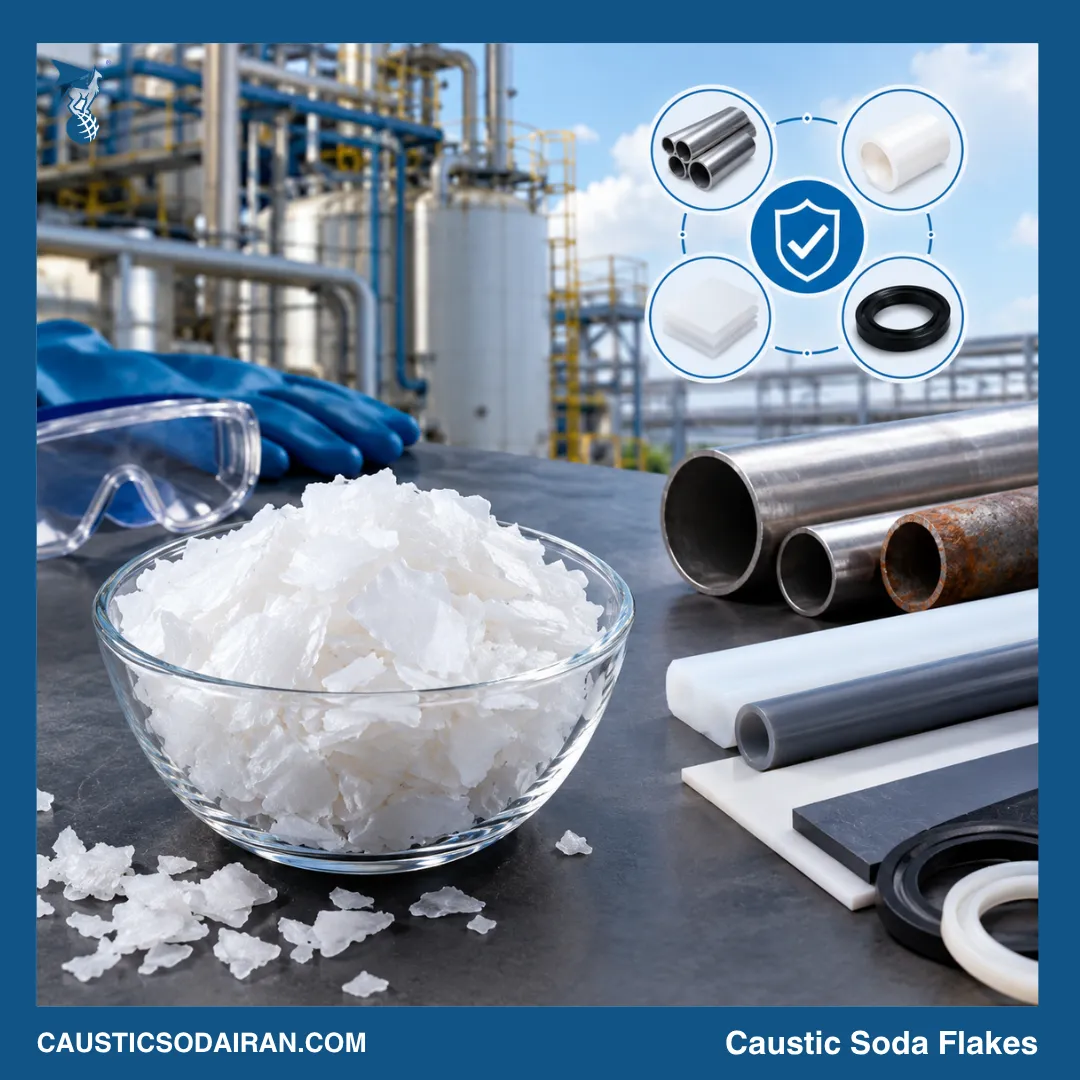
Facilities should also confirm that the cleaning solution is compatible with equipment materials, seals, and other components. Certain metals and surface finishes may be damaged by strongly alkaline solutions under particular conditions.
After cleaning, adequate rinsing and verification help reduce the risk of residual alkalinity affecting subsequent operations. Wastewater must also be managed according to applicable environmental and discharge requirements.
These precautions are especially important when cleaning food-processing equipment, pharmaceutical manufacturing systems, and industrial installations used for sensitive products.
9. Improving Cleaning Reliability Through Routine Monitoring
Successful cleaning validation is not a one-time activity. Facilities should maintain documented procedures and review performance data to identify recurring problems.
Routine monitoring may include:
- Reviewing rinse-water pH or conductivity trends where these measurements are suitable.
- Checking compliance with specified cleaning concentrations and contact times.
- Inspecting equipment for visible deposits and drainage problems.
- Reviewing residue test results and investigating unexpected variations.
- Reassessing procedures after changes to equipment, cleaning agents, products, or operating conditions.
A risk-based monitoring program helps identify deviations before they affect product quality or equipment performance.
Periodic review also helps determine whether the established procedure remains appropriate as manufacturing requirements evolve.
Conclusion
Caustic soda flakes support a wide range of industrial cleaning operations, but effective cleaning requires careful control of both contaminant removal and cleaning-agent residues.
Reliable cleaning validation combines documented procedures, appropriate sampling methods, suitable analytical techniques, and scientifically justified acceptance criteria. Surface swab testing, rinse-water analysis, and visual inspection can each contribute useful information when applied correctly.
By controlling concentration, temperature, contact time, and rinsing conditions, manufacturers can improve cleaning consistency and reduce the risk of residual contamination. A structured validation program also supports equipment reliability, process quality, and compliance with applicable requirements.
For industrial buyers, selecting caustic soda flakes with suitable quality documentation and consistent specifications is an important part of maintaining a controlled cleaning process. The final cleaning procedure, however, must always be validated for its specific equipment and intended application.
Request a Quote for Caustic Soda Flakes
Looking for a reliable supplier of caustic soda flakes for your industrial cleaning operations? Contact our team to inquire about product specifications, request a Certificate of Analysis (COA), and receive a quotation based on your order requirements.
Contact us for pricing and product specifications to discuss your supply needs.
Leave a Reply