
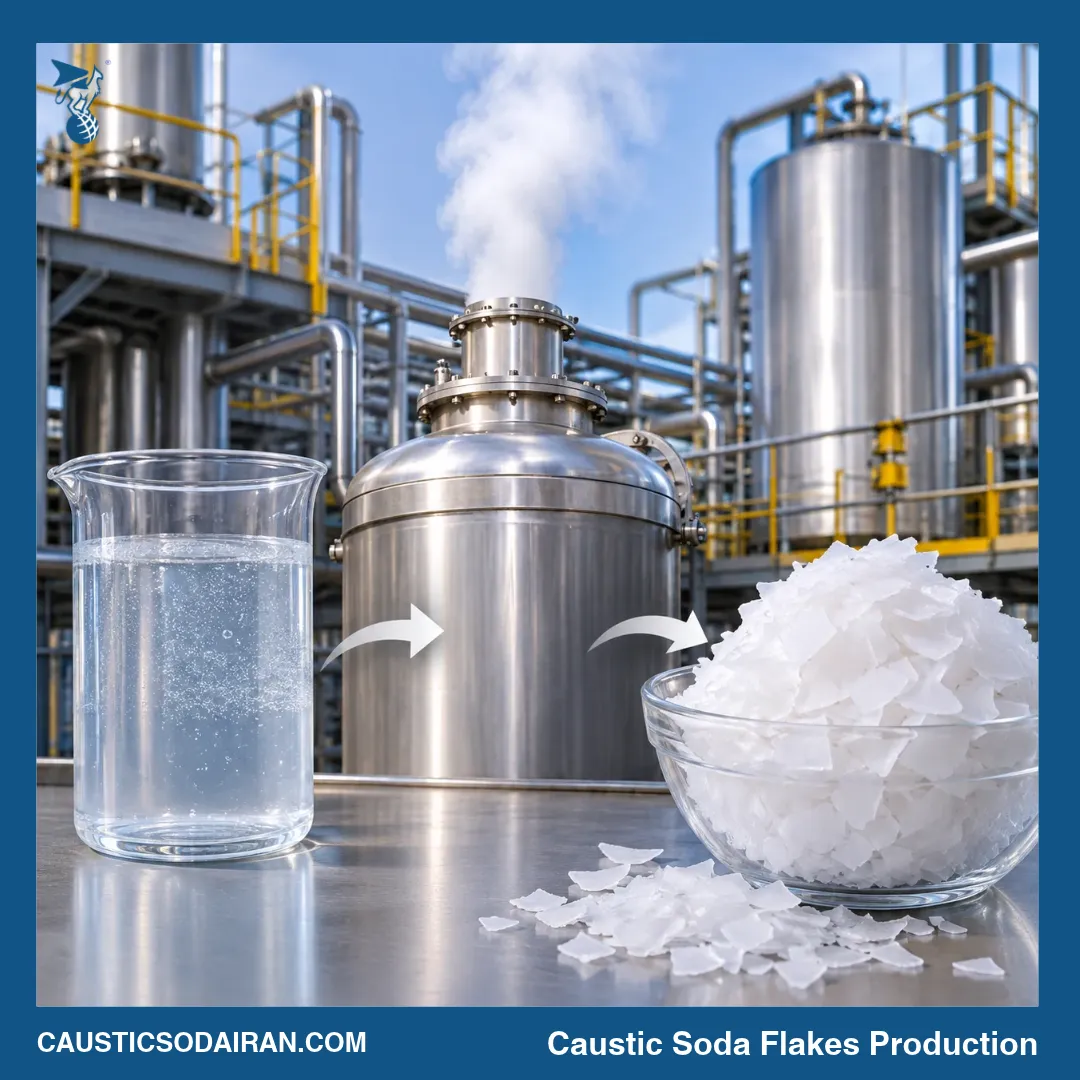
Caustic soda flakes are widely used in chemical manufacturing, textiles, detergents, water treatment, and several other industries. However, before sodium hydroxide becomes a solid and easy-to-transport product, manufacturers must convert liquid caustic soda into flakes through several carefully controlled stages. The caustic soda flakes production process mainly involves evaporation, concentration, and solidification.
Understanding these stages helps industrial buyers evaluate product quality, manufacturing efficiency, and supply reliability.
1. Starting with Caustic Soda Liquor
The production of caustic soda flakes begins with liquid sodium hydroxide, commonly known as caustic soda liquor. Manufacturers generally obtain this solution through the chlor-alkali process, which uses electrolysis to produce sodium hydroxide, chlorine, and hydrogen.
The concentration of the initial solution plays an important role in the production process. Before further processing, manufacturers check its sodium hydroxide content and impurity levels. These checks help ensure consistent product quality.
Common impurities, such as sodium chloride and sodium carbonate, may affect the final product if manufacturers do not control them properly.
2. Evaporation: Removing Excess Water
Evaporation is one of the most important stages in caustic soda flakes production. At this stage, manufacturers heat the liquid solution to remove excess water and increase its sodium hydroxide concentration.
Industrial plants often use multi-effect evaporators or other specialized evaporation systems. These systems improve energy efficiency by recovering and reusing heat.
The choice of electrolysis technology also affects the concentration of the initial caustic soda solution. To understand these differences, read our article on [Membrane vs. Diaphragm Technology in Caustic Soda Production].
Proper temperature and pressure control are essential during evaporation. Inadequate operating conditions can increase energy consumption, reduce production efficiency, and create operational challenges.
As water evaporates, the sodium hydroxide solution becomes increasingly concentrated and moves closer to the required concentration for solidification.
3. Concentration: Preparing the Melt
After the initial evaporation stage, manufacturers further concentrate the caustic soda solution until it reaches a high sodium hydroxide content.
This stage prepares the material for the flaking process. A highly concentrated sodium hydroxide melt can form solid flakes more efficiently when it undergoes controlled cooling.
Manufacturers must carefully monitor several operating parameters, including:
- Sodium hydroxide concentration
- Operating temperature
- Pressure conditions
- Moisture content
- Impurity levels
Accurate process control helps prevent inconsistent product quality and supports stable manufacturing operations.
4. Solidification: Turning Liquid Caustic Soda into Flakes
Once the solution reaches the required concentration, it enters the solidification stage. Manufacturers typically use specialized flaking equipment, such as a cooling drum flaker. For a more detailed technical overview, see this report on the [Sodium Hydroxide Flakes Production Process], which explains industrial evaporation and flaking operations.
In this system, a thin layer of molten caustic soda spreads across a rotating, cooled drum. As the material loses heat, it solidifies into a thin layer.
A scraping mechanism then removes the solidified material from the drum and breaks it into flakes. The resulting product is collected for cooling, inspection, and packaging.
The cooling process must remain controlled because uneven solidification can affect flake size, appearance, and consistency.
5. Quality Control and Final Product Characteristics
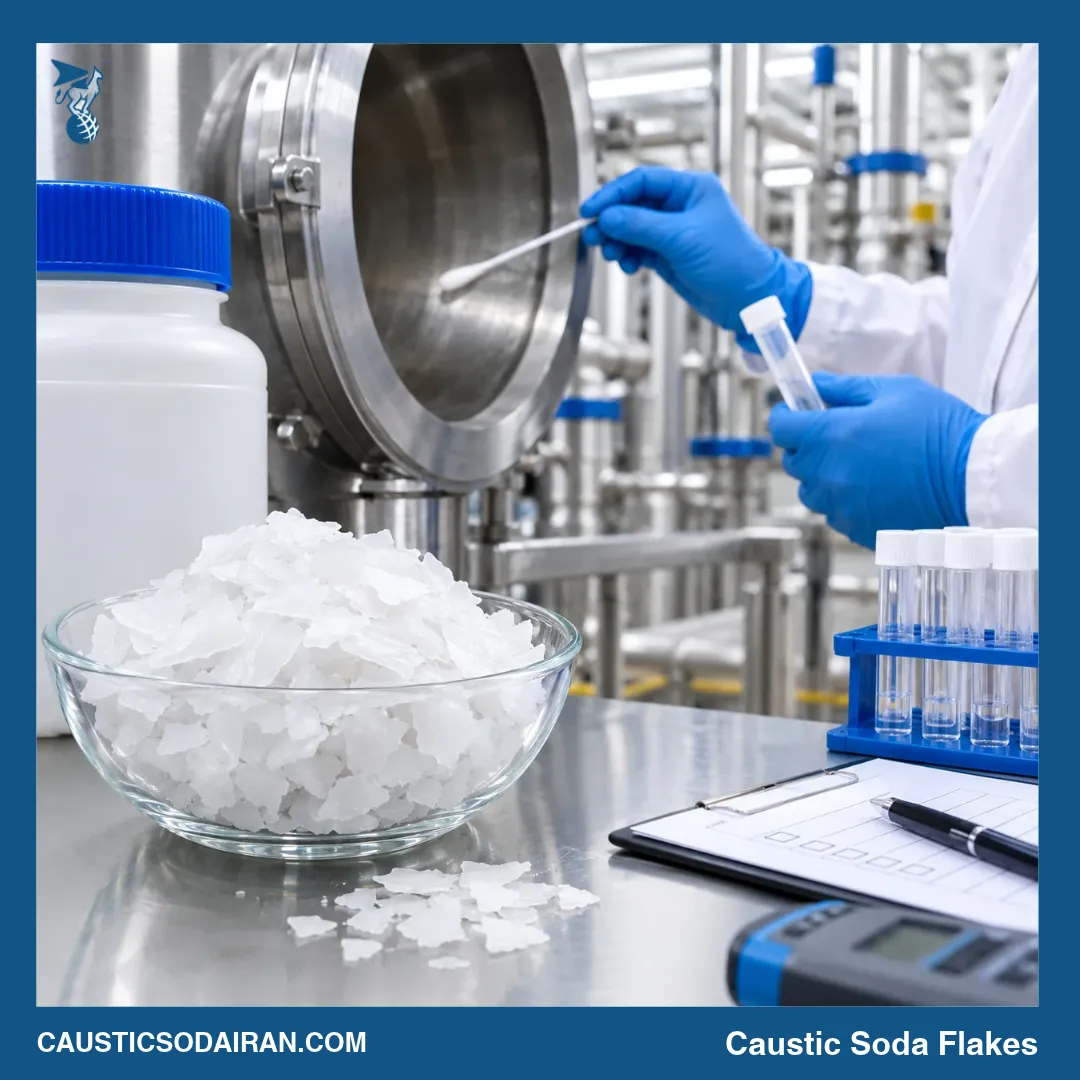
Quality control is essential throughout caustic soda flakes production. Manufacturers test the final product to confirm that it meets industrial requirements and relevant customer specifications.
Important quality parameters include:
- NaOH purity: Indicates the sodium hydroxide content.
- Moisture content: Affects product stability and storage.
- Sodium carbonate: Helps identify unwanted chemical impurities.
- Physical appearance: Includes flake size, color, and uniformity.
Consistent quality allows industrial users to achieve more predictable results in their production processes.
6. Packaging and Storage of Caustic Soda Flakes
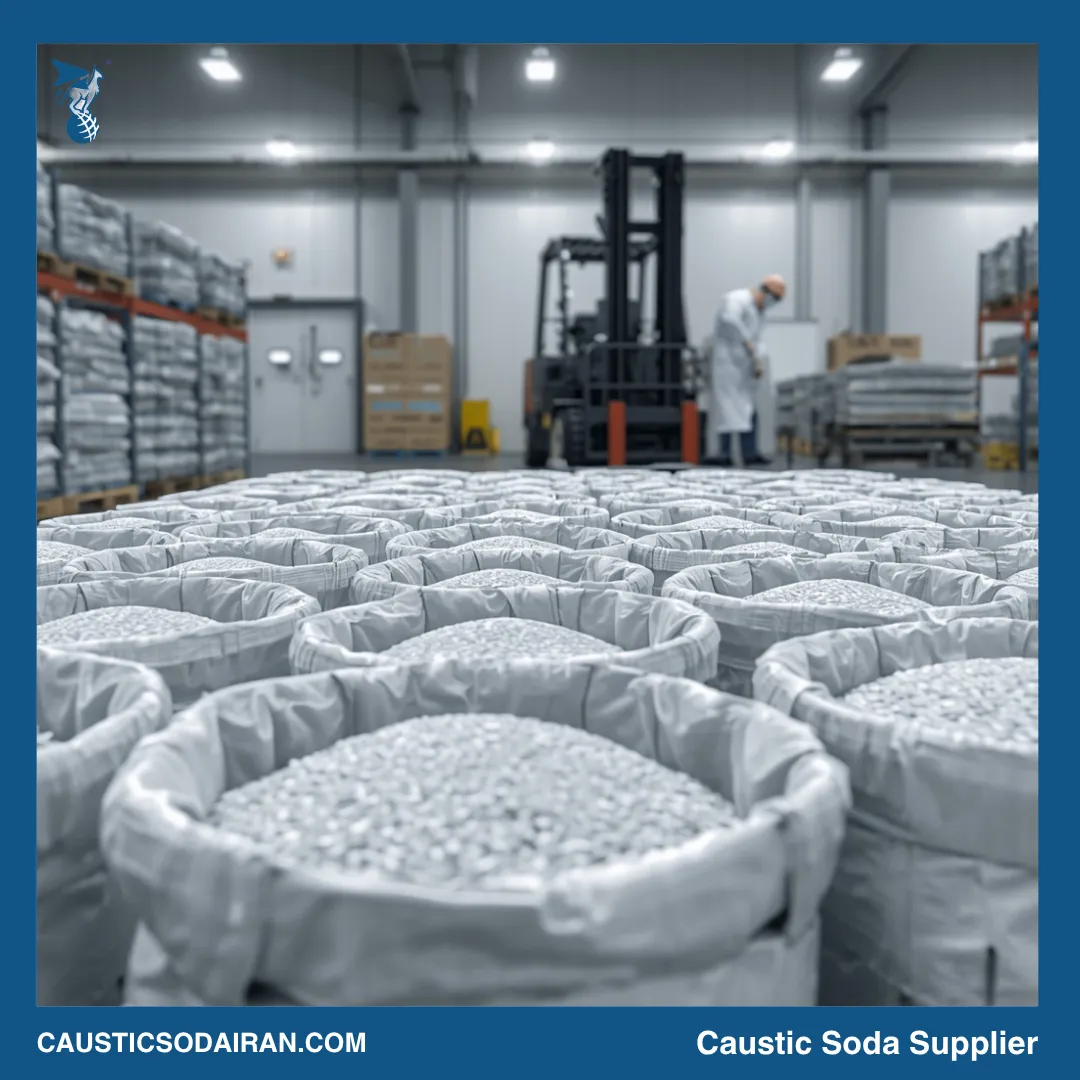
After cooling and inspection, manufacturers pack caustic soda flakes in moisture-resistant bags. Proper packaging protects the product against atmospheric moisture and contamination during transportation and storage.
Because sodium hydroxide is highly hygroscopic, it can absorb moisture from the surrounding air. Therefore, buyers should store the material in tightly sealed packaging, in a dry and well-ventilated area.
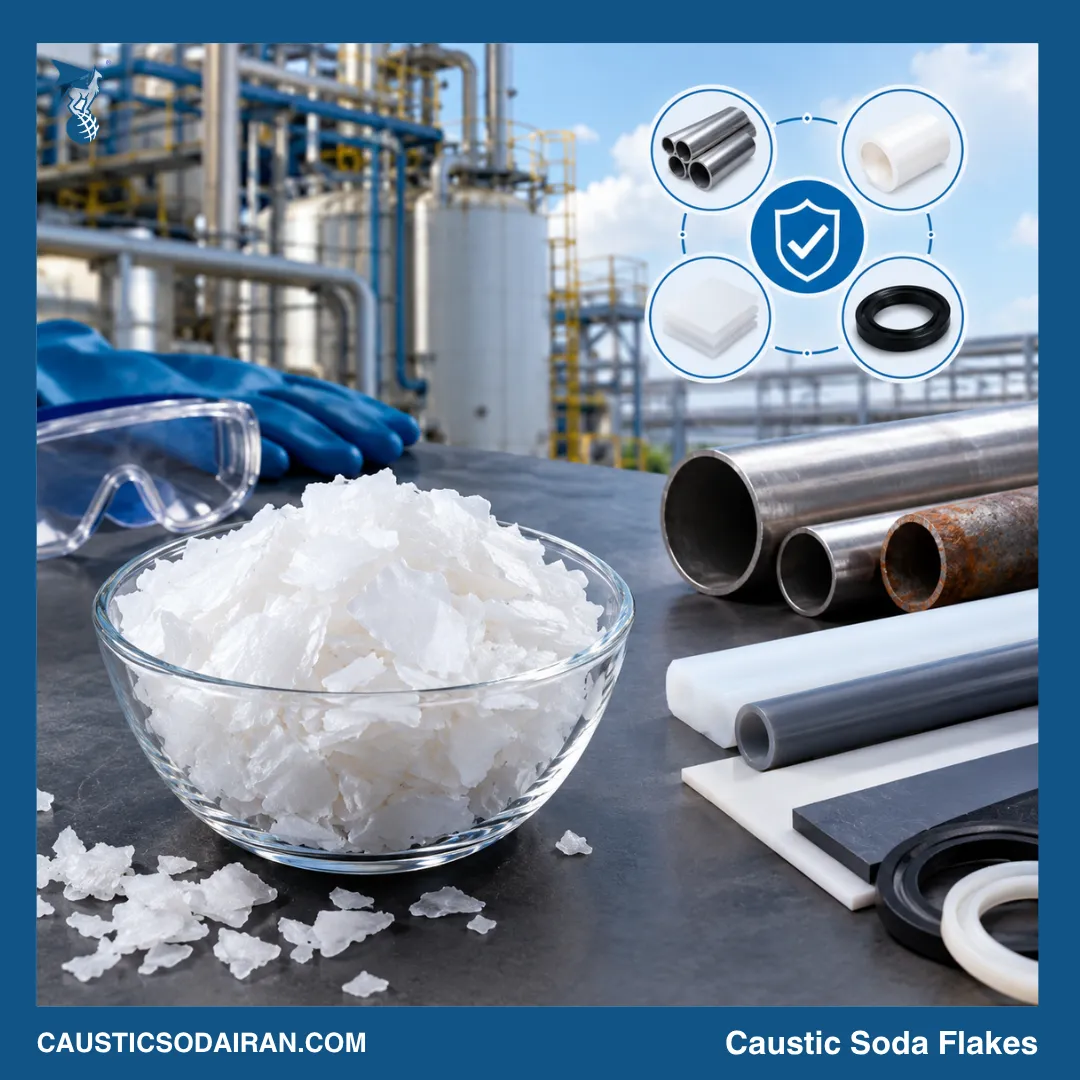
Safe handling procedures are also necessary because caustic soda is highly corrosive and can cause severe skin and eye burns.
7. Why the Production Process Matters to Industrial Buyers
Understanding how manufacturers convert caustic soda liquor into flakes helps buyers make better purchasing decisions.
An efficient production process can offer several advantages:
- More consistent sodium hydroxide purity
- Better control over moisture levels
- Improved product uniformity
- Reduced manufacturing and energy losses
- More reliable product specifications
For industrial buyers, evaluating both product quality and supplier reliability is important when selecting a caustic soda flakes supplier.
Conclusion
Converting caustic soda liquor into flakes requires carefully controlled evaporation, concentration, and solidification. Each stage contributes to the purity, physical characteristics, and overall quality of the final product.
By understanding these manufacturing steps, industrial buyers can better evaluate caustic soda flakes and select products that meet their operational requirements.
Buy High-Quality Caustic Soda Flakes from a Reliable Supplier
Looking for high-quality caustic soda flakes for your industrial operations? Caustic Soda Iran supplies caustic soda products for various industrial applications. Contact our team today to request the latest price quotation, product specifications, and Certificate of Analysis (COA).
For pricing inquiries and product information, visit our Contact Us page and get in touch with our sales team.
Leave a Reply