
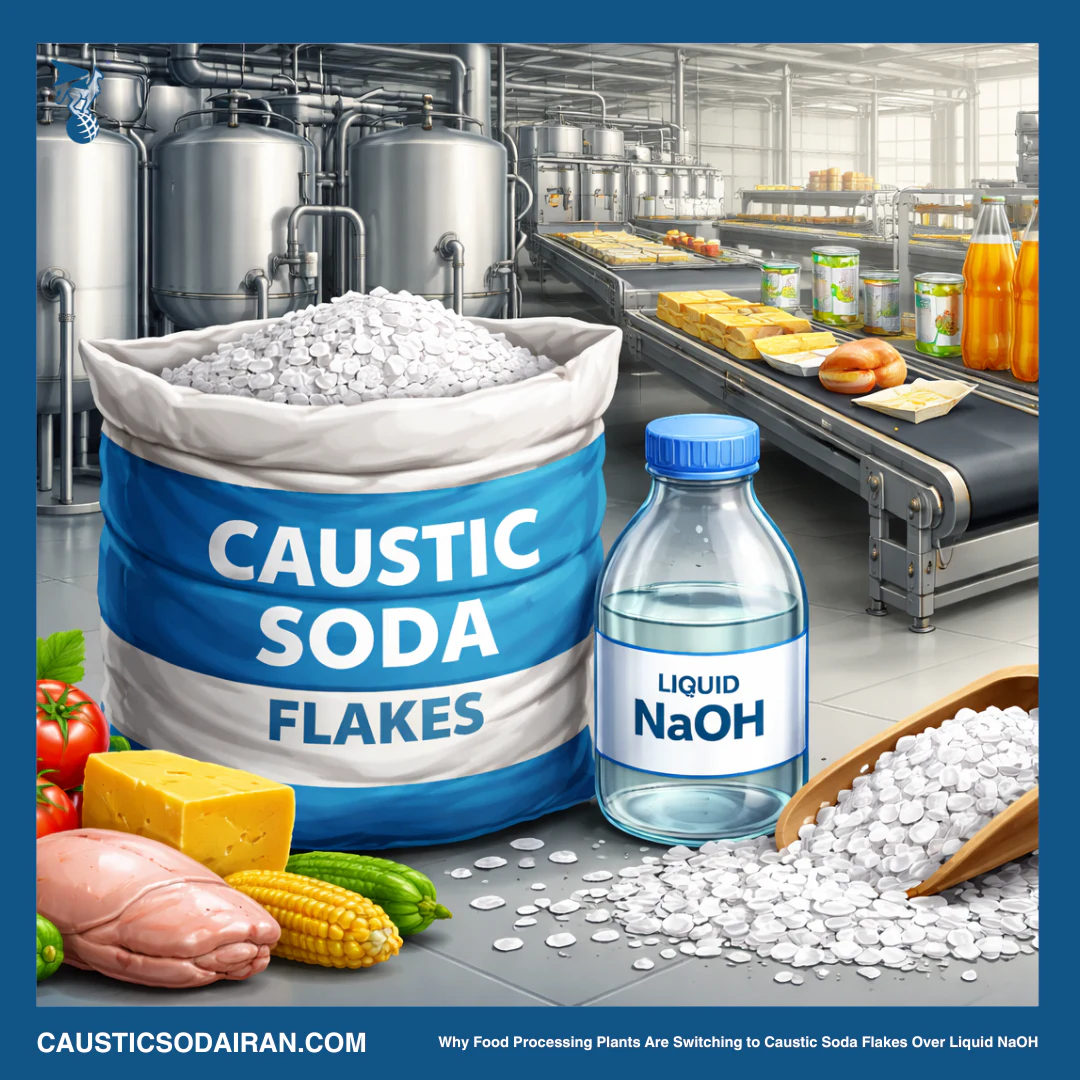
In modern facilities, optimizing operational costs while maintaining hygiene is a constant balancing act, which is why the adoption of caustic soda in food processing lines has become a major industry trend. Sodium Hydroxide ($NaOH$), commonly known as the solid flake form, is an indispensable chemical in this sector, powering everything from Clean-in-Place (CIP) systems to the processing of olives, cocoa, and dairy products.
1. Massive Savings on Transportation and Logistics
The most significant financial driver for this switch boils down to one thing: water weight. Commercial liquid caustic soda is typically supplied at a 50% concentration. This means:
When you buy one ton of liquid NaOH, you are essentially paying to transport 500 kg of active chemical and 500 kg of water.
In contrast, caustic soda flakes boast a purity level of 98% to 99%. This high concentration delivers immediate logistical advantages:
- Cut Freight Costs in Half: You only pay for the transport of the actual active product, not the water weight.
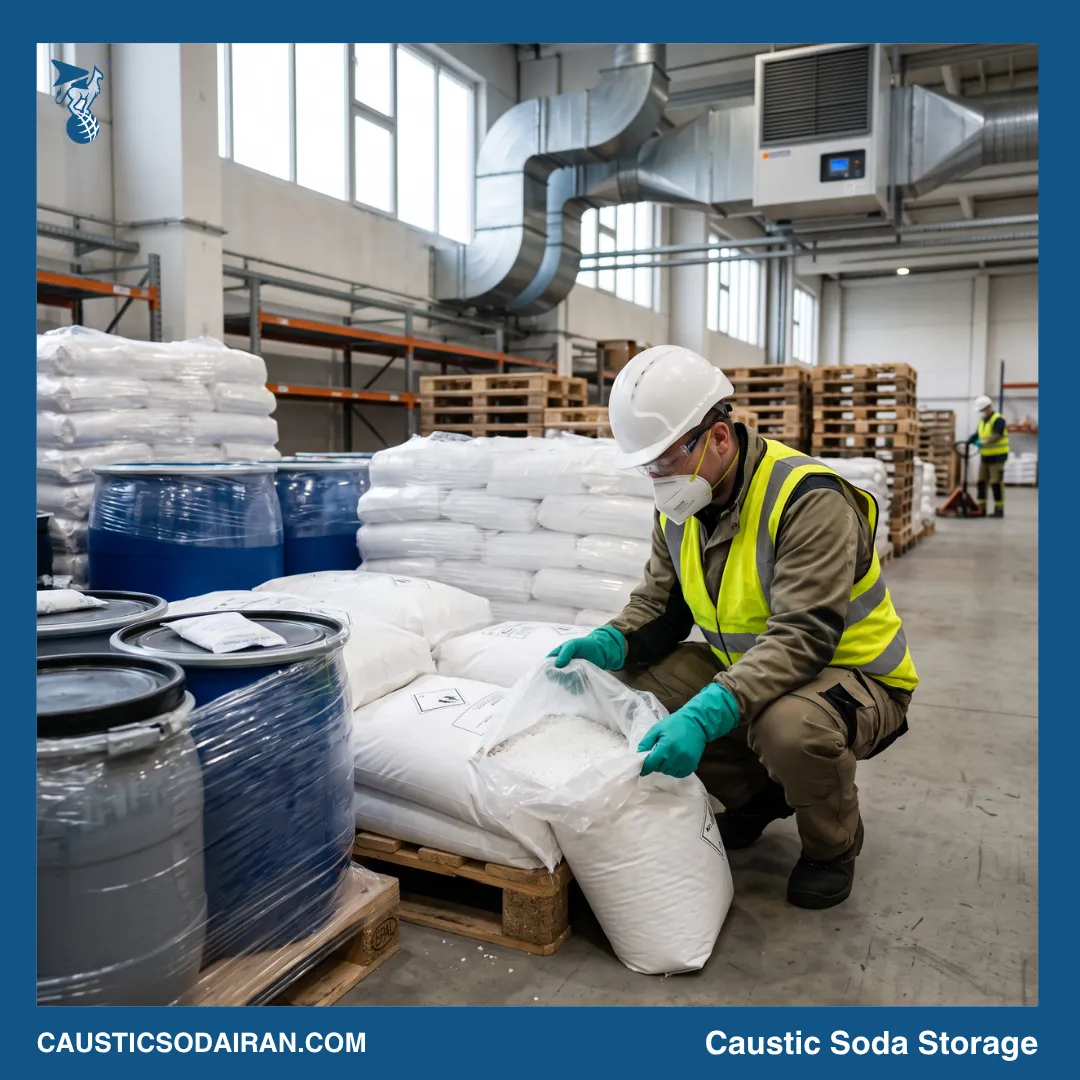
- Minimized Storage Footprint: Sacks of flakes take up significantly less square footage in a warehouse and eliminate the need for expensive, specialized bulk liquid storage tanks.
2. Immunity to Freezing and Temperature Shifts
One of the biggest operational nightmares of 50% liquid caustic soda is its high freezing point. Liquid NaOH begins to crystallize and freeze at around 12°C (54°F).
To prevent freezing during winter or in colder climates, processing plants must invest in insulated tanks and pipe-heating systems (heat tracing). This drastically increases energy consumption and introduces the risk of clogged lines. Caustic soda flakes, being solid, remain perfectly stable across extreme temperature fluctuations without altering their physical state or quality.
3. Precise Dosage Control and Formulation Flexibility
Accuracy in formulation is non-negotiable in the food industry. The concentration of liquid caustic soda can degrade or fluctuate over time due to evaporation or environmental moisture absorption.
Caustic soda flakes offer a highly pure, predictable baseline (98%+ purity). Plant chemists and operators can weigh the exact amount of solid flakes needed to create custom-strength solutions for specific tasks—such as chemical peeling of fruits or heavy-duty line cleaning—without worrying about initial concentration variances.
4. Extended Shelf Life and Chemical Stability
Liquid caustic soda is prone to carbonation; when exposed to the carbon dioxide ($CO_2$) in the air, it slowly converts into sodium carbonate, reducing its effectiveness.
Solid flakes, when stored in standard dual-layered packaging (polypropylene bags with a polyethylene inner liner), are incredibly stable. They have an exceptionally long shelf life, allowing food plants to buy in bulk and store inventory for months without fearing a drop in chemical potency.
5. Enhanced Spill Management and Safety
While both forms are highly corrosive and require strict Personal Protective Equipment (PPE), managing an accidental breach is much easier with the solid form.
A leak or rupture in a liquid NaOH storage tank can quickly spread across a facility floor, posing immediate environmental risks and threatening drainage systems. Conversely, a spilled bag of caustic soda flakes remains localized. It can be easily swept up, contained, or neutralized safely before it causes widespread damage.
Comparison at a Glance: Flakes vs. Liquid NaOH
| Feature | Caustic Soda Flakes | Liquid NaOH (50%) |
| Purity Level | 98% – 99% | Approx. 50% |
| Shipping Efficiency | High (Highly economical) | Low (High cost due to water weight) |
| Freezing Vulnerability | None | High (Freezes below 12°C) |
| Storage Requirements | Compact pallet storage | Bulk, specialized liquid tanks |
| Shelf Life | Excellent (Long-term stability) | Limited (Prone to carbonation) |
Conclusion
The transition from liquid NaOH to caustic soda flakes in food processing plants is a calculated move toward efficiency. While dissolving flakes requires an initial mixing step on-site, the long-term rewards—ranging from reduced freight bills and zero freezing worries to superior shelf life—far outweigh the minor preparation time. For modern food plants looking to lean out their supply chain, flakes are proving to be the superior choice.

Leave a Reply