
Introduction
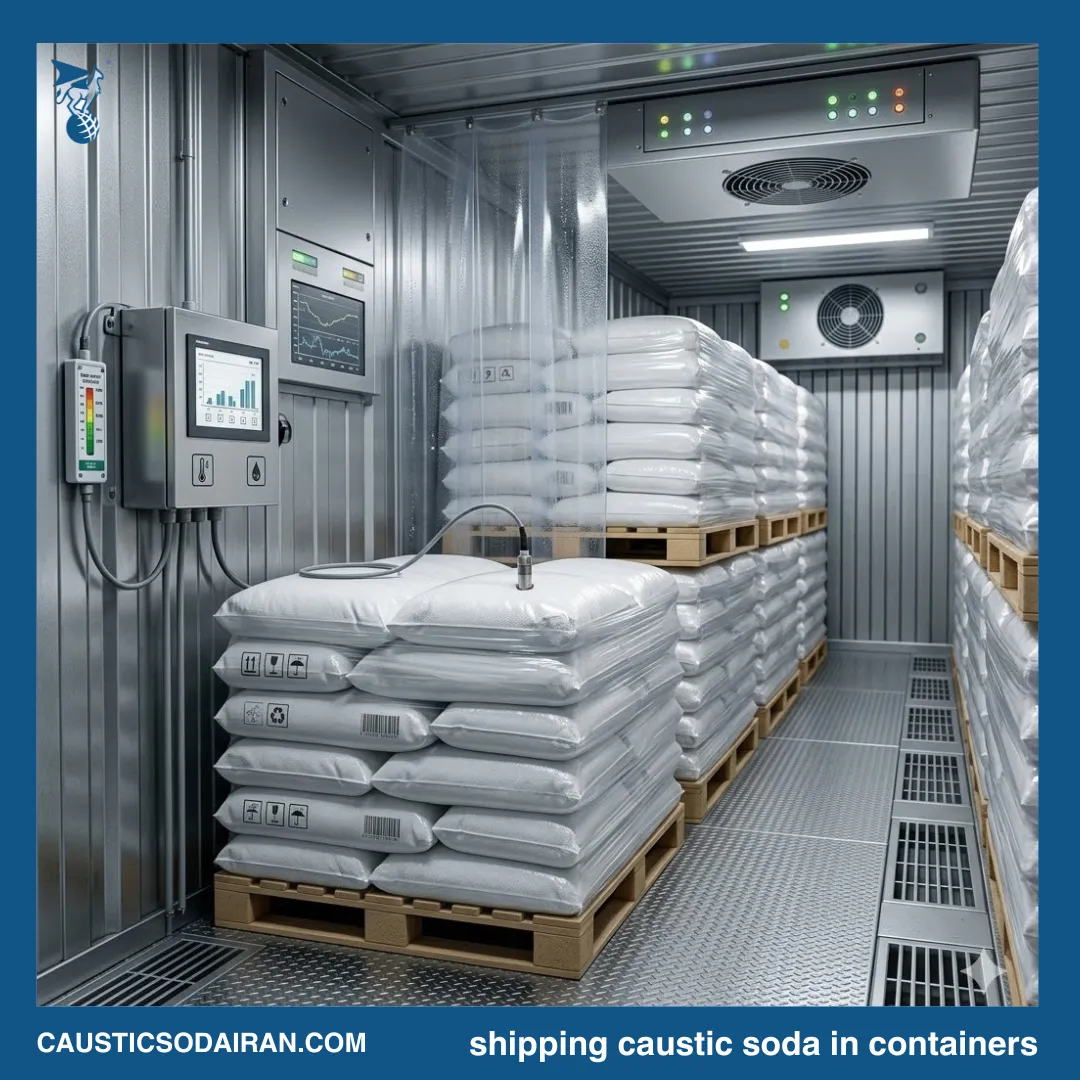
Shipping caustic soda flakes (sodium hydroxide) in bulk sea containers requires strict environmental control to maintain product integrity. One of the most critical challenges in shipping caustic soda in containers is managing exposure to moisture and temperature fluctuations during ocean transit.
Because caustic soda is highly hygroscopic, even small deviations in humidity or condensation inside containers can lead to caking, lump formation, and reduced usability in downstream chemical processes.
Why Temperature and Humidity Matter in Caustic Soda Logistics
Caustic soda flakes readily absorb moisture from the surrounding environment. When transported in sea containers, the product is exposed to:
- Long transit times (2–6 weeks typical ocean freight)
- Variable ambient temperatures
- Condensation cycles (“container rain”)
- Coastal humidity during loading/unloading
These factors can compromise product quality if not properly managed.
Key Risk: Hygroscopic Degradation
When moisture is absorbed:
- Flakes begin to agglomerate (caking)
- Dissolution rate in industrial applications decreases
- Product weight and purity specifications may be affected
Optimal Temperature Conditions for Container Shipping
Maintaining a stable temperature range is essential in shipping caustic soda in containers.
Recommended conditions:
- Ideal range: 15°C – 30°C
- Avoid rapid temperature swings (>10°C in short periods)
- Prevent exposure to direct sunlight during storage and loading
Why temperature control matters:
Temperature fluctuations cause internal condensation inside containers. This is one of the main drivers of moisture contamination even in sealed packaging.
Humidity Control Strategies for Sea Containers
Humidity is the most critical factor in preserving caustic soda flakes.
1. Use of Desiccants
- Calcium chloride or silica gel desiccants
- Placed in strategic container positions (roof + corners)
- Absorb excess moisture during transit
2. Liner Protection Systems
- Polyethylene container liners
- Aluminum barrier liners for high-risk routes
- Moisture-resistant pallet wrapping
3. Container Pre-Conditioning
- Drying containers before loading
- Ensuring internal relative humidity is below 50%
Preventing “Container Rain” (Condensation Formation)
Container rain occurs when warm, humid air inside the container condenses on cooler metal surfaces.
Mitigation techniques:
- Avoid loading in high humidity conditions
- Use ventilated but sealed container systems where appropriate
- Apply thermal insulation liners
- Maintain consistent temperature profiles across the route
Packaging Best Practices for Caustic Soda Flakes
Proper packaging is a core part of successful shipping caustic soda in containers.
Recommended packaging:
- Multi-layer polyethylene bags
- 25 kg or 50 kg sealed sacks
- Jumbo bags with inner liners for bulk shipping
- Moisture-resistant pallet shrink wrapping
Critical rule:
Packaging must act as a secondary moisture barrier, not the only protection layer.
Container Selection and Handling Guidelines
Not all containers are suitable for chemical-grade flake transport.
Preferred container types:
- Dry standard 20ft and 40ft containers
- High-cube containers for pallet efficiency
- Moisture-tested (pre-inspected) units only
Handling precautions:
- Avoid open-yard exposure before loading
- Minimize dwell time at humid ports
- Seal containers immediately after loading
Supply Chain Considerations
Maintaining product integrity is not only a shipping issue but also a logistics chain challenge:
- Warehousing conditions before export
- Port storage humidity levels
- Transit route climate zones (tropical vs. temperate)
- Seasonal monsoon impacts in maritime logistics
Each stage must be controlled to ensure stability of caustic soda flakes.
Conclusion
Successful shipping caustic soda in containers depends heavily on controlling temperature stability and humidity exposure throughout the supply chain. Without proper mitigation strategies—such as desiccants, liner systems, and controlled handling—caustic soda flakes can quickly degrade, leading to caking and reduced industrial performance.
A well-designed logistics strategy ensures product integrity from production facility to final destination, even under challenging marine transport conditions.


Leave a Reply