
Introduction
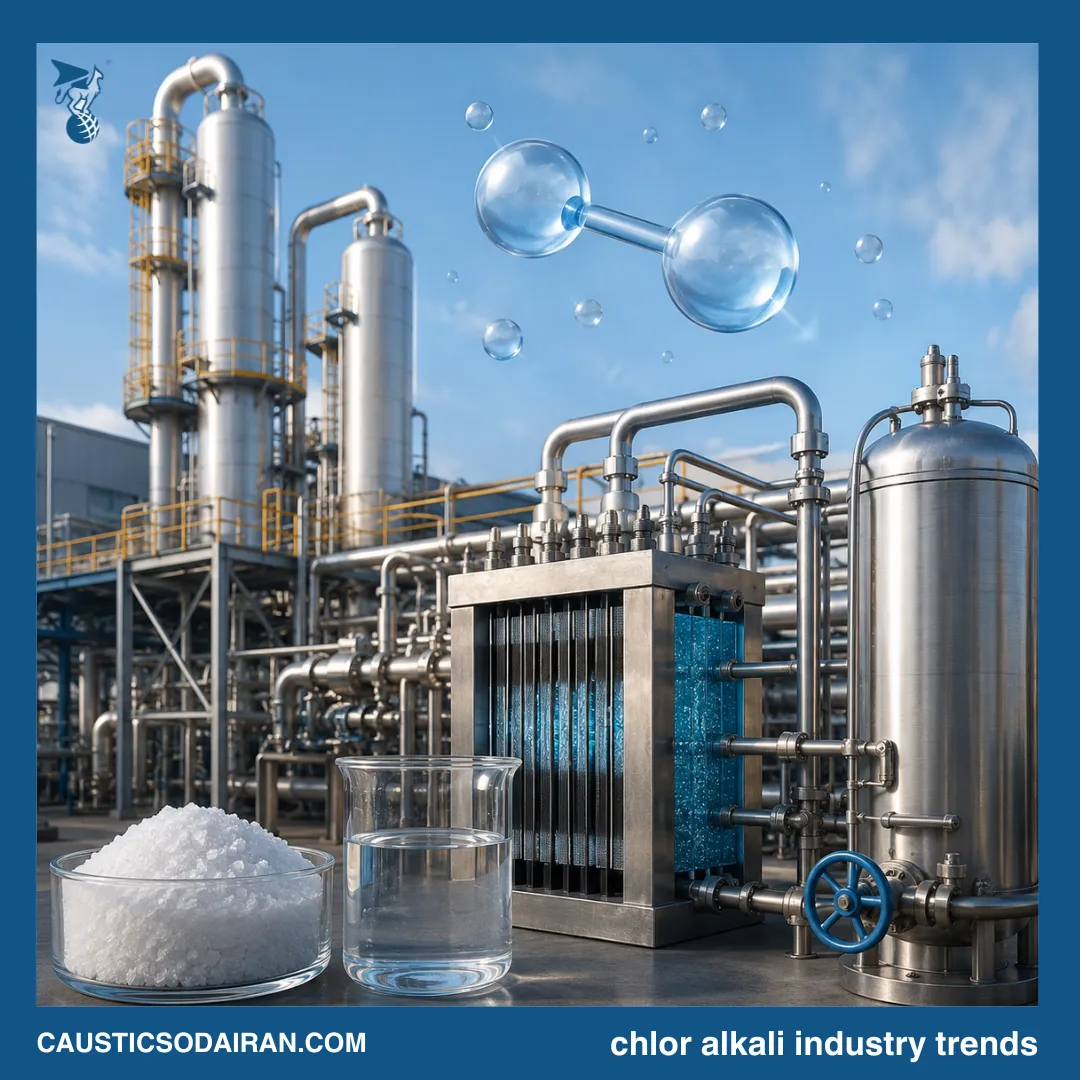
The chlor-alkali industry is a cornerstone of global chemical manufacturing, producing caustic soda (NaOH), chlorine (Cl₂), and hydrogen (H₂) through brine electrolysis. A less visible but increasingly strategic element of this process is hydrogen as a by-product, which is reshaping production economics and indirectly influencing caustic soda supply behavior.
As energy markets tighten and decarbonization pressures grow, chlor alkali industry trends are increasingly defined by how producers capture, monetize, or internally consume this hydrogen stream.
Hydrogen as a Structural By-Product in Chlor-Alkali Production
In electrolysis cells, hydrogen is generated at the cathode alongside caustic soda formation. Traditionally, this hydrogen was often:
- Vented (historically in smaller or older facilities)
- Burned on-site for process heat
- Used internally for limited chemical synthesis
However, modern membrane-based plants increasingly treat hydrogen as a commercial co-product rather than waste. This shift changes plant economics and operational strategy significantly.
How Hydrogen Utilization Alters Caustic Soda Supply Behavior
1. Improved Marginal Economics of Chlor-Alkali Operations
Electricity represents a dominant share of chlor-alkali production costs, often 40–60% of total cost structure. Electricity represents a dominant share of chlor-alkali production costs, and energy cost in caustic soda production plays a decisive role in market pricing and supply behavior.
When hydrogen is captured and sold (or internally optimized), it effectively:
- Reduces net production cost per ton of NaOH
- Improves plant profitability during low caustic soda price cycles
- Encourages higher operating rates even in weak chlorine markets
This leads to greater supply stability in caustic soda output.
2. Decoupling Production Constraints from Chlorine Demand
A defining feature of chlor-alkali production is the fixed co-production ratio of:
- Caustic soda
- Chlorine
- Hydrogen
Historically, chlorine demand volatility constrained caustic soda output. However, monetizing hydrogen introduces an additional revenue buffer, allowing producers to:
- Maintain higher utilization rates
- Reduce shutdown frequency
- Smooth production cycles despite chlorine oversupply
This directly reshapes chlor alkali industry trends toward more continuous production regimes.
3. Hydrogen Monetization Encourages Capacity Expansion
Where hydrogen can be sold into:
- Merchant hydrogen markets
- Refining and petrochemical sectors
- Emerging low-carbon hydrogen supply chains
Producers gain an additional revenue stream that improves project IRR. This incentivizes:
- New membrane-cell capacity investments
- Retrofit of older diaphragm or mercury-based units
- Co-location with hydrogen offtake infrastructure
The result is a long-term expansion of caustic soda capacity availability, particularly in regions with strong hydrogen demand.
4. Energy Optimization and Internal Hydrogen Use
Some facilities redirect hydrogen for:
- Combined heat and power (CHP) systems
- Steam generation
- On-site chemical synthesis
This reduces external fuel demand and stabilizes plant energy costs. Lower energy volatility translates into:
- More predictable caustic soda pricing
- Reduced shutdown risk during energy spikes
- Improved regional competitiveness
Supply Chain Implications for Caustic Soda Markets
1. Increased Supply Elasticity
Hydrogen valorization improves plant resilience, allowing producers to maintain output under market stress conditions. This increases short-term supply elasticity, especially in integrated chemical hubs.
2. Regional Production Divergence
Regions with strong hydrogen utilization infrastructure (industrial clusters, refinery demand) tend to:
- Maintain higher utilization rates
- Export more caustic soda consistently
- Experience less price-driven production cuts
This creates structural divergence in global supply reliability.
3. Reduced Volatility in Chlor-Alkali Cycles
Since hydrogen provides an additional revenue stabilizer, producers are less exposed to:
- Chlorine demand downturns
- Energy price spikes
- Caustic soda price compression
Over time, this dampens cyclical volatility in chlor-alkali operations.
Strategic Impact on Chlor Alkali Industry Trends
Hydrogen utilization is now a core structural driver in chlor alkali industry trends, influencing:
- Asset utilization strategies
- Investment in membrane cell technology
- Integration with hydrogen economy infrastructure
- Supply chain risk management
The chlor-alkali sector is effectively transitioning from a dual-product system (chlorine + caustic soda) to a tri-product economic model including hydrogen, fundamentally reshaping production economics.
Conclusion
The utilization of hydrogen by-product is no longer a marginal operational detail—it is becoming a strategic variable that reshapes caustic soda supply dynamics. By improving economics, stabilizing production, and incentivizing capacity expansion, hydrogen integration is reinforcing long-term supply resilience in the chlor-alkali industry.
As chlor alkali industry trends continue evolving, hydrogen monetization will remain a key determinant of both regional competitiveness and global caustic soda supply stability.
Leave a Reply