
Introduction
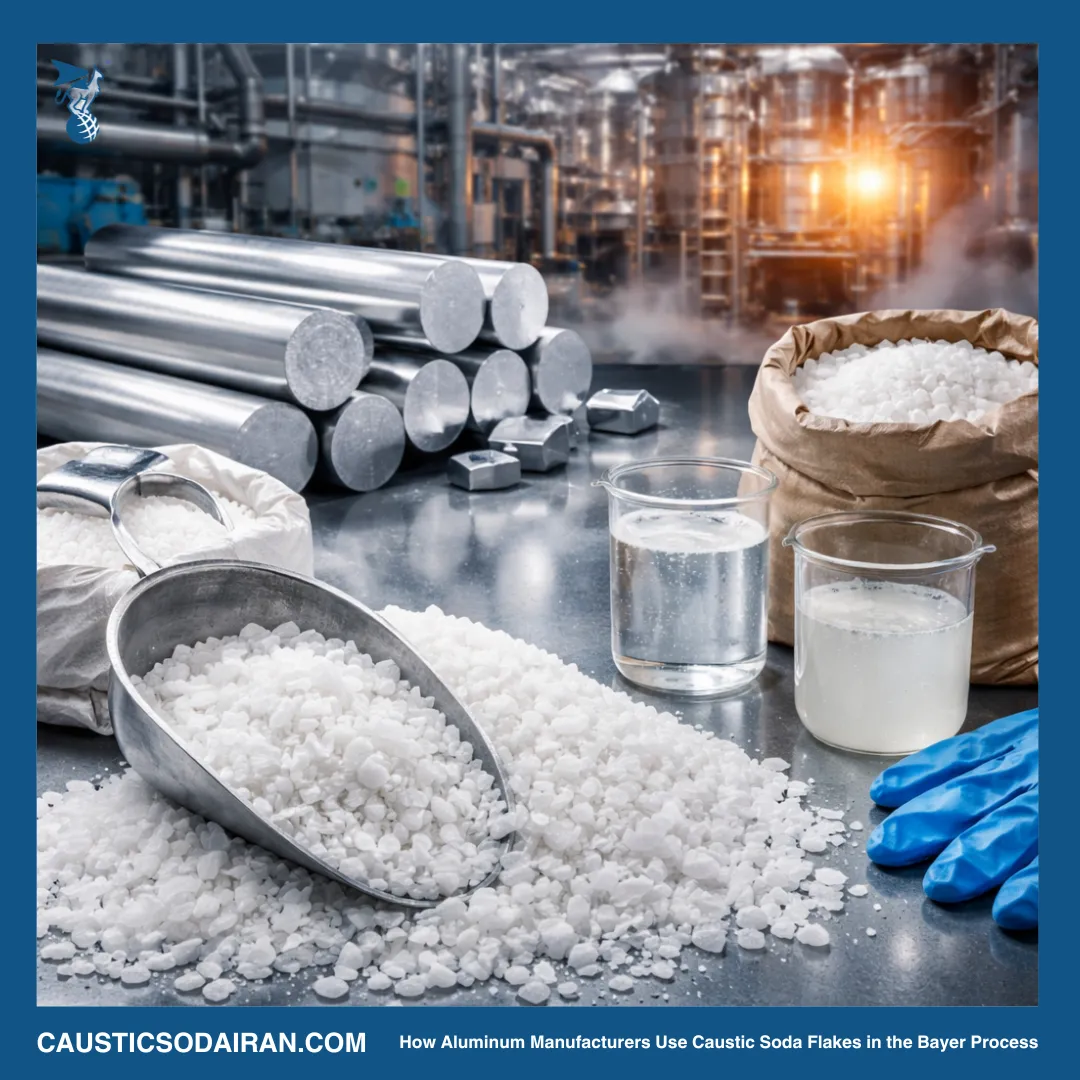
Aluminum is one of the most widely used metals in the world, serving industries such as construction, automotive manufacturing, packaging, and aerospace. Before aluminum can be produced, alumina must be extracted from bauxite ore through a refining method known as the Bayer process. A critical chemical used throughout this operation is caustic soda flakes. Understanding the role of the caustic soda flakes aluminum Bayer process relationship helps manufacturers improve production efficiency, reduce costs, and maintain product quality.
What Is the Bayer Process?
The Bayer process is the primary industrial method used to refine bauxite into alumina (Al₂O₃), which is later converted into aluminum metal through electrolysis. The process involves four major stages:
- Bauxite preparation
- Digestion
- Clarification
- Precipitation and calcination
Caustic soda flakes, which consist mainly of sodium hydroxide (NaOH), play an essential role during the digestion stage where alumina is separated from impurities.
Why Caustic Soda Flakes Are Used
Caustic soda flakes are highly alkaline and can dissolve aluminum-bearing minerals found in bauxite. When mixed with finely ground bauxite under elevated temperatures and pressure, sodium hydroxide reacts with aluminum hydroxides to form soluble sodium aluminate.
This selective dissolution allows valuable alumina to enter the solution while impurities such as iron oxides and titanium oxides remain undissolved and can be removed later.
The Role of Caustic Soda Flakes in the Digestion Stage
The digestion stage is considered the heart of the Bayer process. During this step:
- Bauxite ore is crushed and ground into fine particles.
- Caustic soda solution is added to create a slurry.
- The mixture is heated under pressure.
- Aluminum compounds dissolve into the liquor as sodium aluminate.
The efficiency of this reaction depends on factors such as caustic concentration, temperature, pressure, and bauxite quality. Proper control helps maximize alumina recovery while minimizing chemical consumption.
Benefits of Using High-Quality Caustic Soda Flakes
Aluminum refineries prefer high-purity caustic soda flakes because they offer several advantages:
Improved Alumina Extraction
Higher purity sodium hydroxide increases the dissolution rate of alumina-bearing minerals and improves overall yield.
Reduced Impurity Levels
Low contaminant levels help prevent unwanted reactions that can affect product quality and equipment performance.
Lower Maintenance Costs
Consistent chemical quality reduces scaling, equipment fouling, and operational disruptions.
Enhanced Process Efficiency
Reliable caustic soda performance allows refineries to optimize production and reduce waste generation.
Challenges in the Bayer Process
Although caustic soda is essential, manufacturers must manage several operational challenges:
- Losses caused by reactive silica in bauxite
- Formation of scale deposits in process equipment
- Handling and disposal of red mud residue
- Recovery and recycling of caustic liquor
Modern alumina refineries employ advanced monitoring systems and recycling technologies to improve caustic soda utilization and reduce environmental impact.
Sustainability and Caustic Soda Recovery
One of the economic strengths of the Bayer process is the ability to recover and recycle a large portion of the sodium hydroxide used during digestion. Recovered caustic liquor is returned to the process, reducing raw material consumption and improving sustainability.
Efficient recycling systems help aluminum manufacturers lower operating costs while supporting environmental goals.
Conclusion
The connection between caustic soda flakes aluminum Bayer process operations is fundamental to modern aluminum production. Caustic soda flakes enable the efficient extraction of alumina from bauxite, making them one of the most important chemicals in the aluminum industry. By using high-quality sodium hydroxide and implementing effective recovery systems, aluminum manufacturers can increase productivity, improve product quality, and reduce overall production costs.
Leave a Reply