
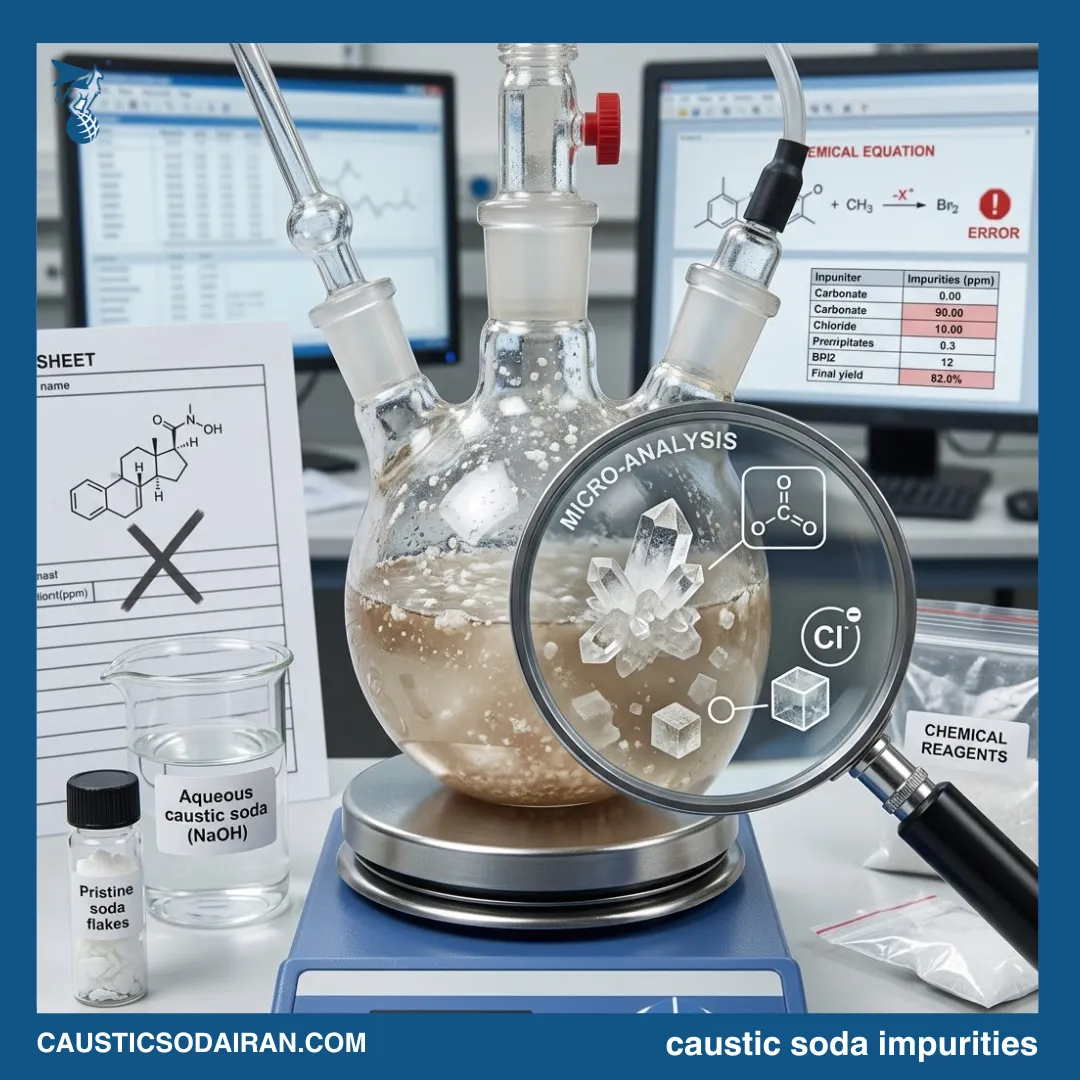
In industrial chemistry, sodium hydroxide (NaOH), commonly known as caustic soda, is a foundational reagent used in a wide range of synthesis processes—from organic intermediate production to pH control in large-scale manufacturing. However, the performance of NaOH is highly sensitive to the presence of contaminants, particularly carbonate (Na₂CO₃) and chloride (Cl⁻) ions. These caustic soda impurities can significantly disrupt reaction efficiency, product purity, and overall process reliability.
Understanding Caustic Soda Purity and Its Role in Synthesis
High-purity NaOH is expected to behave as a strong, predictable base, fully dissociating in solution. In ideal conditions, it provides consistent alkalinity, enabling controlled reaction kinetics. However, when impurities such as carbonates and chlorides are present, they introduce unwanted side reactions and alter the chemical environment.
Even small deviations in purity can lead to measurable consequences in sensitive chemical syntheses, particularly in pharmaceutical, fine chemical, and specialty material production.
Carbonate Contamination: The Silent Efficiency Killer
Carbonate impurities typically form when NaOH absorbs carbon dioxide (CO₂) from the air:
2 NaOH + CO₂ → Na₂CO₃ + H₂O
Effects on Chemical Synthesis:
- Reduced effective alkalinity: Carbonate ions are weaker bases compared to hydroxide ions, lowering the actual available OH⁻ concentration.
- Buffering effect: Carbonates create a buffering system that interferes with pH-sensitive reactions.
- Precipitation issues: In reactions involving metal ions (e.g., Ca²⁺, Mg²⁺), unwanted carbonate precipitates may form, contaminating products.
- Reduced reaction rates: Lower active base concentration slows down base-catalyzed reactions such as ester hydrolysis or condensation processes.
In high-precision synthesis, this loss of control can result in batch inconsistency and lower yield.
Chloride Impurities: Corrosion and Side-Reaction Risks
Chloride contamination in caustic soda usually originates from incomplete purification during chlor-alkali production.
Key Impacts:
- Equipment corrosion: Chloride ions accelerate pitting corrosion in stainless steel reactors and pipelines, increasing maintenance costs and downtime.
- Side reactions: In organic synthesis, chloride can participate in substitution reactions, producing unwanted chlorinated byproducts.
- Catalyst poisoning: Certain catalysts, especially metal-based ones, are highly sensitive to halides and may lose activity.
- Product contamination: Even trace chloride levels can compromise purity standards in pharmaceuticals and electronic-grade chemicals.
Combined Effect of Carbonate and Chloride Impurities
When both carbonate and chloride impurities are present, their effects are not merely additive—they often interact indirectly by destabilizing reaction conditions:
- Increased variability in pH control systems
- Higher demand for neutralization and purification steps
- Reduced reproducibility in multi-step synthesis processes
- Lower overall process efficiency and increased operational costs
This is especially critical in continuous manufacturing systems where stability is essential.
Industrial Consequences of Poor-Quality Caustic Soda
Failure to control caustic soda impurities can lead to:
- Lower yield and inconsistent batch quality
- Increased downstream purification costs
- Shortened equipment lifespan due to corrosion
- Regulatory compliance risks in sensitive industries
For sectors like pharmaceuticals, agrochemicals, and high-purity solvents, these issues can significantly affect competitiveness and product approval.
Mitigation Strategies for Impurity Control
To minimize the impact of carbonate and chloride contamination, industries typically adopt the following strategies:
1. Controlled Storage Conditions
NaOH should be stored in airtight containers to prevent CO₂ absorption.
2. High-Purity Feedstock Selection
Using membrane-grade caustic soda reduces initial chloride and carbonate levels.
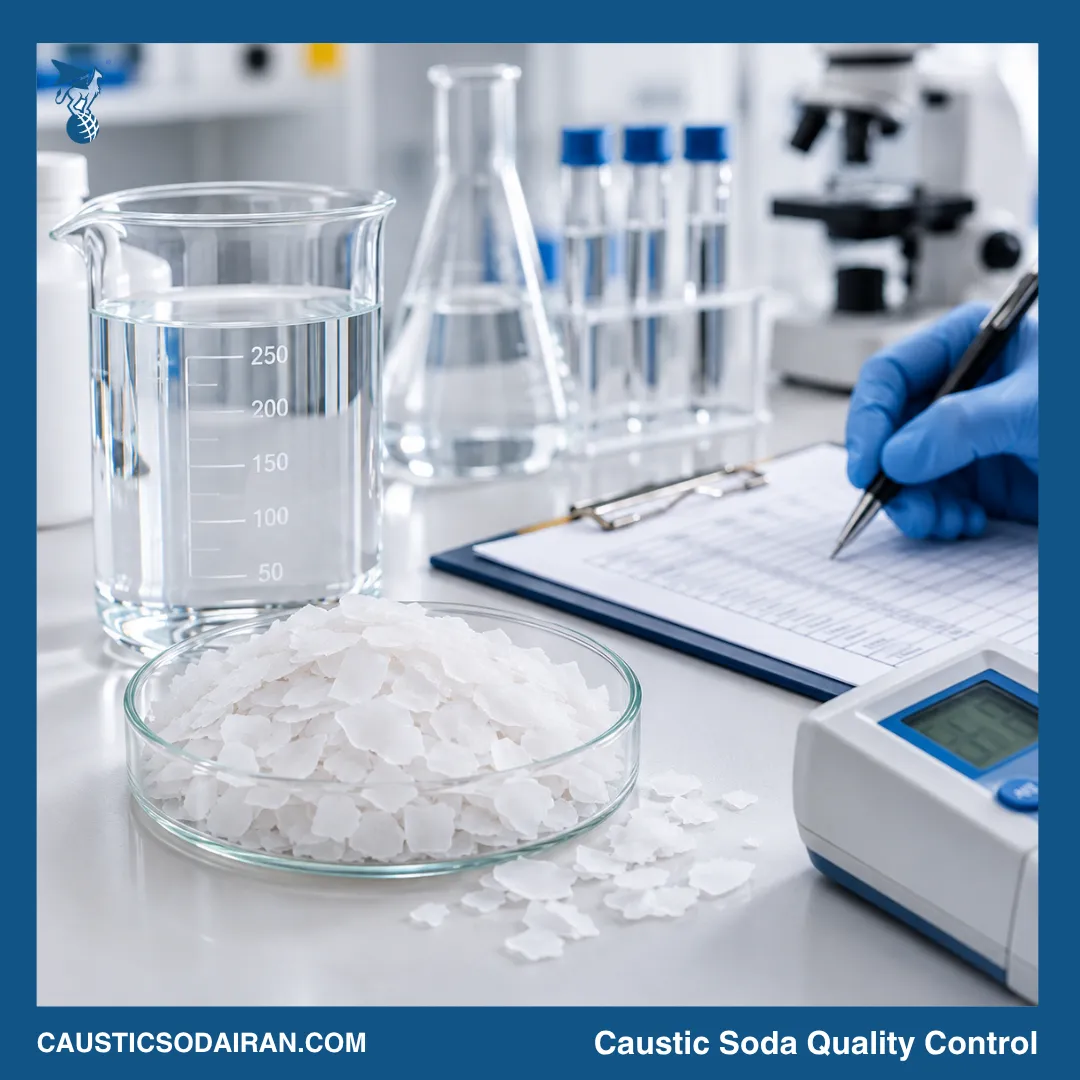
3. On-site Quality Testing
Regular titration and ion chromatography help monitor impurity levels before use.
4. Pre-treatment or Polishing Steps
In high-precision applications, NaOH solutions may be purified further before synthesis.
Conclusion
Carbonate and chloride impurities may seem minor in concentration, but their impact on chemical synthesis using NaOH is substantial. From reduced alkalinity and reaction inefficiency to equipment corrosion and product contamination, caustic soda impurities represent a critical quality parameter in industrial chemistry.
Ensuring high-purity caustic soda is not just a matter of performance—it is a requirement for consistency, safety, and economic efficiency in modern chemical manufacturing
For reliable, high-purity caustic soda solutions and consistent industrial supply, visit CausticSodaIran.com to explore our quality-focused chemical products and export services.
Leave a Reply