
Introduction
The rapid expansion of electric vehicles (EVs) and energy storage systems has led to a significant increase in spent lithium-ion batteries. As a result, advanced recycling technologies have become essential for recovering valuable metals such as lithium, cobalt, nickel, and manganese. Among these technologies, hydrometallurgical processes play a central role in efficient metal recovery.
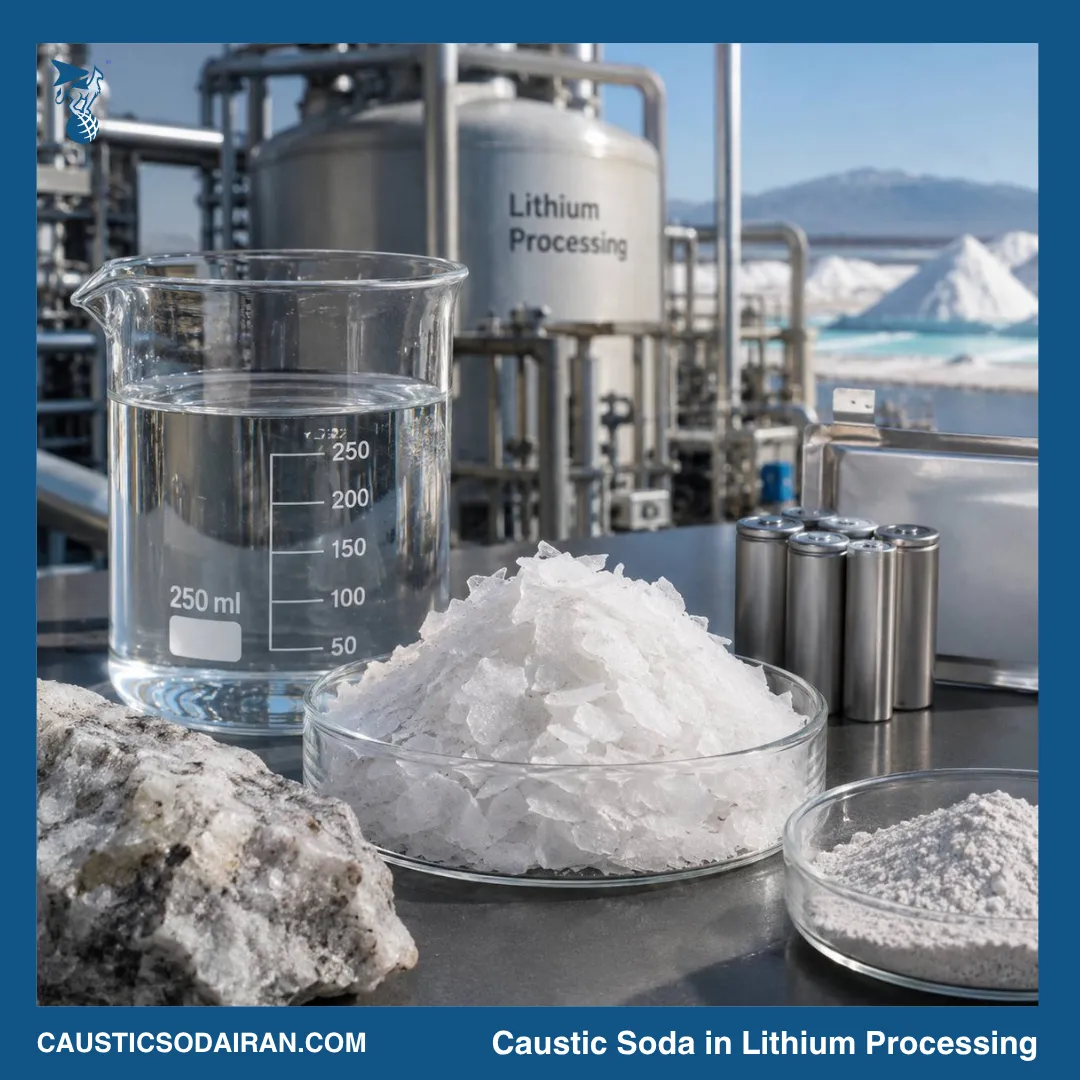
A key chemical used in these processes is Caustic Soda Flakes (sodium hydroxide, NaOH), which acts as a strong alkaline agent for pH control, selective precipitation, and process optimization.
The main SEO focus keyword in this article is battery recycling chemistry, which refers to the chemical reactions and mechanisms involved in the recovery of materials from used batteries.
Role of Caustic Soda Flakes in Lithium-Ion Battery Recycling
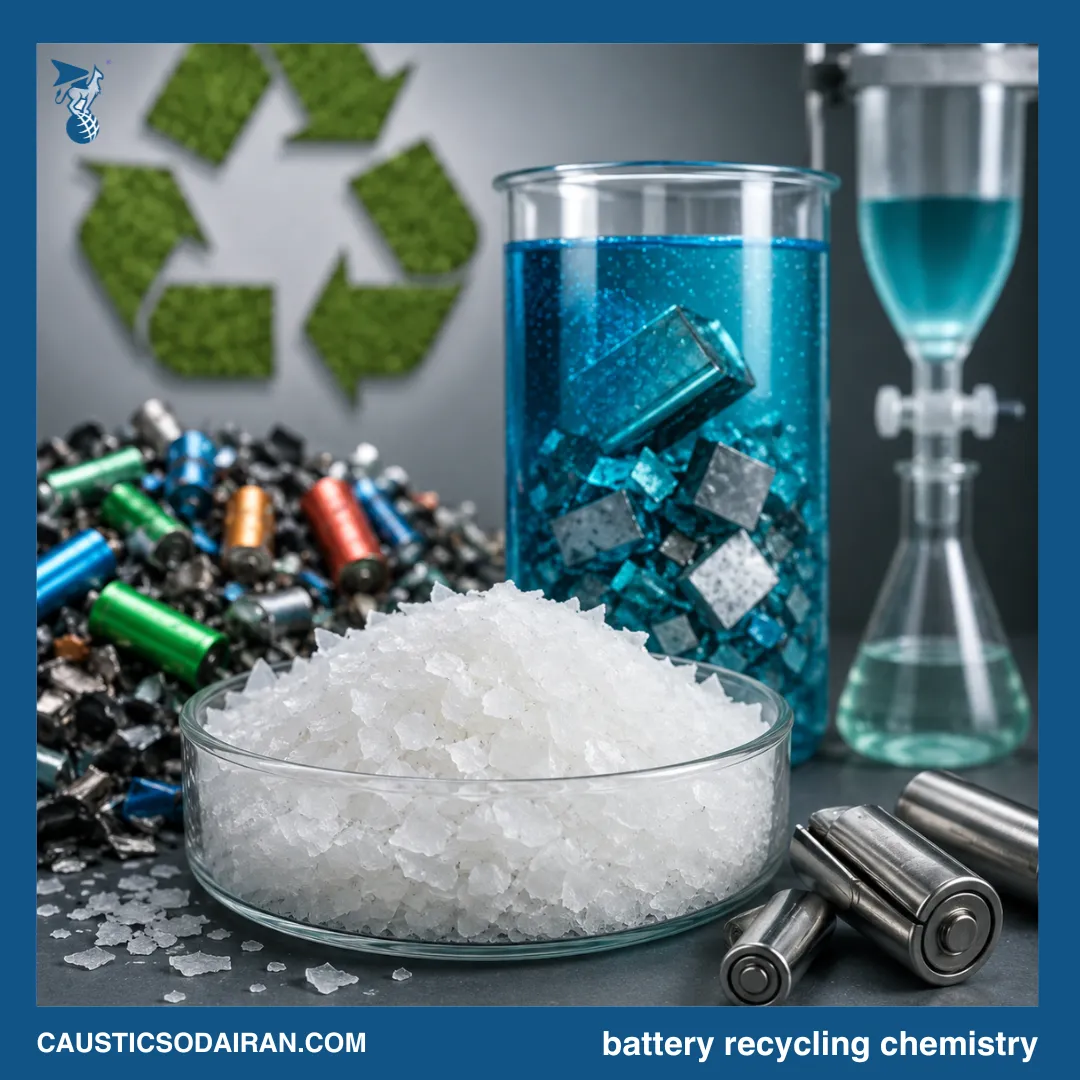
In Lithium-ion battery recycling, the primary objective is to recover valuable metals from the so-called “black mass” obtained after shredding spent batteries.
Caustic Soda Flakes (NaOH) play several critical roles:
1. pH Adjustment and Control
- Creates a strongly alkaline environment
- Enables selective precipitation of metal ions
- Prevents unwanted dissolution of certain impurities
2. Hydrolysis and Metal Precipitation
- Metal ions such as Al³⁺ and Fe³⁺ react with hydroxide ions
- Form insoluble hydroxides that can be easily separated
- Improves the purity of the leach solution containing lithium and other target metals
3. Support for Selective Leaching Systems
- Works alongside acidic leaching agents
- Helps control side reactions and stabilizes solution chemistry
- Improves overall process selectivity and efficiency
Hydrometallurgy and Battery Recycling Chemistry
The hydrometallurgical approach in Hydrometallurgy is one of the most widely used methods in modern battery recycling chemistry.
The typical process flow includes:
- Mechanical shredding of batteries
- Generation of “black mass”
- Acidic leaching of metals
- pH adjustment using Caustic Soda Flakes
- Selective precipitation of impurities
- Solvent extraction and purification
- Crystallization of metal salts
In this system, NaOH acts as a critical chemical control agent that determines separation efficiency and final product purity.
Key Chemical Reactions Involving Caustic Soda Flakes
Several important precipitation reactions occur in alkaline media:
- Aluminum precipitation:
Al³⁺ + 3OH⁻ → Al(OH)₃↓ - Iron precipitation:
Fe³⁺ + 3OH⁻ → Fe(OH)₃↓
These reactions are essential for removing impurities before lithium recovery steps.
Importance in Process Optimization
The use of Caustic Soda Flakes provides several industrial advantages:
- Improved metal separation efficiency
- Better control of reaction kinetics
- Reduced impurity levels in the final solution
- Lower operational costs in purification stages
- Enhanced scalability for industrial recycling plants
Precise control of NaOH concentration is one of the most important parameters in optimizing hydrometallurgical performance.
Industrial and Environmental Significance
With the growing demand for lithium-ion batteries, battery recycling chemistry has become a strategic field in sustainable resource management. Hydrometallurgical recycling using Caustic Soda Flakes reduces dependence on primary mining and supports a circular economy model.
This approach not only improves resource efficiency but also significantly reduces environmental impact associated with battery waste.
Conclusion
Caustic Soda Flakes are a crucial reagent in lithium-ion battery recycling, particularly in hydrometallurgical processes. By enabling precise pH control, selective precipitation, and improved separation efficiency, NaOH plays a vital role in modern battery recycling chemistry.
Understanding and optimizing these chemical interactions is essential for developing efficient, scalable, and sustainable battery recycling technologies.
Leave a Reply