
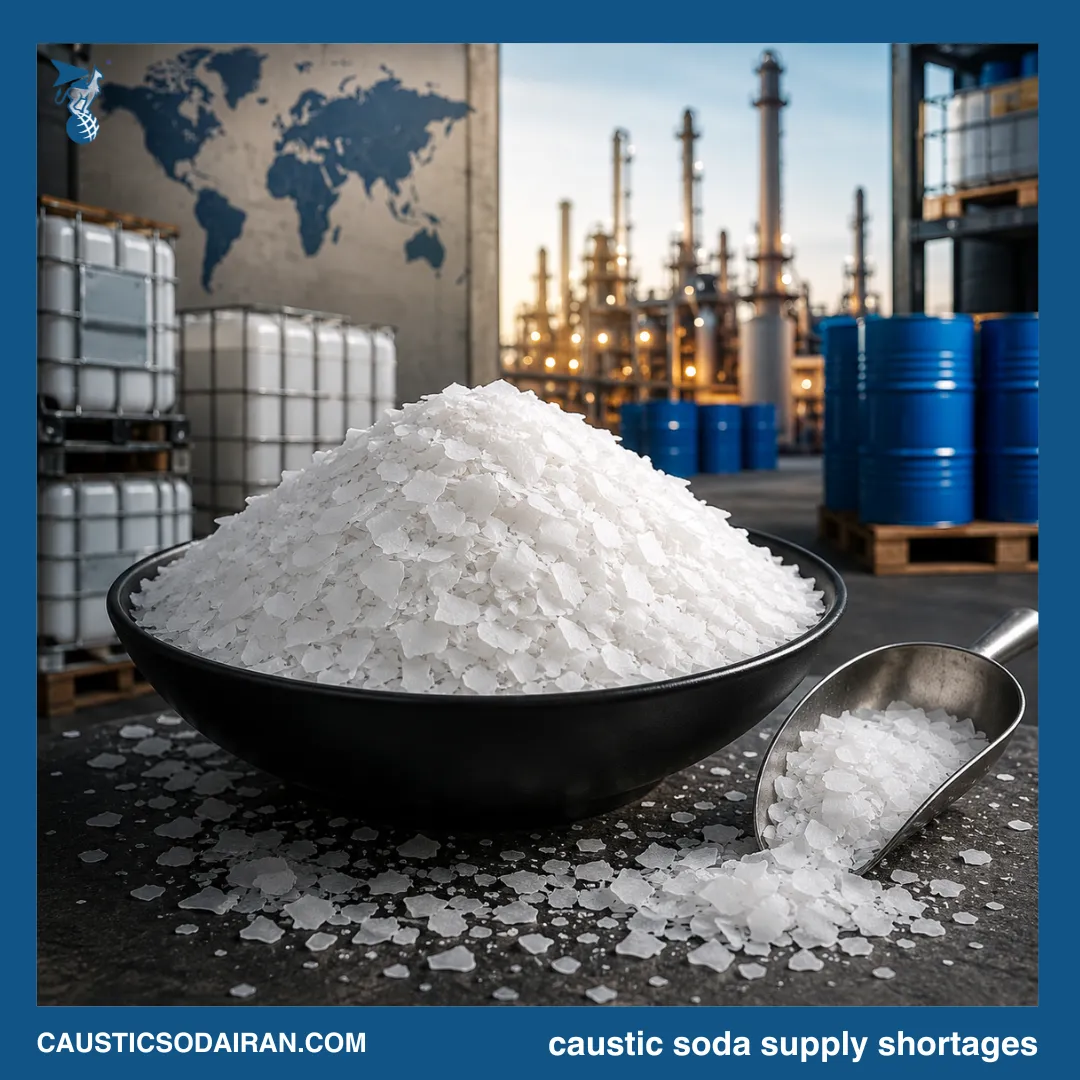
The global chemical industry is entering a new phase of uncertainty, with caustic soda supply shortages becoming one of the most significant challenges for industrial buyers in 2026. Although worldwide demand for caustic soda flakes continues to grow across industries such as alumina refining, water treatment, pulp and paper, textiles, and chemical manufacturing, supply chains are under increasing pressure. Rising energy costs, geopolitical tensions, shipping disruptions, and changing production patterns have all contributed to tighter market conditions.
For procurement managers and manufacturers, understanding the causes behind these shortages is no longer optional—it is essential for maintaining production continuity and controlling procurement costs. Businesses that anticipate market changes and build resilient sourcing strategies will be in a much stronger position than those that rely solely on spot purchasing.
What Is Driving Caustic Soda Supply Shortages in 2026?
The current caustic soda supply shortages are not caused by a single event. Instead, they result from several interconnected economic, operational, and geopolitical factors that affect the global chlor-alkali industry.
Unlike many commodity chemicals, caustic soda production is closely linked to chlorine production. Since both products are generated simultaneously through the chlor-alkali electrolysis process, any change in chlorine demand directly influences caustic soda output. This relationship makes supply particularly sensitive to shifts in downstream industrial activity.
As market conditions continue to evolve throughout 2026, producers and buyers alike must navigate an increasingly complex supply environment.
Rising Energy Costs Continue to Limit Production
Electricity remains one of the largest operating expenses in chlor-alkali manufacturing. Because the electrolysis process requires significant amounts of electrical power, fluctuations in energy prices have an immediate impact on production economics.
In many regions, higher electricity costs have forced manufacturers to reduce operating rates or temporarily suspend production during periods of unfavorable pricing. These production adjustments reduce the volume of caustic soda entering global markets, tightening supply and increasing competition among buyers.
Even facilities operating at full capacity face higher production costs, which are ultimately reflected in export prices.
Chlorine Market Conditions Affect Supply Availability
One unique characteristic of the chlor-alkali industry is the inseparable relationship between chlorine and caustic soda production.
When industries such as PVC manufacturing experience slower demand, chlorine consumption declines. Since producers cannot manufacture additional caustic soda without simultaneously producing chlorine, they often lower plant utilization rates. As a result, global caustic soda supply shortages become more pronounced even if demand for sodium hydroxide remains strong.
This structural limitation distinguishes the caustic soda market from many other industrial chemicals.
Logistics Challenges Continue to Disrupt Global Trade
Although international shipping networks have improved compared with previous years, logistics remain a significant source of uncertainty.
Industrial buyers continue to encounter:
- Longer vessel waiting times
- Port congestion
- Higher freight rates
- Container shortages on selected trade routes
- Customs clearance delays
- Regional transportation bottlenecks
These logistical obstacles increase procurement lead times and make delivery schedules less predictable, particularly for international shipments.
Growing Industrial Demand Is Outpacing Supply Growth
Global industrial activity continues to support strong demand for caustic soda flakes.
Several sectors are expanding their consumption, including:
- Alumina refining
- Water treatment
- Pulp and paper production
- Textile processing
- Chemical manufacturing
- Soap and detergent production
- Food processing
- Mining operations
As governments invest in infrastructure, clean water projects, and industrial development, sodium hydroxide demand continues to rise faster than new production capacity can be added.
This imbalance is one of the primary reasons caustic soda supply shortages are expected to remain a concern throughout 2026.
Regional Market Differences
Supply conditions vary considerably across different regions.
Asia
Asia remains both a major producer and consumer of caustic soda flakes. Domestic demand from aluminum producers and chemical manufacturers often limits export availability, particularly during periods of strong industrial growth.
Europe
European manufacturers continue to face elevated energy costs and strict environmental regulations. These factors increase production costs and occasionally reduce operating rates, limiting regional supply.
Middle East
The Middle East has become an increasingly important export hub due to its competitive production costs and strategic geographic location. However, geopolitical developments and shipping disruptions can temporarily affect export schedules and freight availability.
North America
North American producers generally benefit from relatively stable production capacity, but export availability depends heavily on domestic industrial demand and transportation infrastructure.
How Supply Shortages Affect Industrial Buyers
The consequences of caustic soda supply shortages extend beyond higher product prices.
Industrial companies frequently experience:
| Challenge | Business Impact |
|---|---|
| Limited product availability | Delayed purchasing decisions |
| Higher freight costs | Increased landed cost |
| Longer lead times | Larger inventory requirements |
| Price volatility | Budget uncertainty |
| Reduced supplier flexibility | Greater procurement risk |
These challenges can significantly affect manufacturing efficiency, particularly for industries that rely on continuous chemical supply.
Strategies to Reduce Procurement Risk
Companies cannot eliminate market uncertainty, but they can reduce its impact through proactive procurement planning.
Diversify Supply Sources
Working with multiple qualified suppliers reduces dependence on a single production region and minimizes disruption risks.
Build Long-Term Supplier Relationships
Long-term agreements often provide greater pricing stability and improved product availability during periods of market tightness.
Improve Demand Forecasting
Accurate consumption forecasts allow purchasing teams to place orders earlier, avoiding last-minute buying during supply shortages.
Maintain Strategic Inventory
Holding appropriate safety stock helps manufacturers continue operations during temporary supply interruptions or shipping delays.
Evaluate Suppliers Beyond Price
The lowest quotation does not always represent the best value. Buyers should also evaluate:
- Product quality consistency
- Production capacity
- Export experience
- Technical documentation
- Packaging standards
- Delivery reliability
- Customer support
Reliable suppliers help reduce operational risks while ensuring consistent product quality.
Will Caustic Soda Supply Shortages Continue Beyond 2026?
Most market analysts expect some improvement if global energy markets stabilize and international logistics continue recovering. However, structural challenges are likely to remain.
Growing industrial demand, environmental regulations, electricity price volatility, and geopolitical uncertainty will continue influencing production capacity and international trade. As a result, periodic caustic soda supply shortages may continue even as overall market conditions gradually improve.
Companies that monitor market trends and adjust procurement strategies accordingly will be better prepared to navigate future disruptions.
Conclusion
The evolving 2026 chemical market demonstrates that caustic soda supply shortages are driven by a combination of energy costs, chlor-alkali production dynamics, transportation challenges, and increasing global demand. These factors create a more competitive procurement environment where planning and supplier selection are more important than ever.
Rather than reacting to shortages after they occur, industrial buyers should focus on building resilient supply chains, diversifying sourcing strategies, and partnering with experienced exporters capable of providing consistent product quality and dependable delivery.
As a trusted supplier and exporter of high-purity caustic soda flakes, we support international customers with reliable supply, competitive pricing, flexible packaging options, and efficient global shipping solutions, helping businesses maintain stable operations even during periods of market uncertainty.
Leave a Reply