
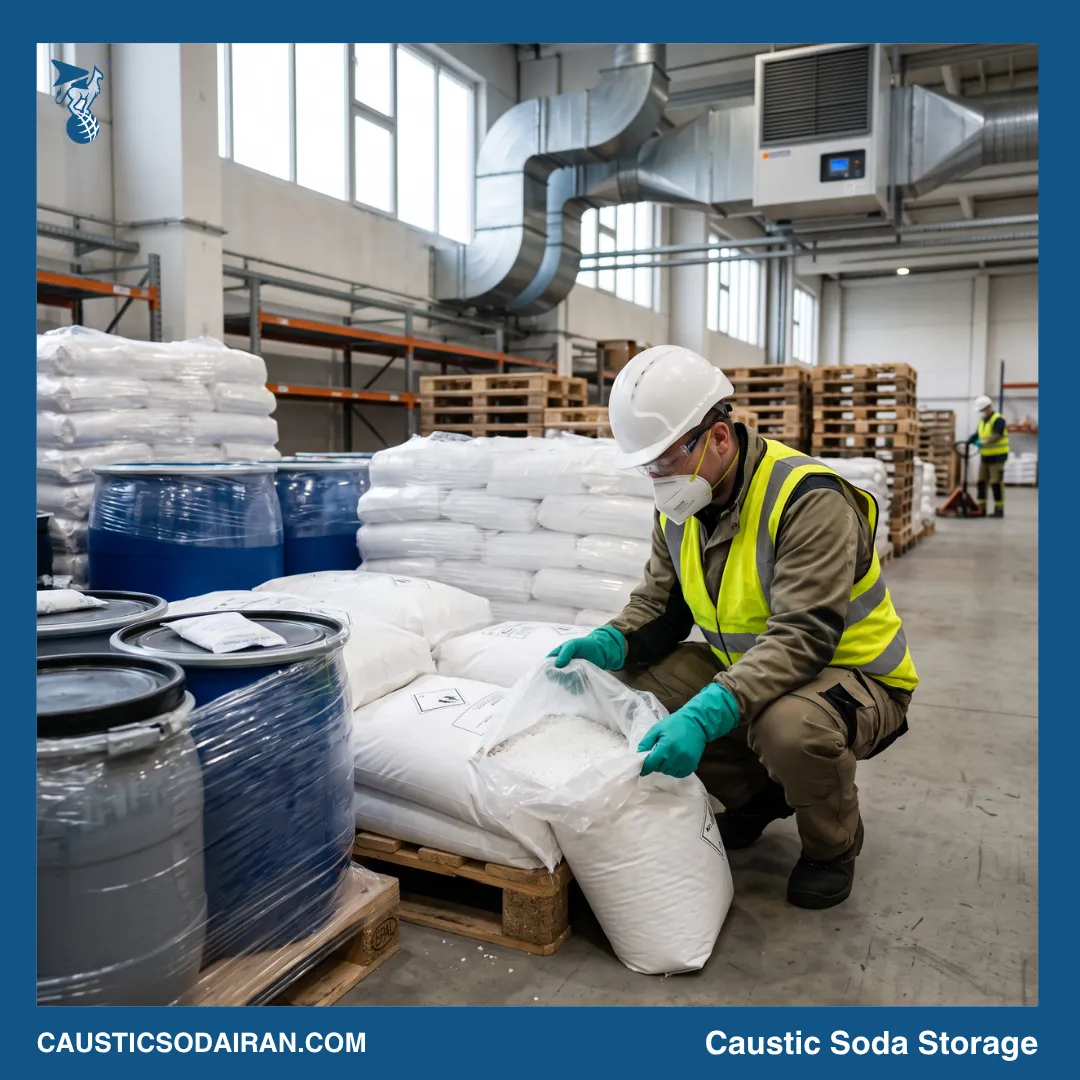
Caustic Soda Storage requires careful control of moisture, packaging, temperature, and warehouse conditions. Caustic soda flakes, also known as sodium hydroxide (NaOH), are highly hygroscopic and can absorb moisture from the surrounding air. As a result, improperly stored flakes may become sticky, form lumps, cake together, or experience changes in physical quality.
For industrial buyers and distributors, effective caustic soda storage is therefore essential for maintaining product quality throughout long-term storage. The right combination of moisture-resistant packaging, dry warehouse conditions, pallet management, and regular inspection can significantly reduce the risk of caking and moisture-related degradation.
Why Does Caustic Soda Flake Absorb Moisture?
Sodium hydroxide has a strong affinity for water vapor. The hygroscopic properties of sodium hydroxide flakes mean that they readily absorb moisture and carbon dioxide from the surrounding air.Even when there is no direct contact with liquid water, exposed caustic soda flakes can gradually absorb humidity from the atmosphere.
Once moisture reaches the flakes, their surface can become wet or partially dissolved. When this moisture later redistributes or evaporates, individual particles may stick together and create hard agglomerates. Prolonged exposure to air can also increase interaction with carbon dioxide, contributing to the formation of sodium carbonate and reducing the desired caustic soda concentration.
This is why moisture control should be the central principle of long-term caustic soda storage.
1. Use Moisture-Resistant Packaging
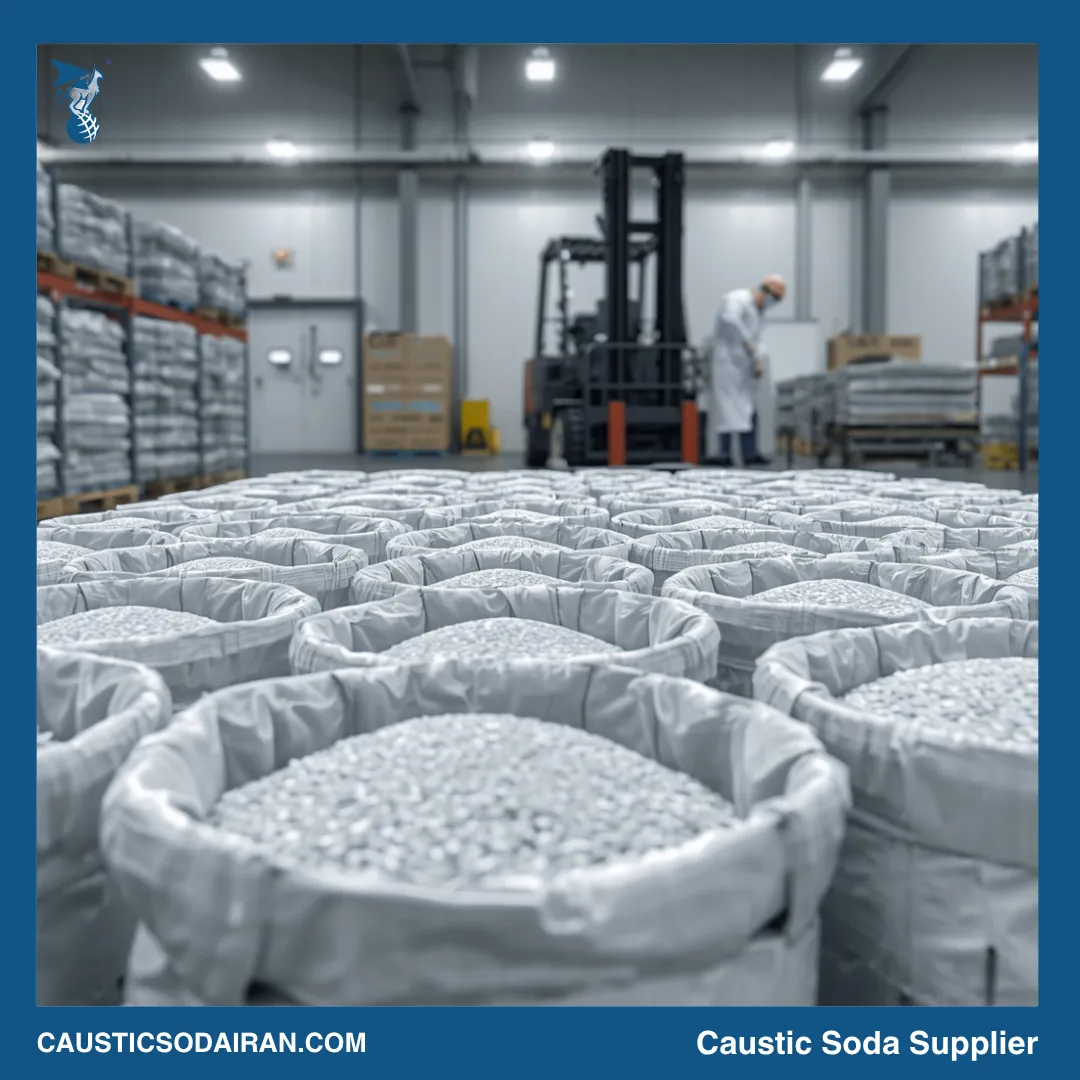
Packaging is the first barrier against atmospheric moisture. Caustic soda flakes should remain in tightly sealed, moisture-resistant packaging designed for corrosive chemicals.
Common industrial packaging configurations include:
- PE-lined bags
- Double-layer polypropylene bags with an inner liner
- HDPE or compatible plastic drums
- Moisture-resistant bulk bags with suitable liners
The inner liner should remain intact throughout storage. A damaged liner can allow humid air to reach the product and accelerate caking. Some commercial packaging specifications use sealed PE liners specifically to limit moisture ingress.
For long-term storage, damaged bags should not simply be returned to the general inventory. They should be isolated and assessed according to the site’s handling and quality procedures.
2. Keep the Warehouse Dry
A dry warehouse is one of the most important requirements for successful caustic soda storage.
The storage area should be protected from:
- Rain and outdoor humidity
- Water leaks
- Condensation
- Wet floors
- Open doors during periods of high humidity
- Direct contact with water-based chemicals
Caustic soda should be kept in a cool, dry and well-ventilated location, with containers tightly closed when not in use. Safety data sheets commonly emphasize protection from moisture and weather conditions.
Where environmental conditions are challenging, warehouses can benefit from humidity monitoring and appropriate ventilation or dehumidification systems.
3. Keep Bags Off the Floor
Direct contact between packaging and a concrete floor can expose caustic soda to moisture from condensation, cleaning activities, or floor-level humidity.
Use suitable pallets or raised platforms and maintain enough clearance to allow inspection around stored material. This approach also makes it easier to identify damaged packaging before moisture reaches the product.
Pallets should remain stable, dry, and free from standing water. If stretch wrapping is used for transportation or warehouse protection, it should remain intact until the material is ready to be handled, provided that the packaging system is designed for that purpose.
4. Minimize Exposure When Opening Bags
Even high-quality packaging cannot protect the product if containers are repeatedly left open.
During dispensing or production operations:
- Open only the quantity required for immediate use.
- Keep unused material sealed.
- Minimize the time that flakes are exposed to ambient air.
- Reseal partially used packaging immediately.
- Inspect the liner before resealing.
This simple procedure can significantly reduce moisture exposure during routine handling.
5. Control Temperature and Condensation
Temperature management is another important part of caustic soda storage. Proper control of these factors is also critical during transportation, as explained in our guide to temperature and humidity control for caustic soda flakes.The objective is not simply to maintain a particular temperature but to avoid environmental conditions that promote condensation or damage packaging.
Large temperature fluctuations can cause condensation when warm, humid air encounters cooler surfaces. Therefore, warehouses should avoid unnecessary temperature swings and protect stored material from extreme heat and weather exposure.
Storage guidance for sodium hydroxide generally recommends cool, dry conditions and protection from heat and moisture.
6. Inspect Packaging Regularly
Long-term storage should include a documented inspection program.
Warehouse personnel can check for:
- Torn or punctured bags
- Damaged PE liners
- Wet packaging
- Visible lumps
- Hardening or agglomeration
- Product leakage
- Signs of condensation
- Pallet instability
- Contamination
Early detection is particularly valuable because a small packaging failure can expose the product to atmospheric moisture and gradually increase caking.
A simple inspection log can record the storage location, batch number, packaging condition, inspection date, and corrective action.
7. Apply FIFO or FEFO Inventory Practices
Inventory rotation can reduce unnecessary storage time. A FIFO (First In, First Out) system helps ensure that older batches are consumed before newer stock.
Where product specifications or supplier recommendations establish a relevant shelf-life period, inventory management should also consider those requirements.
However, storage duration alone is not the only factor determining product condition. A well-sealed batch stored in a dry environment may remain in much better physical condition than a newer batch exposed to humid air.
8. Avoid Incompatible Materials
Caustic soda is highly corrosive and should be segregated from incompatible substances, particularly acids and certain reactive metals. Storage areas should therefore be organized to prevent accidental contact with incompatible chemicals.
This segregation is important not only for chemical safety but also for maintaining a controlled warehouse environment.
9. Protect Product During Transportation Before Storage
Long-term storage quality can be compromised before the material even reaches the warehouse.
During transportation, caustic soda flakes should remain protected from:
- Rain
- Sea spray
- Humid air
- Damaged containers
- Wet loading areas
- Condensation inside transport equipment
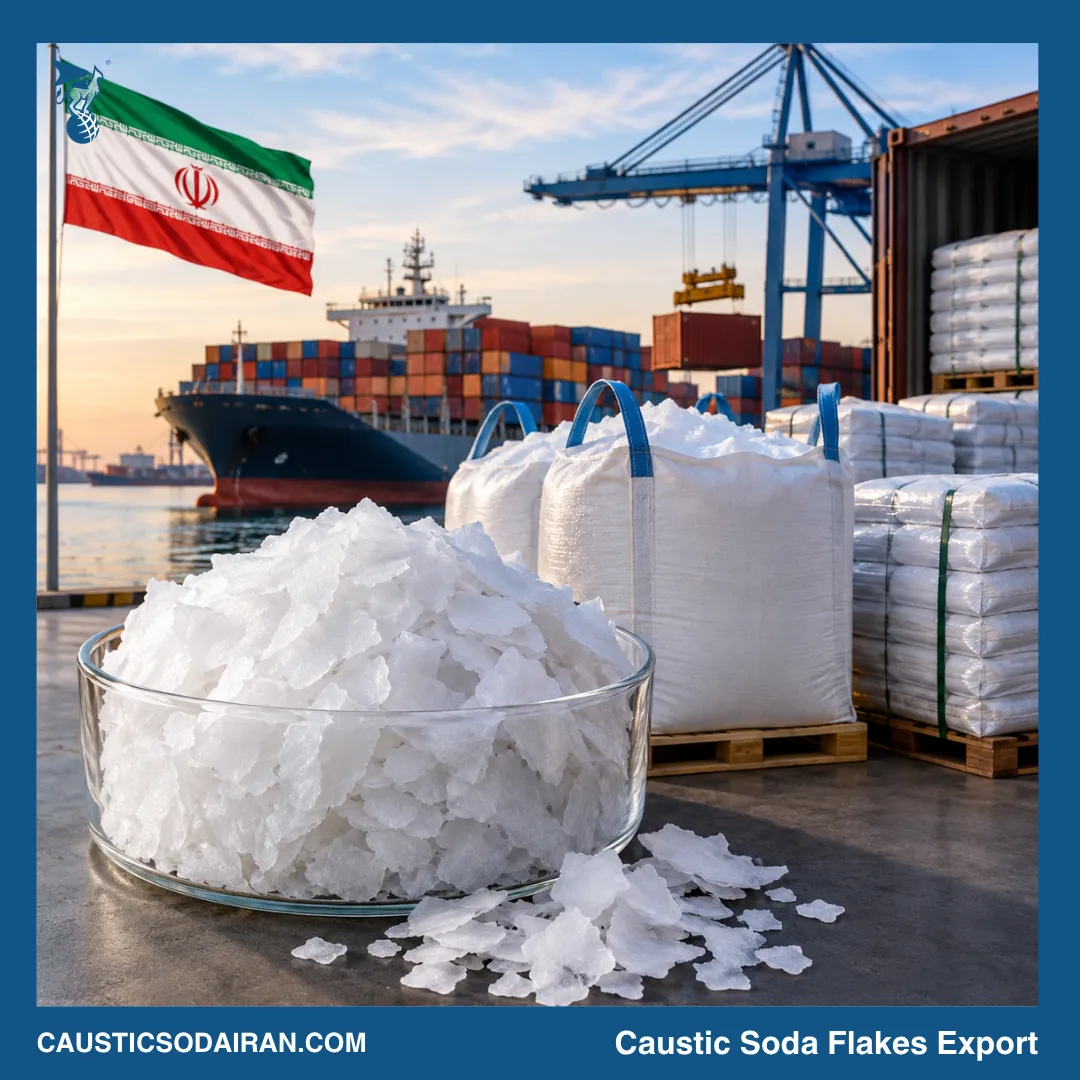
For export shipments, moisture-resistant packaging and dry, suitable transport conditions are especially important because extended transit can increase the opportunity for packaging damage and moisture exposure.
10. What Happens When Caking Has Already Started?
If caustic soda flakes have developed minor lumps, the material should first be evaluated according to the supplier’s specifications and the user’s quality-control procedures.
Caking is not merely a cosmetic issue. Moisture exposure can alter the physical characteristics of the material and may also contribute to chemical changes. Sodium hydroxide exposed to air can absorb moisture and carbon dioxide, with sodium carbonate formation occurring as part of this interaction.
Therefore, heavily caked material should not automatically be assumed to have the same quality as dry, free-flowing flakes. Laboratory testing may be appropriate before the material is released for sensitive industrial applications.
Best Practices Checklist for Long-Term Caustic Soda Storage
For reliable caustic soda storage, industrial facilities should follow a practical checklist:
- Use sealed, moisture-resistant packaging.
- Keep the product in a dry and well-ventilated warehouse.
- Protect bags from rain, water and condensation.
- Store bags on suitable pallets rather than directly on the floor.
- Repair or isolate damaged packaging immediately.
- Minimize exposure when opening bags.
- Reseal partially used packages.
- Monitor warehouse conditions where humidity is a concern.
- Inspect stored batches regularly.
- Maintain clear inventory and batch records.
- Separate caustic soda from incompatible chemicals.
- Follow the supplier’s SDS and site-specific safety procedures.
Conclusion
Effective caustic soda storage is fundamentally about controlling moisture exposure. Because sodium hydroxide flakes are highly hygroscopic, inadequate packaging, humid warehouses, damaged liners, condensation, and prolonged exposure to air can contribute to caking and deterioration.
The most effective strategy combines moisture-resistant packaging, dry warehouse conditions, elevated pallet storage, careful handling, regular inspections, and disciplined inventory management. By implementing these measures, industrial users and distributors can preserve the physical quality of caustic soda flakes and reduce problems during storage, transportation, and subsequent processing.
For bulk buyers, choosing a supplier that provides consistent product quality, appropriate packaging, and reliable export logistics is equally important. Proper storage begins before the product enters the warehouse.
Leave a Reply