
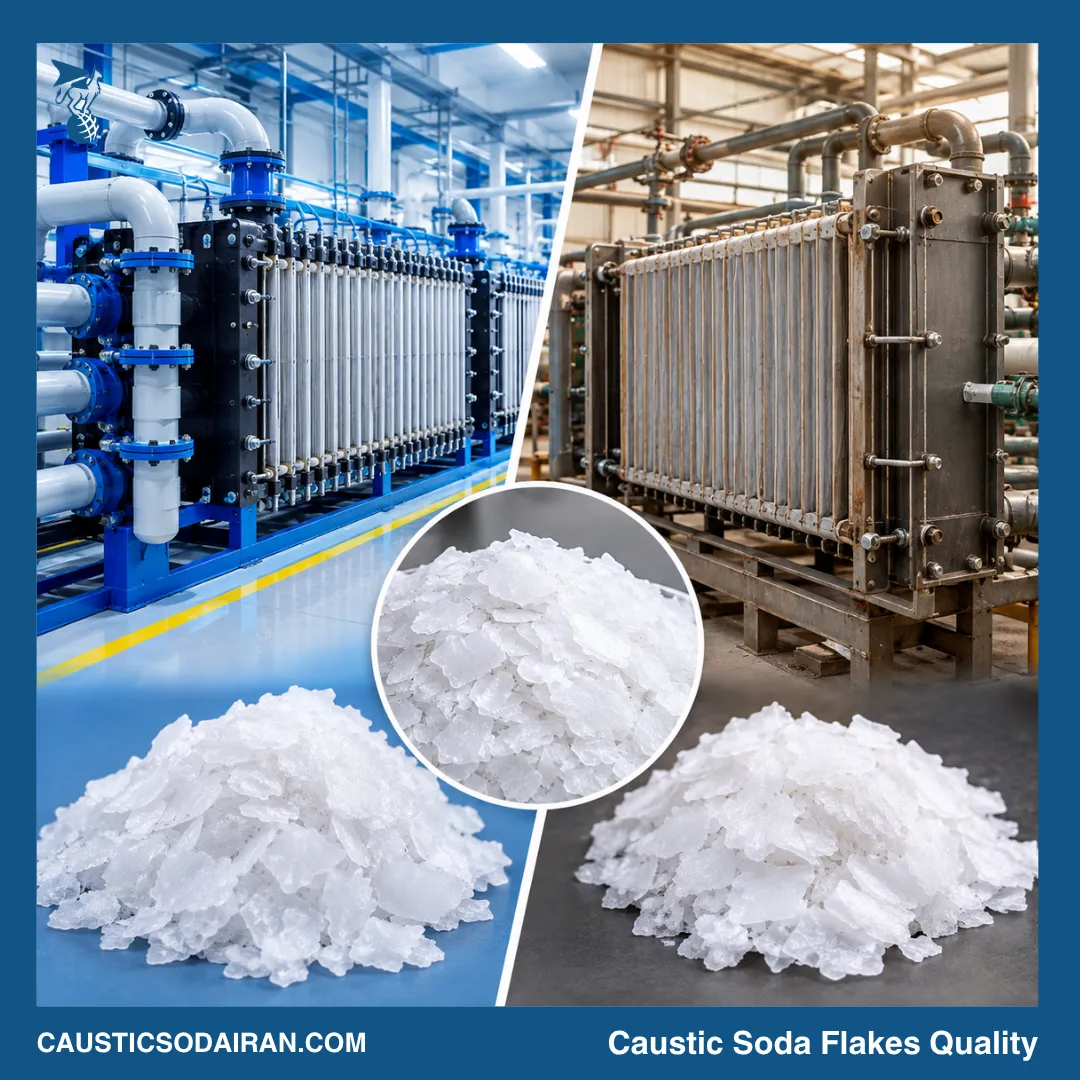
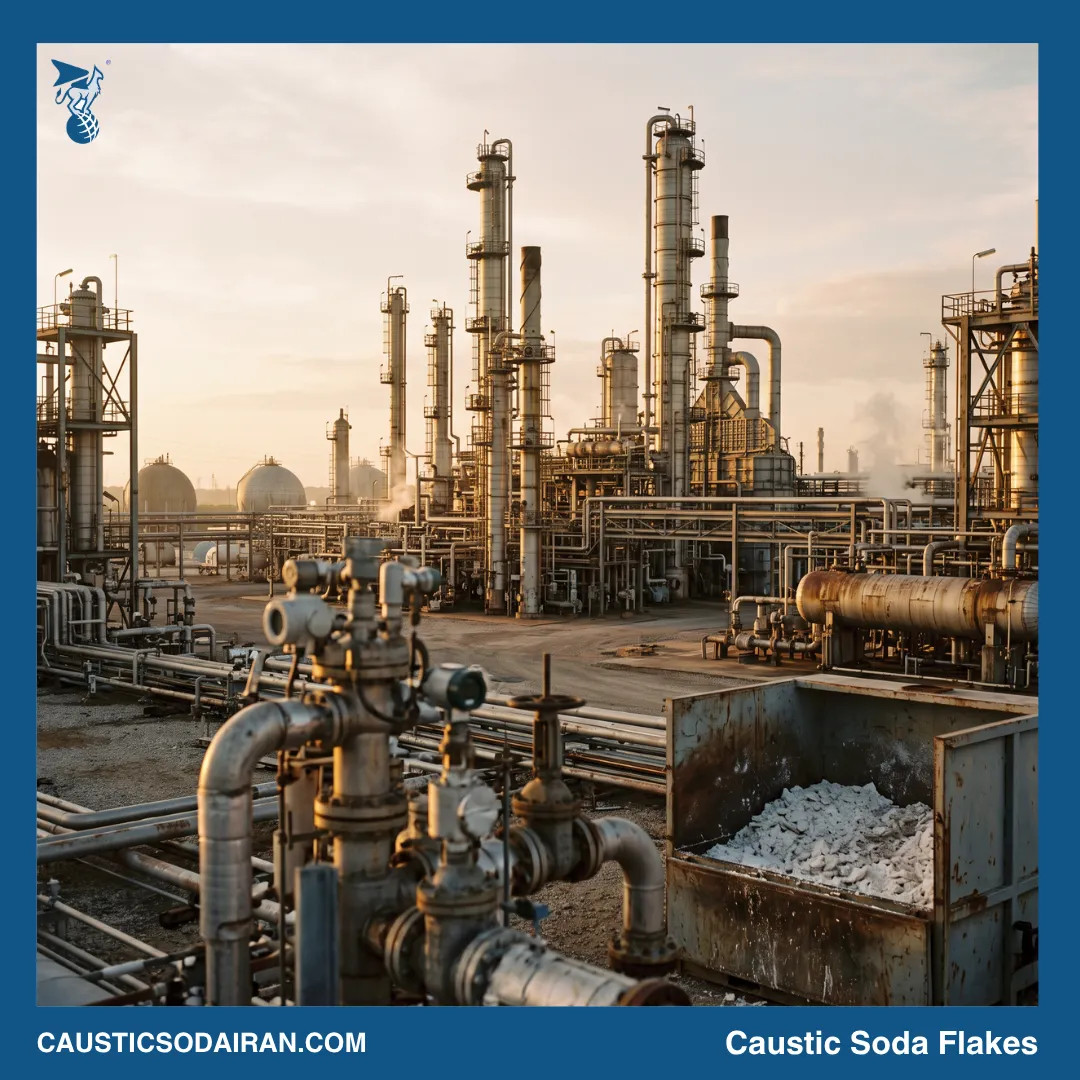
Caustic soda flakes are widely used in chemical processing, pulp and paper production, alumina refining, textiles, detergents, water treatment, and petroleum industries. Although sodium hydroxide (NaOH) is the main component in both membrane-cell and diaphragm-cell products, the manufacturing method can influence the final caustic soda flakes quality.
The chlor-alkali industry mainly uses membrane and diaphragm electrolysis technologies to produce chlorine, hydrogen, and sodium hydroxide. Differences in cell design, brine purification, separation efficiency, and concentration stages can affect the purity profile of the resulting caustic soda.
For industrial buyers, understanding these differences helps with product selection, quality control, storage, and process compatibility.
What Is Caustic Soda Flakes?
Caustic soda flakes are a solid form of sodium hydroxide produced by concentrating and solidifying liquid caustic soda. The material is highly alkaline and reacts strongly with acids and many organic and inorganic substances.
Commercial caustic soda flakes typically contain a high concentration of NaOH. However, the exact specification depends on the production process, raw materials, purification stages, concentration technology, and manufacturer.
Common quality parameters include:
- Sodium hydroxide concentration
- Sodium carbonate content
- Sodium chloride content
- Iron content
- Water content
- Other trace impurities
- Physical appearance and flake consistency
These parameters determine whether a product is suitable for general industrial use or applications that require tighter specifications.
How Membrane Electrolysis Produces Caustic Soda
Membrane-cell technology separates the anode and cathode compartments using an ion-exchange membrane. Purified brine enters the anode compartment, where chlorine is generated. Sodium ions pass through the membrane toward the cathode compartment, where they react with water to form sodium hydroxide and hydrogen.
The membrane provides physical and chemical separation between the compartments. As a result, the sodium hydroxide solution can be produced with relatively low levels of sodium chloride compared with traditional diaphragm-cell production.
After electrolysis, the dilute caustic soda solution undergoes evaporation and concentration. Further processing can produce commercial-grade liquid caustic soda or solid caustic soda flakes.
Effect of Membrane Technology on Product Quality
Membrane technology can support a high-purity caustic soda product because the ion-exchange membrane limits the migration of chloride and other unwanted species into the caustic solution. For a detailed comparison of these production methods, see our guide to [membrane vs. diaphragm technology in caustic soda production].
This characteristic is particularly relevant when manufacturers supply caustic soda for applications where chloride or other impurities must remain low.
Therefore, caustic soda flakes quality from a membrane-based process often reflects the effectiveness of:
- Brine purification
- Membrane performance
- Electrolysis control
- Evaporation efficiency
- Final product handling
The production method alone does not guarantee a specific specification. Actual quality should always be confirmed through the supplier’s certificate of analysis (COA).
How Diaphragm Electrolysis Produces Caustic Soda
Diaphragm-cell technology uses a porous diaphragm to separate the anode and cathode compartments. The diaphragm allows ionic movement while reducing direct mixing between the products generated at the electrodes.
Compared with membrane cells, diaphragm cells generally produce a caustic soda solution containing more sodium chloride.The solution therefore requires additional concentration and purification steps before it can become a commercial solid product.
During evaporation, water is removed from the caustic solution. Depending on the production configuration, further treatment may reduce some impurities before the final product is solidified.
Caustic Soda Flakes Quality: Membrane vs. Diaphragm
The main difference between the two technologies concerns the impurity profile of the initial caustic solution. More information about caustic soda production and the two main electrolysis technologies is available from Euro Chlor.
| Quality Factor | Membrane Process | Diaphragm Process |
|---|---|---|
| NaOH concentration | High after concentration | High after concentration |
| Sodium chloride | Generally lower | Generally higher |
| Purification requirements | Relatively lower after electrolysis | Often greater |
| Product consistency | Strongly controlled by process conditions | Strongly controlled by process conditions |
| Suitability for sensitive applications | Often advantageous | Depends on final specification |
| Production technology | Ion-exchange membrane | Porous diaphragm |
These differences explain why buyers should evaluate the final specification rather than choosing a product solely according to its production technology.
1. Sodium Hydroxide Purity
NaOH concentration is one of the most important indicators of caustic soda flakes quality. A high-quality commercial product should meet the concentration specified in its technical documentation.
Both membrane and diaphragm technologies can produce concentrated sodium hydroxide. However, the impurity profile can differ because of the composition of the electrolyzed brine and the separation method.
For procurement, buyers should compare the guaranteed NaOH percentage stated on the COA rather than assuming that every product from a particular technology has identical purity.
2. Sodium Chloride Content
Sodium chloride is an important impurity when evaluating caustic soda.
Membrane cells generally provide better separation between the chlorine and caustic compartments. This can result in lower chloride levels in the caustic solution.
Diaphragm cells can transfer more brine-related material into the caustic stream. Consequently, sodium chloride may remain at a higher level unless additional purification is applied.
For processes sensitive to chloride contamination, this parameter deserves particular attention.
3. Sodium Carbonate Content
Sodium carbonate can form when sodium hydroxide absorbs carbon dioxide from the surrounding environment.
The reaction can be represented as:
2NaOH + CO₂ → Na₂CO₃ + H₂O
Carbonate content can increase during storage and handling if caustic soda is exposed to atmospheric carbon dioxide.
Therefore, carbonate concentration in the final product depends not only on the electrolysis technology but also on concentration, packaging, storage, and handling conditions.
4. Iron and Other Trace Impurities
Iron and other trace metals can affect applications that require controlled chemical purity.
The level of these impurities depends on factors such as:
- Brine quality
- Equipment materials
- Purification systems
- Process control
- Storage conditions
- Packaging materials
A membrane-based process can produce a high-purity product, but the final specification still depends on the complete manufacturing and handling chain.
5. Water Content and Flake Stability
Caustic soda flakes are hygroscopic. They readily absorb moisture from the atmosphere.
Excess moisture can cause:
- Flake softening
- Caking
- Reduced active NaOH concentration
- Changes in physical appearance
- Difficulties during handling and dosing
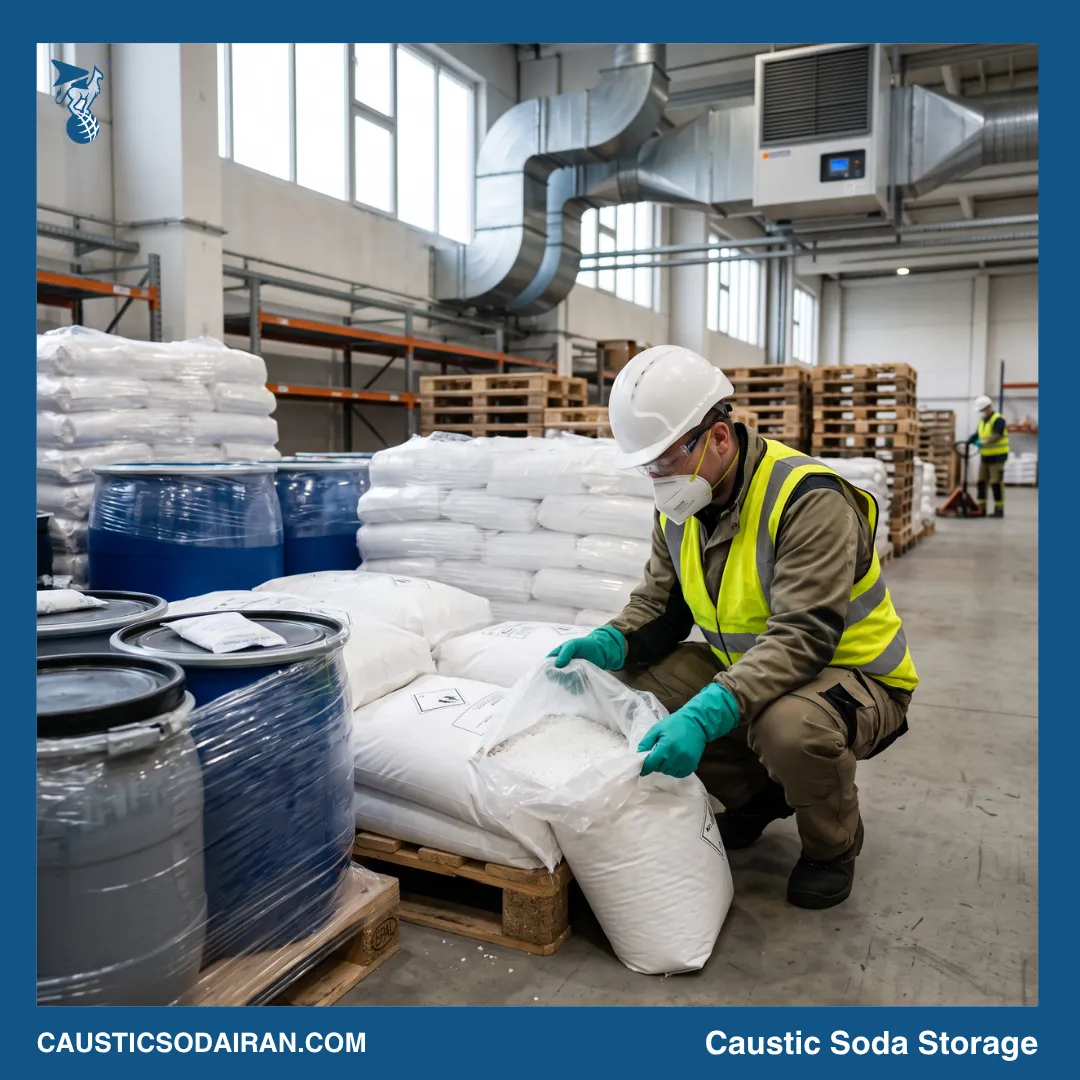
For this reason, packaging is an important part of maintaining caustic soda flakes quality after production.
Moisture-resistant bags, proper sealing, dry warehouses, and controlled handling can help preserve the original specification.
Does Membrane Technology Always Mean Higher Quality?
Not necessarily.
Membrane electrolysis provides important advantages for producing low-impurity caustic soda, particularly with respect to chloride contamination. However, final product quality depends on the entire manufacturing system.
A supplier using membrane technology can still deliver material that does not meet a buyer’s requirements if the product experiences contamination, moisture absorption, inadequate concentration control, or poor storage conditions.
Likewise, diaphragm technology can produce commercially useful caustic soda flakes when the final product meets the required specification.
Therefore, buyers should evaluate documented analytical results instead of relying exclusively on the production method.
Which Caustic Soda Flakes Are Suitable for Industrial Applications?
The appropriate product depends on the application.
General Chemical Processing
Many chemical processes can use standard industrial-grade caustic soda flakes. Buyers should primarily check NaOH concentration and impurity limits specified by the process.
Alumina Refining
The Bayer process uses caustic soda to dissolve alumina-bearing minerals. Consistent chemical specifications are important because impurities can influence process chemistry and material balances.
Pulp and Paper
Caustic soda is used in several stages of pulp and paper manufacturing, including chemical pulping and processing. Product consistency helps maintain predictable operating conditions.
Textile Processing
Sodium hydroxide is used in textile treatment processes such as mercerization. Reliable concentration and controlled impurities can support consistent processing results.
Water Treatment
Caustic soda is used for pH adjustment and neutralization. Depending on the treatment system, buyers may require specific limits for impurities and contaminants.
Detergent and Chemical Manufacturing
Caustic soda serves as a chemical reactant and pH-control agent in various manufacturing processes. The required specification depends on the formulation and process requirements.
How Buyers Should Compare Membrane and Diaphragm Products
Instead of comparing production technologies alone, procurement teams should request a complete technical specification.
Important documents and parameters include:
- Certificate of Analysis (COA)
- Technical Data Sheet (TDS)
- Sodium hydroxide concentration
- Sodium chloride content
- Sodium carbonate content
- Iron content
- Moisture or water content
- Applicable quality standard
- Packaging specification
- Batch or lot identification
A comparison based on these parameters provides a more reliable assessment of caustic soda flakes quality.
The Role of Brine Purification
Brine purification is a critical part of chlor-alkali production.
Membrane cells generally require highly purified brine because contaminants can reduce membrane performance and increase operational problems. This requirement encourages extensive purification before electrolysis.
Diaphragm systems can tolerate different brine conditions, but the resulting caustic stream may contain more impurities.
Therefore, the quality of the feed brine has a direct relationship with the quality and consistency of the final caustic soda.
Production Technology and Cost Considerations
Production technology can also influence manufacturing economics.
Membrane cells generally require significant brine purification and specialized membrane systems. However, their separation characteristics can reduce the impurity load in the caustic product.
Diaphragm technology has a different process configuration and may require additional treatment or concentration steps.
For buyers, the lowest purchase price does not necessarily represent the lowest total cost. A product with a higher impurity level may create additional costs through purification, process adjustments, equipment maintenance, or waste treatment.
Quality Control During Storage and Transport
Even a high-purity product can lose quality if storage and transport conditions are unsuitable.
Caustic soda flakes should be kept in dry, well-ventilated storage areas and protected from moisture. Packaging should remain intact throughout transportation and warehouse handling.
Containers or bags should also be protected from contamination and excessive exposure to humid air.
These measures are essential because product quality is determined not only at the manufacturing plant but also by the condition in which the material reaches the end user.
Frequently Asked Questions
Are membrane caustic soda flakes purer than diaphragm products?
Membrane-cell technology generally produces a caustic solution with lower sodium chloride contamination. However, the final purity of the flakes depends on the complete production process and the manufacturer’s specifications.
Can diaphragm-cell caustic soda be used for industrial applications?
Yes. Diaphragm-cell caustic soda can be suitable for many industrial applications when its final chemical specification meets the process requirements.
Which impurities should buyers check?
Key parameters include sodium chloride, sodium carbonate, iron, water content, and the actual NaOH concentration.
Does the production method determine final product quality?
No. The production method influences the impurity profile, but brine purification, process control, evaporation, packaging, storage, and quality assurance also affect the final product.
How can buyers verify caustic soda flakes quality?
The most reliable approach is to review the supplier’s COA and TDS and compare the measured parameters with the technical requirements of the intended application.
Conclusion
The production method plays an important role in determining the impurity profile of caustic soda flakes. Membrane electrolysis generally provides better separation and can produce caustic soda with lower chloride contamination. Diaphragm electrolysis follows a different separation mechanism and may result in higher chloride levels in the initial caustic solution.
However, caustic soda flakes quality cannot be determined by production technology alone. NaOH concentration, sodium chloride, sodium carbonate, iron, moisture, packaging, storage, and quality-control procedures all contribute to the final product specification.
For industrial procurement, the best approach is to compare verified COA data with the requirements of the intended application. This method allows buyers to select caustic soda flakes based on measurable chemical performance rather than production technology alone.


Leave a Reply