
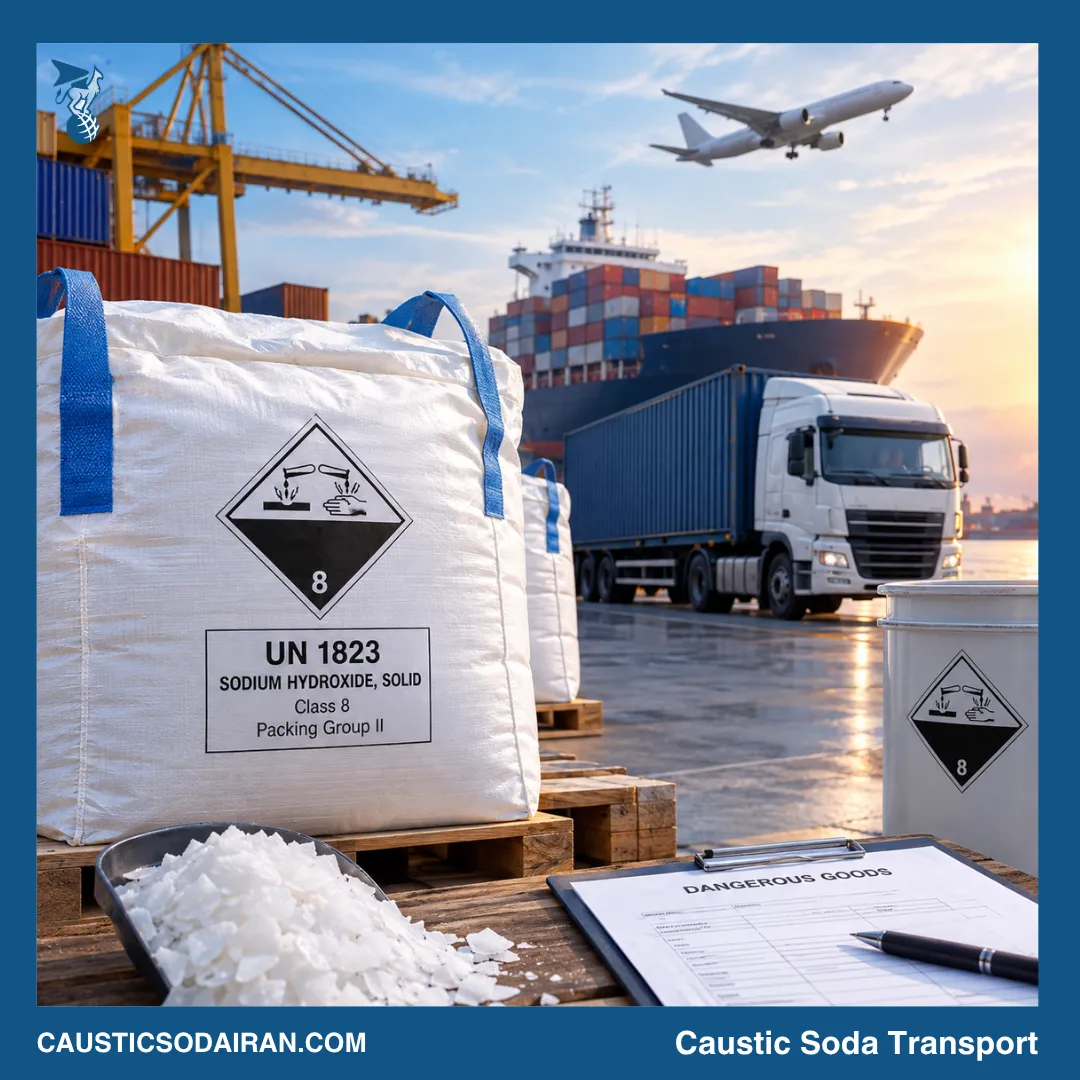
Exporting caustic soda flakes requires strict compliance with hazardous materials transport regulations. Because sodium hydroxide is highly corrosive, international shipments must follow specific requirements for classification, packaging, labeling, documentation, and handling.
For most solid caustic soda flakes, the applicable transport designation is UN 1823, SODIUM HYDROXIDE, SOLID, classified as Class 8 corrosive material with Packing Group II. These requirements appear across major dangerous-goods transport frameworks, although the exact procedures can vary according to the transport mode and destination country.
Understanding these rules helps exporters reduce customs delays, prevent packaging failures, and maintain safe handling throughout the international supply chain.
1. Why Caustic Soda Flakes Are Classified as HAZMAT
Caustic soda flakes are a solid form of sodium hydroxide (NaOH). The substance is strongly alkaline and can cause severe chemical burns when it contacts skin or eyes. It can also react dangerously with acids and may attack certain metals in the presence of moisture.
Because of these corrosive properties, caustic soda flakes are regulated as dangerous goods during transportation.
Under ADR, sodium hydroxide, solid is assigned:
- UN Number: UN 1823
- Proper Shipping Name: SODIUM HYDROXIDE, SOLID
- Hazard Class: 8
- Classification Code: C6
- Packing Group: II
- Hazard Label: Class 8
- Hazard Identification Number: 80
These classifications are particularly important when preparing transport documents and shipping marks.
2. Understanding UN 1823 for Caustic Soda Flakes
The UN number provides a standardized identification system for dangerous goods during transportation. For solid sodium hydroxide, UN 1823 identifies the material regardless of whether it is transported by road, sea, or air, although each transport system has its own additional rules.
Export documents should use the applicable proper shipping name rather than relying only on commercial terminology such as “caustic soda flakes.”
For example, an appropriate transport description can include:
UN 1823, SODIUM HYDROXIDE, SOLID, 8, II
The correct declaration allows carriers, customs authorities, emergency responders, and handling personnel to identify the substance and its hazards quickly.
3. HAZMAT Transport Standards for Road Shipments
For road transportation in countries and regions covered by ADR, exporters must consider the requirements covering classification, packaging, marking, documentation, vehicle operation, and handling.
Exporters can consult the official UNECE ADR requirements for dangerous goods transport for detailed regulatory provisions covering classification, packaging, documentation, loading, and vehicle requirements.These include dangerous-goods classification, packaging and tank provisions, consignment procedures, packaging construction and testing, loading and unloading, vehicle requirements, and driver-related provisions.
For UN 1823, ADR identifies the substance as a Class 8 corrosive material in Packing Group II. The current ADR data also identifies a tunnel restriction code of E, meaning that transport restrictions can apply to certain Category E tunnels.
Exporters should therefore plan the road route before dispatch, particularly when shipments cross multiple European jurisdictions.
4. Packaging Requirements for Caustic Soda Flakes
For detailed guidance on handling, packaging, labeling, and shipping procedures, see our guide to How to Transport Caustic Soda Flakes Safely.
ADR lists P002 as the applicable packing instruction for UN 1823 and provides specific provisions for different packaging configurations. For certain IBC applications, additional requirements apply.
Suitable export packaging should:
- Be compatible with sodium hydroxide.
- Protect the flakes from moisture.
- Prevent leakage or loss of material.
- Remain mechanically stable during handling.
- Carry the required dangerous-goods markings.
- Remain securely closed throughout transportation.
- Protect workers from accidental contact during loading and unloading.
Moisture control is especially important because caustic soda flakes are hygroscopic and can absorb moisture from the surrounding environment. Properly sealed packaging helps preserve product quality while reducing handling risks.
5. Labeling and Hazard Marks
Dangerous-goods labeling communicates the primary transportation hazard to everyone involved in the logistics chain.
Caustic soda flakes transported as UN 1823 require the Class 8 corrosive substances label under ADR. The UN number and proper shipping name also form an important part of the required package identification.
For export shipments, the markings should remain:
- Clearly visible
- Durable
- Legible
- Resistant to normal transport conditions
- Correct for the applicable transport regulation
Incorrect, damaged, or missing marks can result in shipment delays and may create serious safety problems during loading, unloading, and emergency response.
6. Limited Quantities and Transport Thresholds
Some dangerous-goods regulations provide specific exemptions or simplified procedures for smaller quantities.
For UN 1823 under ADR, the limited quantity threshold is 1 kg per inner packaging. ADR also identifies UN 1823 as Transport Category 2, with a 333 kg threshold under the applicable small-load calculation in ADR 1.1.3.6.
Exporters should not automatically apply these thresholds to every shipment. The applicable exemption depends on the complete shipment configuration, packaging, transport mode, and regulatory jurisdiction.
7. Documentation for International Caustic Soda Shipments
Accurate documentation is essential for international HAZMAT transport.
Depending on the shipment and transport mode, documentation can include:
- Commercial invoice
- Packing list
- Safety Data Sheet (SDS)
- Dangerous goods declaration
- Transport document
- Certificate of origin
- Customs documentation
- Bill of lading for sea freight
- Air waybill for air freight
- Other documents required by the destination country
The dangerous-goods description should correspond with the actual product classification and packaging.
The SDS should also provide transport information consistent with the shipment. A typical SDS for caustic soda flakes identifies UN 1823, Class 8, Packing Group II, and the proper shipping name SODIUM HYDROXIDE, SOLID.
8. Caustic Soda Transport by Sea
Sea shipments require compliance with the IMDG Code in addition to the requirements imposed by the exporting and importing countries.
For UN 1823, international dangerous-goods data identifies:
- UN Number: 1823
- Proper Shipping Name: Sodium hydroxide, solid
- Class: 8
- Packing Group: II
The IMDG system also provides emergency response information for incidents involving fire or spillage. For sodium hydroxide, the referenced emergency schedules include EmS F-A and S-B.
Containers should be properly secured to prevent movement, package damage, or loss during ocean transportation.
9. Air Transport Considerations
Air transportation involves additional restrictions because of the greater consequences of hazardous-material incidents during flight.
Transport data for sodium hydroxide, solid identifies UN 1823 as Class 8, Packing Group II under ICAO/IATA dangerous-goods requirements. Specific packing instructions and quantity limitations can apply depending on whether the shipment is carried on passenger or cargo aircraft.
For large commercial exports, sea or road transportation is generally more practical than air freight. However, when air transport is required, exporters should verify the current IATA Dangerous Goods Regulations before shipment.
10. Safe Loading and Handling Procedures
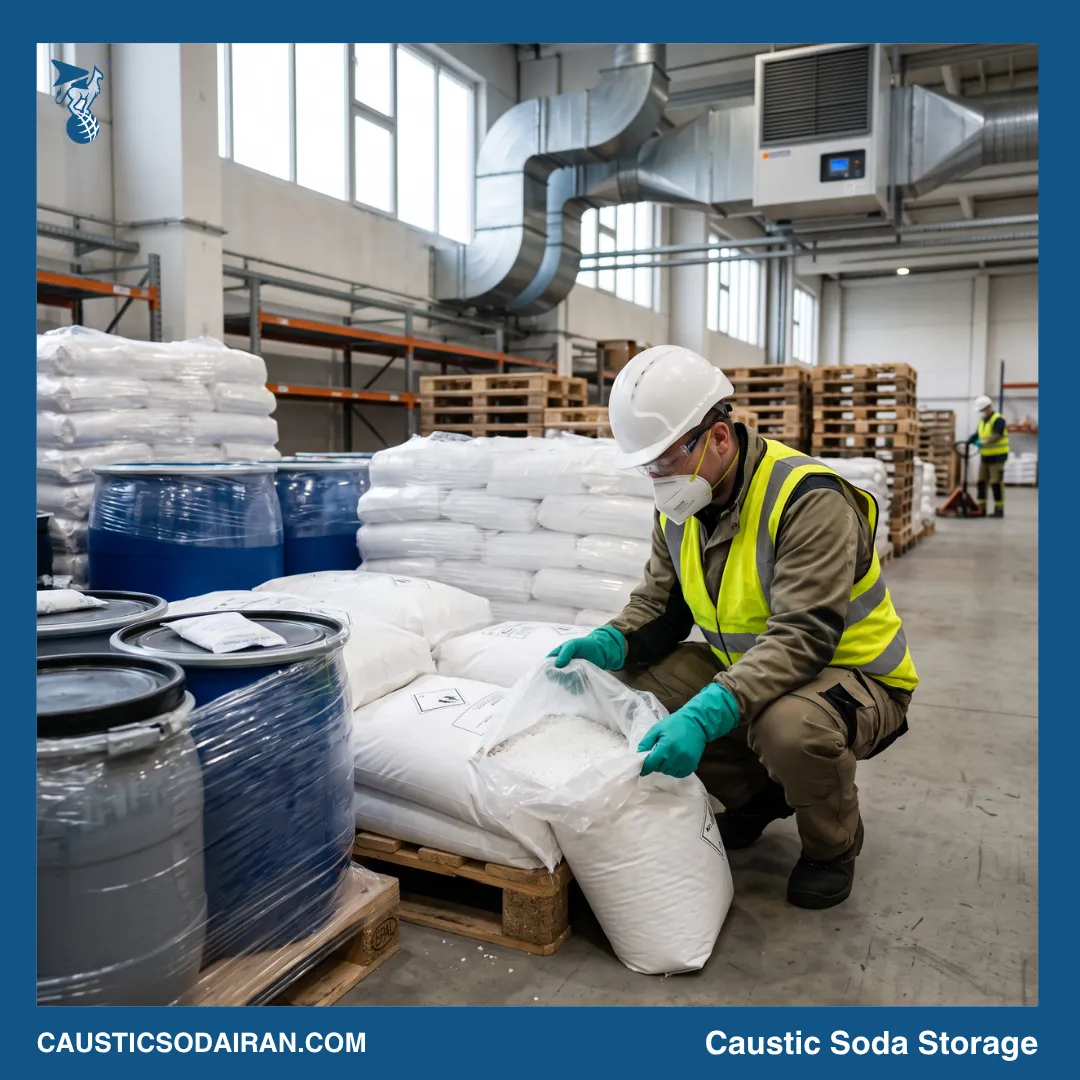
Correct classification and packaging do not eliminate operational risks. Workers must also follow appropriate HAZMAT handling procedures.
During loading, exporters and logistics providers should:
- Inspect packages before loading.
- Check for damaged bags, drums, or containers.
- Keep packaging dry.
- Prevent contact with incompatible chemicals.
- Secure cargo against movement.
- Avoid placing damaged packages into the shipment.
- Use appropriate personal protective equipment.
- Keep emergency response information available.
- Separate incompatible materials when required.
- Inspect the cargo again before dispatch.
Caustic soda should be kept away from acids and materials that could react dangerously with sodium hydroxide.
11. Preventing Moisture and Packaging Damage
Moisture is a major consideration when exporting caustic soda flakes over long distances.
Exposure to humid air can affect the physical condition of flakes and may contribute to caking. Damaged or poorly sealed packaging can also increase the risk of chemical exposure.
For this reason, exporters should select packaging suitable for the intended route and climate. Cargo should be protected from rain, condensation, and unnecessary exposure to humid environments during storage and transportation.
Proper warehouse practices are equally important. The loading area should remain dry, well controlled, and suitable for hazardous chemical handling.
12. Common HAZMAT Transport Mistakes
Several avoidable mistakes can cause delays or safety problems during caustic soda exports.
Incorrect UN Number
Using an incorrect UN number can lead to documentation discrepancies and improper handling.
Incorrect Packing Group
Caustic soda flakes are generally shipped under Packing Group II when classified as UN 1823.
Missing Class 8 Label
The corrosive hazard must be communicated through the appropriate dangerous-goods marking.
Incompatible Packaging
Packaging that is not suitable for corrosive solid chemicals can deteriorate or fail during transport.
Inconsistent Documentation
The commercial invoice, packing list, SDS, and dangerous-goods documentation should describe the shipment consistently.
Poor Moisture Protection
Humidity can affect product quality and packaging integrity, particularly during long-distance transportation.
Ignoring Route Restrictions
Road shipments can be subject to route-specific requirements. For example, ADR identifies tunnel restriction code E for UN 1823.
13. Exporter Compliance Checklist
Before dispatching a caustic soda flakes shipment, exporters can use the following checklist:
- Confirm the product identity and concentration.
- Confirm UN 1823.
- Confirm SODIUM HYDROXIDE, SOLID as the proper shipping name.
- Confirm Class 8 classification.
- Confirm Packing Group II.
- Select compliant packaging.
- Apply the required Class 8 hazard label.
- Verify UN number and package markings.
- Prepare the SDS.
- Prepare dangerous-goods transport documentation.
- Check the requirements of the selected transport mode.
- Verify carrier acceptance requirements.
- Inspect packages before loading.
- Secure cargo correctly.
- Check the planned road and shipping route.
- Confirm destination-country requirements before dispatch.
14. Why Regulatory Compliance Matters
Compliance with HAZMAT transport standards protects more than the cargo. It protects drivers, warehouse workers, port personnel, customs officers, emergency responders, and final customers.
For exporters, compliance also reduces the likelihood of:
- Customs delays
- Carrier rejection
- Cargo damage
- Regulatory penalties
- Packaging failures
- Chemical exposure incidents
- Unexpected logistics costs
Because international dangerous-goods rules can change and may differ by transport mode, exporters should verify the current requirements applicable to each shipment rather than relying on a generic template.
Conclusion
Safe caustic soda transport depends on accurate classification, compliant packaging, correct labeling, complete documentation, and careful handling. For solid sodium hydroxide, UN 1823, Class 8, Packing Group II provides the core dangerous-goods identification used across major transport frameworks.
Exporters who integrate HAZMAT requirements into their logistics planning can reduce compliance risks while maintaining product quality throughout international transportation. Before every shipment, the applicable ADR, IMDG, ICAO/IATA, national, and destination-country requirements should be checked against the actual cargo and packaging configuration.
For reliable international sourcing, Caustic Soda Iran supplies export-grade caustic soda flakes with professional packaging and documentation support for international chemical shipments. Contact our team to discuss your required grade, packaging, quantity, and destination.

Leave a Reply